

All previous newsletters can be found here.
TFC Planting Day, October 18 2025
The annual Trees for Canterbury public planting day will be from 10.00am – noon this coming Saturday. Note the later than usual time.
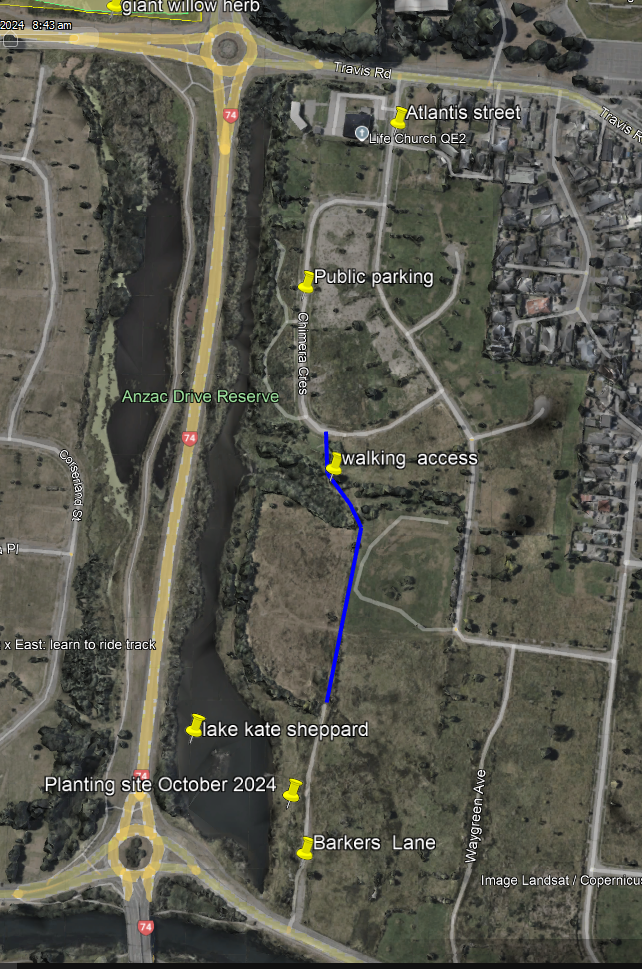
Car parking will be in the red zone; Travis Road to Atlantis Street and Chimera Crescent. Then a 5 minute walk to the site, marked in Blue. No Parking on New Brighton Road.
If the weather on the work day is bad and we decide to cancel then an email will be sent by 8am on Saturday morning. So if you think the conditions are marginal, please check your emails.
If you’re reading this on the website and are not on the email list then you can add yourself to it through the form at the foot of the home page. If you change your mind there’s an unsubscribe link in each newsletter.
Volunteers welcome
Would you like to volunteer to help with caring for the wetland? We would be interested to hear from you. You may have a community group, workplace or extended family that would like to be involved too. Please contact us via info@traviswetland.org.nz
Annual General Meeting
7pm Tuesday 21st October
Travis Wetland Education Centre, 280 Beach Rd

The Travis Wetland Trust AGM is on Tuesday next week. Come along, there is no arm twisting to join the board/committee but volunteers are welcomed! After the formal AGM there is supper and after that the CCC ranger staff will update us on news and plans for Ōruapaeroa Travis Wetland. Finally Tommy Copeland, a Master’s student from Lincoln University, will speak about his proposal for an invertebrate survey at Travis.
All welcome, please join us.
Membership and donations
Show your support for the Trust’s work be being a member or making a donation. The membership year began on 1 July. Membership, donations, or both can be made online by credit card, or via internet banking. All the details you need are on the membership page of the Travis website. Or bring some cash to the AGM.
Latest News
Report on the Previous Work Day, 20 September
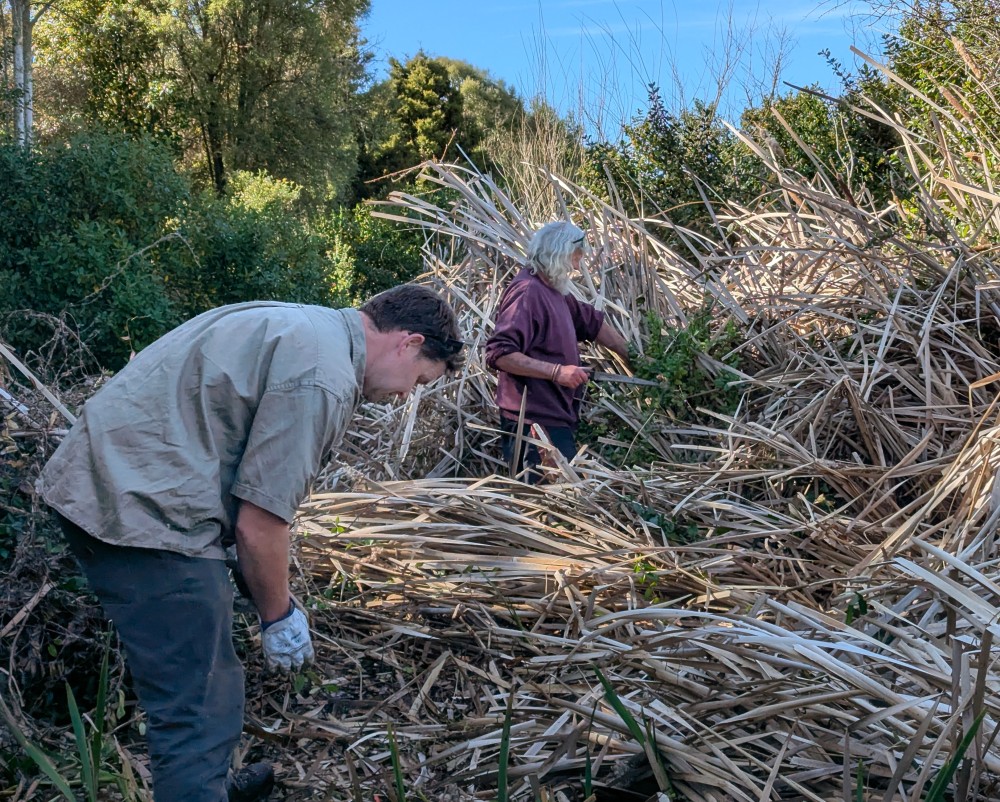
This fine morning was a great chance for our 14 volunteers to get to work on weed removal.
One team worked down a steep bank on the main walking track near Inwoods Road. Their task was to remove Japanese Honeysuckle, aiming to get as many stems and roots as possible. This was a mammoth task given the tangled growth habit of this plant but luckily winter dieback of nearby raupō made things a little easier. Drier areas of the bank sported prolific growth of ivy which was soon joining the giant waste piles.
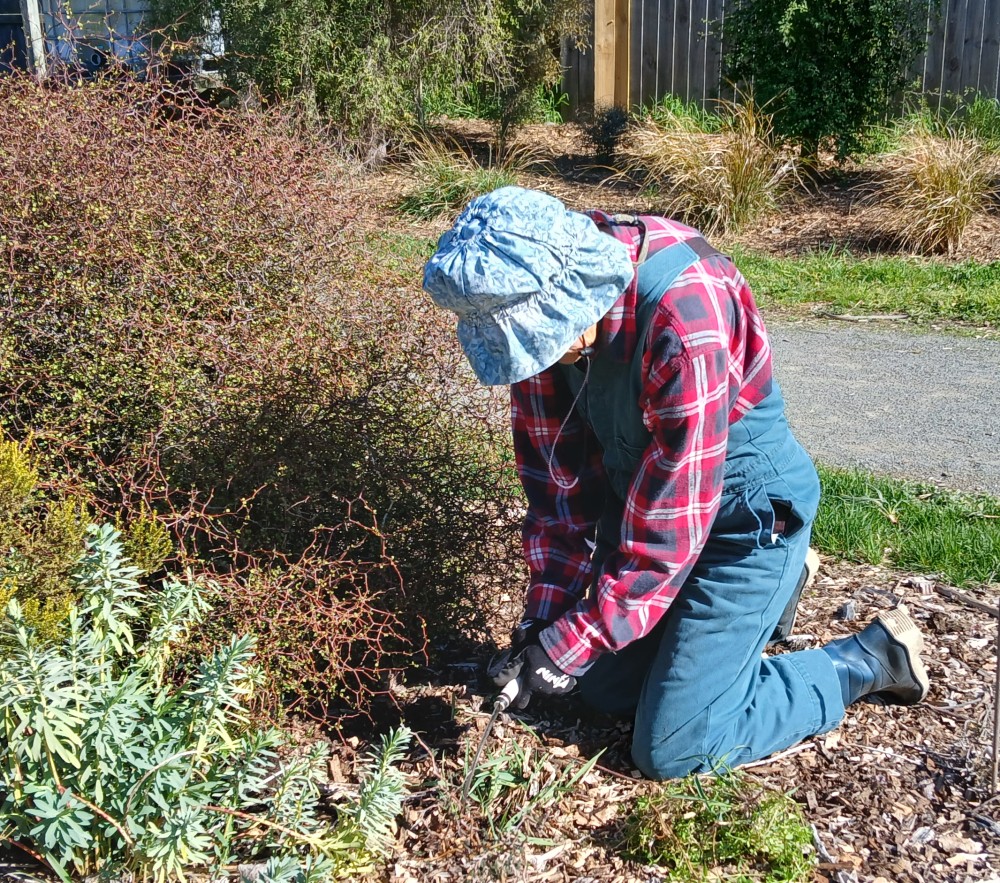
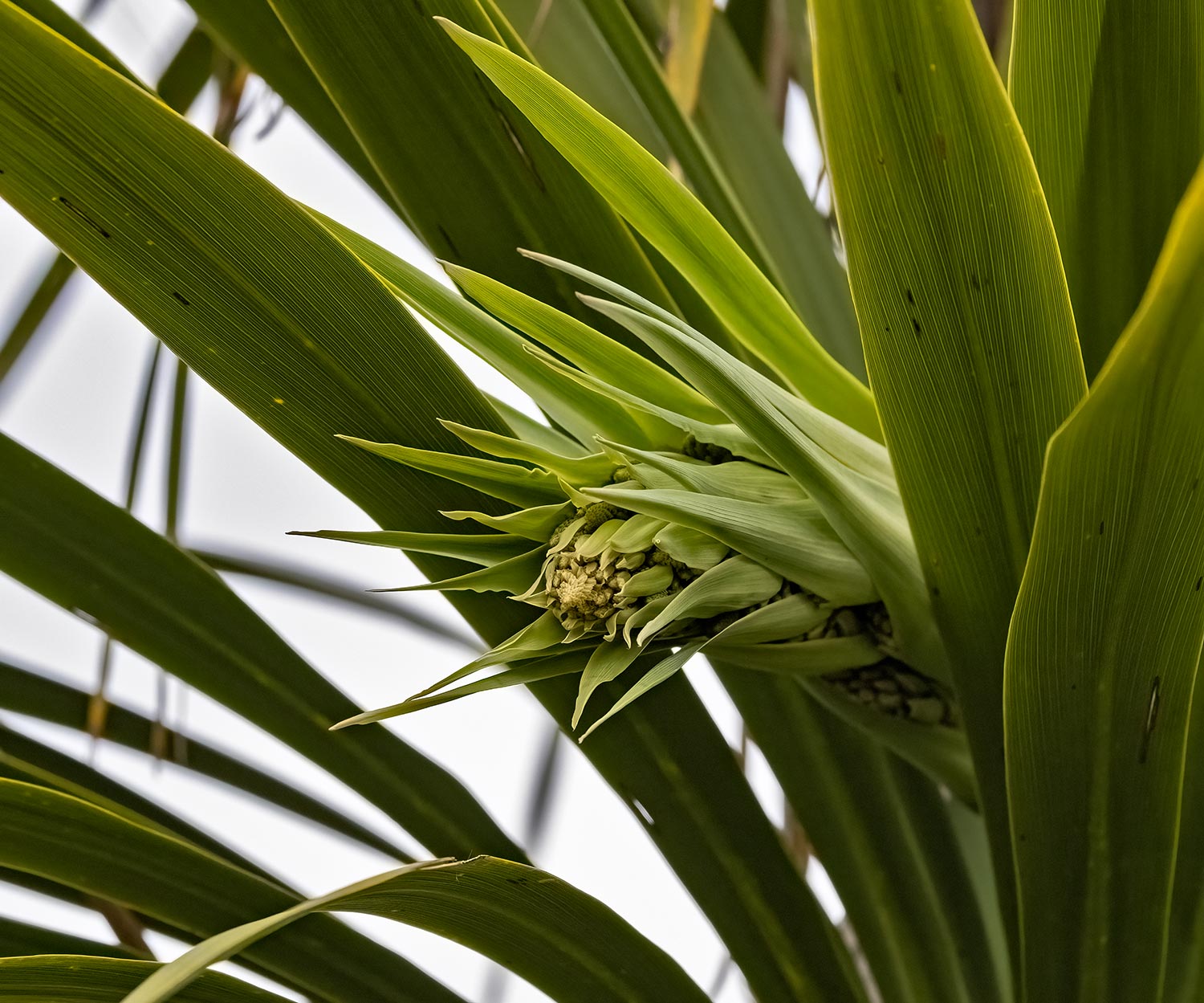
A second team undertook some more sedate weeding in the plots on the Inwoods Road entrance track. This was testing for backs and knees but gave good results, with tall grasses and other weeds removed to allow better plant growth. Colin pointed out tiny flowers on a porcupine plant.
Thanks to everyone for a satisfying morning’s work.
Article: Sue Britain, images: Dave Evans and Sue Britain
Shining cuckoo

Have you heard a shining cuckoo yet this year? They are not common, but I usually hear one at least once each spring in the Port Hills and less often at Ōruapaeroa Travis Wetland. The male call is very distinctive and is well described by their Māori name pīpīwharauroa. Check out the shining cuckoo page on NZ Birds Online to hear recordings of the call.
I see on iNaturalist that there have been a couple observations in Ōtautahi in the past few weeks. They are more often heard than seen and Grahame did well to capture the images of one at Travis in September 2017
It’s called a cuckoo because it parasitises another bird by having that bird raise its chicks. The shining cuckoo primarily lays its egg in a grey warbler nest. After the chick has hatched and grown a bit it ejects any grey warbler chicks from the nest. Despite being significantly bigger than their own chicks the grey warbler adults continue to feed the shining cuckoo.
They are interesting birds for several reasons. They winter over in the Solomon Islands and migrate back to Aotearoa in the spring, spreading down the country as the spring advances. Shining cuckoos are known for eating spiky and poisonous foods and they can also eat toxic monarch caterpillars. This article by Colin Miskelly on the Te Papa website is well worth a read.
Article: Dave Evans, image: Grahame
Summer mast year
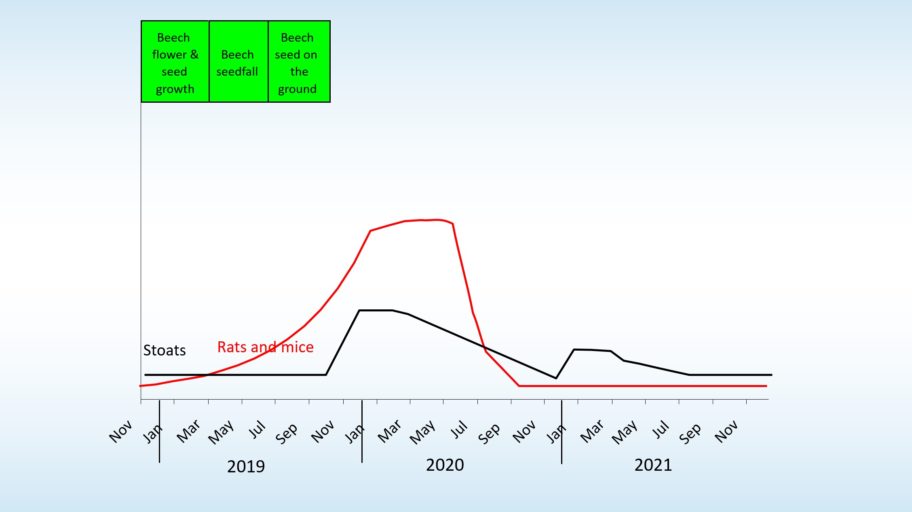
Did you hear that DOC is predicting a mast season for beech seeding this summer? Every few years there is a summer when the vast majority of beech trees over a swathe of the South Island seed prolifically. The last time this happened was in the summer of 2018/19. The mast leads to a slow moving predator nightmare as shown in this graph from an article on the Predator Free NZ website.
The seed fall leads to a massive increase in the populations of rats and mice, which in turn leads to an increase in the population of stoats. Once the seed is all eaten the rats and mice populations crash and the stoats turn their attention to native birds and invertebrates.
It’s not an issue for Travis Wetland but it will lead to a lot of predator trapping activity in beech forests across the motu over the subsequent 1 to 2 years. There is more information in this DOC blog post.
Article: Dave Evans, image: Graeme Elliot, DOC
Naturing
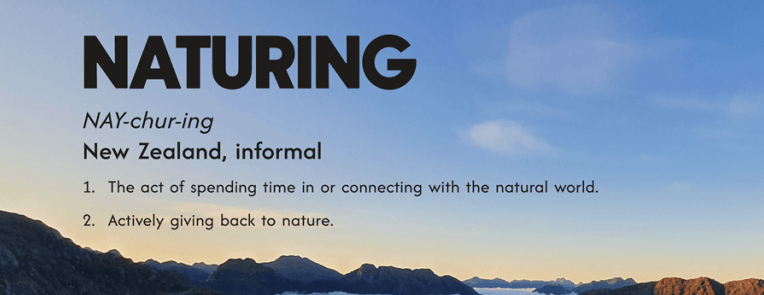
A decade or so ago the term “rewilding” became trendy. Rewilding is a form of ecological restoration aimed at increasing biodiversity and restoring natural processes. Definitely the sort of thing we do at Travis.
Now DOC is promoting the term “naturing”. It’s not an international movement on the scale of rewilding, but DOC is trying to popularise it. I wonder if it will catch on. Ōruapaeroa is definitely a good place for naturing as well as rewilding. You can read more here on the DOC website.
Article: Dave Evans, image: DOC
Recent images from Ōruapaeroa Travis Wetland
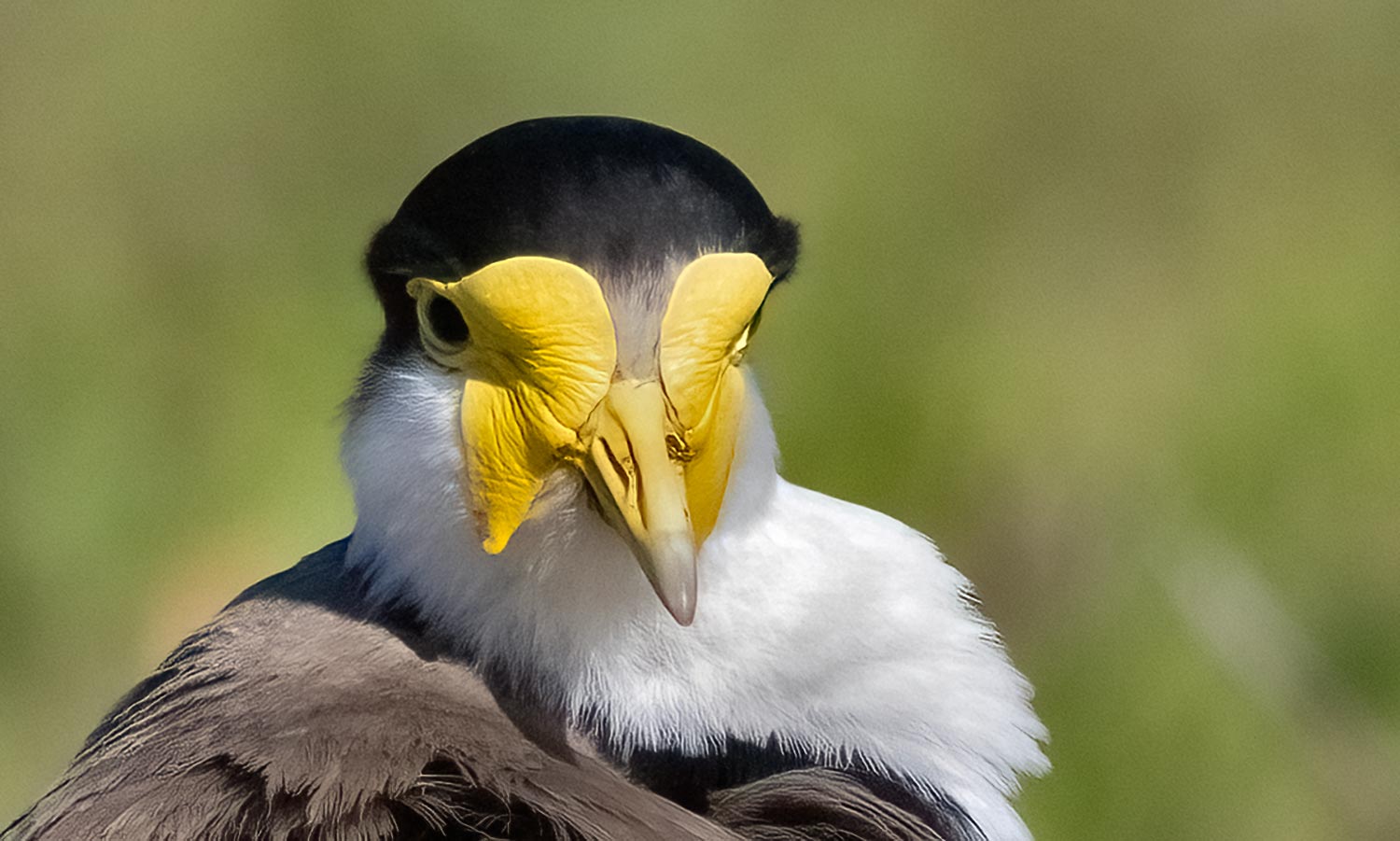
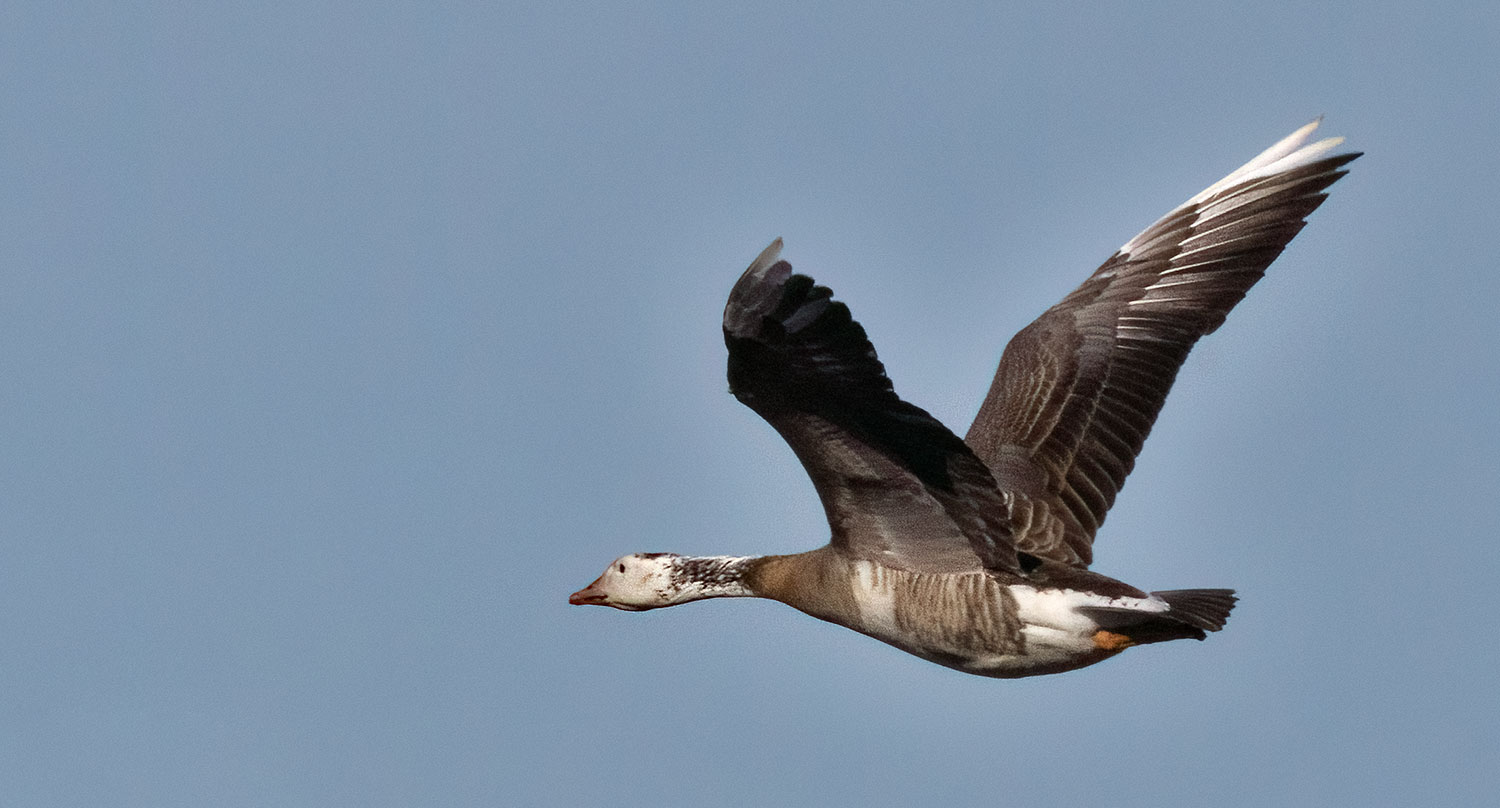
All images by Grahame