
All previous newsletters can be found here.
Work Day Reminder, March 21 2026
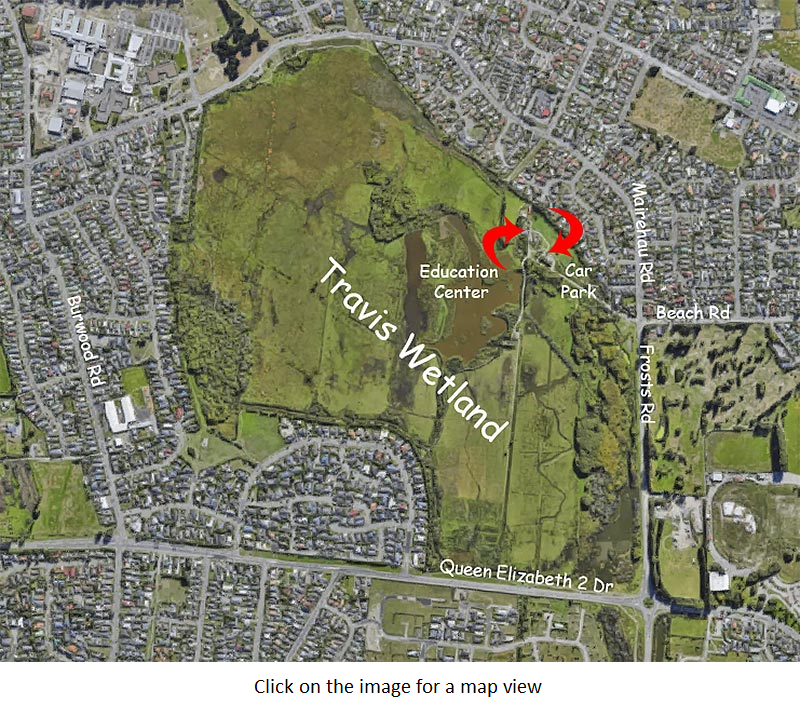
The next monthly work day will be from 9.00am – noon this coming Saturday.
This month we’ll most likely be weeding somewhere around the wetland. If you arrive late there will be a notice on the Education Centre door explaining where we have gone and a phone number for you to call if you need more guidance to our location.
All tools provided. Gumboots are recommended. If you don’t have any we have pairs for loan at the Education Centre. Please bring your own gloves if you can, but we have some of them for loan too.
If the weather on the work day is poor and we decide to cancel then an email will be sent by 8am on Saturday morning. So if you think the conditions are marginal, please check your emails.
If you’re reading this on the website and are not on the email list then you can add yourself to it through the form at the foot of the home page. If you change your mind there’s an unsubscribe link in each newsletter.
Volunteers welcome
Would you like to volunteer to help with caring for the wetland? We would be interested to hear from you. You may have a community group, workplace or extended family that would like to be involved too. Please contact us via info@traviswetland.org.nz
Report on the last work day, 21st February
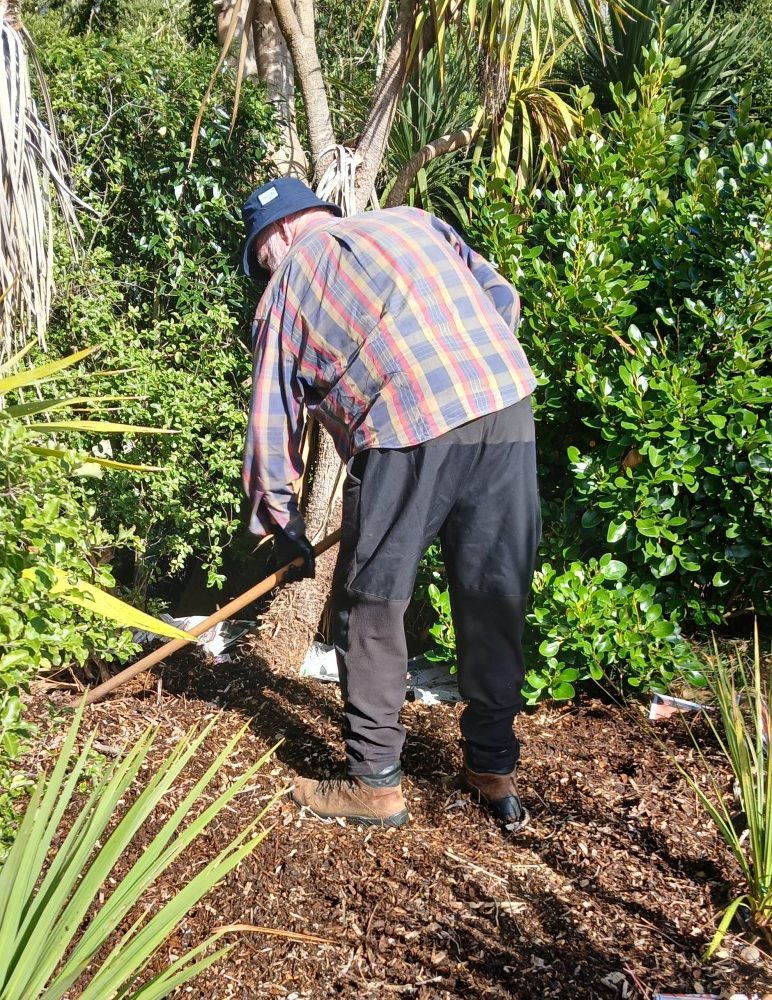
A team of 11 welcomed the fine morning for our mission to tidy up a small bush area near the bird hide track. Large specimens of mallow, nightshade and hemlock were removed and invading grass was brought under control. Newspaper was laid and covered with many barrow loads of bark mulch to achieve a very tidy result.
Meanwhile a group of 3 had a less energetic but productive time removing convolvulus and releasing small plants further round the pond edge. Young kahikatea were doing well in this area and regenerating coprosma and lacebark were plentiful. Two hairy willow herb plants were located and promptly dealt with.
Great work everyone.
Article and image: Sue Britain
Bugs and Blooms in the Mairehau Dunes
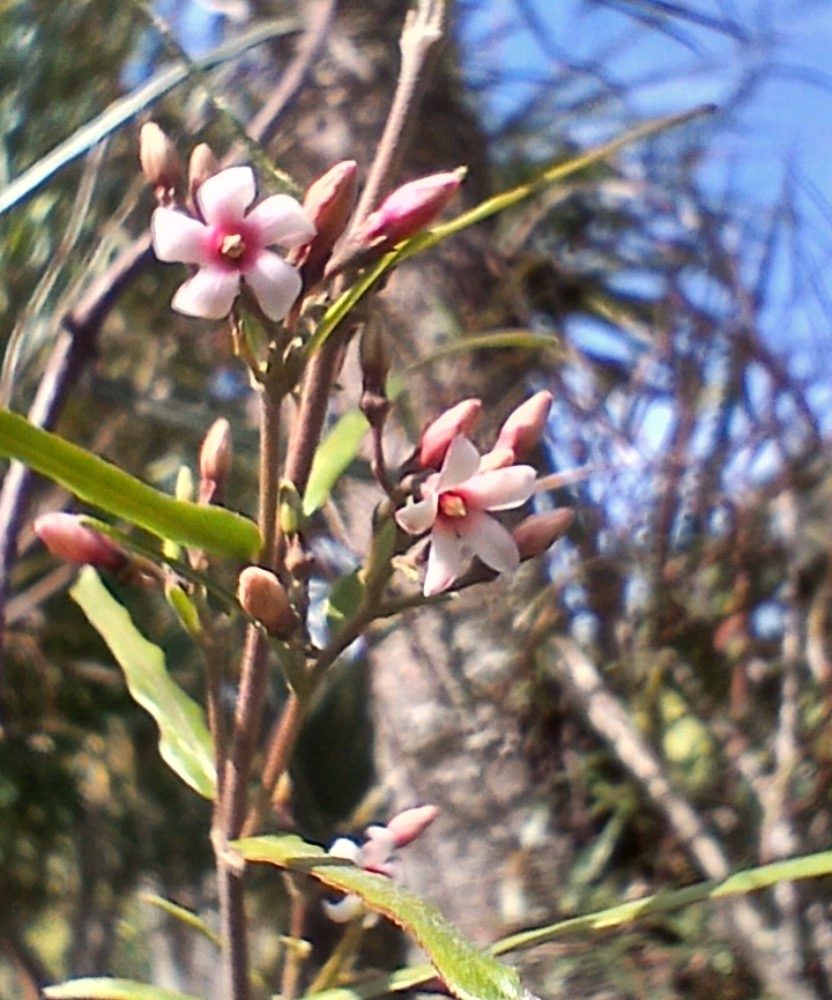
New Zealand has 2 common endemic species of jasmine, plus likely hybrids (genus Parsonsia), though neither are related to overseas species. They grow in clearings or forest edges and can climb high into trees by twining around host plants.
Recently I noticed delightful new flowers on a specimen growing up a cabbage tree. On examination its slender leaves, small flower clusters and white, pink-centred blooms suggested it was likely to be P. capsularis (Kaiwhiria).
Whilst trying to photograph the tiny flowers in a strong breeze, I noticed some colourful insects resting in a dead cabbage tree leaf which was hanging from the jasmine. I had no idea what I had found but continued observing and snapping away. Investigation showed that I had likely found Arocartus rusticus, the swan plant seed bug.
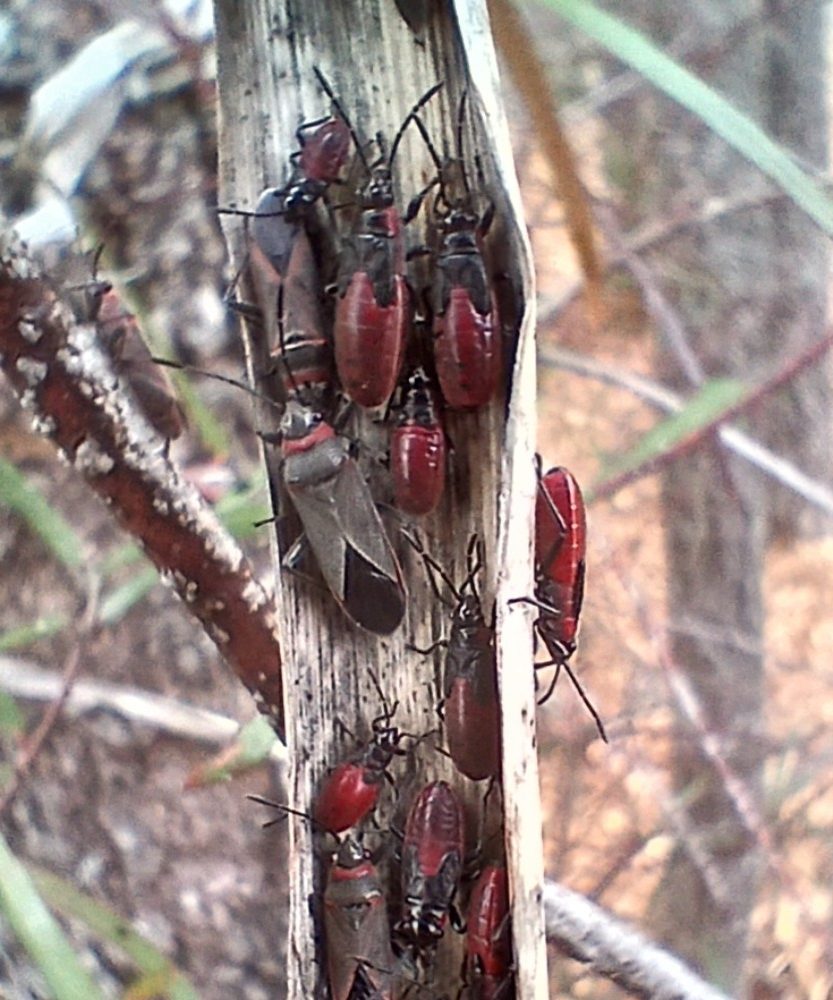
These colourful bugs are 10 mm long with striking orange and black markings. The markings warn potential bird predators that they are likely to be poisonous from to the plants they consume, such as Parsonsia, swan plant and other members of the dogbane family. The bugs certainly have laid back behaviour, feeding openly and dispersing slowly if disturbed.
The young nymphs of the species are bright red and go through 5 instar stages to reach adulthood. Like the adults they suck sap from the plant stems and feed on its seeds and developing fruit. I was very lucky to observe a small nymph shedding its exoskeleton.
A. rusticus was first recorded in NZ in 1872, following likely accidental introduction from Australia.
New Zealand Parsonsia species are known to host numerous other invertebrates, such as wasps, beetles, moths and aphids. Bellbirds enjoy their nectar and Maori used Parsonsia flower sprigs to lure birds to traps in the trees.
Moral from this story. Stop awhile and smell the flowers – who knows what you may find.
Sources include : iNaturalist, Wikipedia, Landcare Research, Brisbaneinsects.com, NZ Native Shrubs and Climbers by J.C. Smith-Dodsworth.
Article and images: Sue Britain
Fungi and Slime Moulds
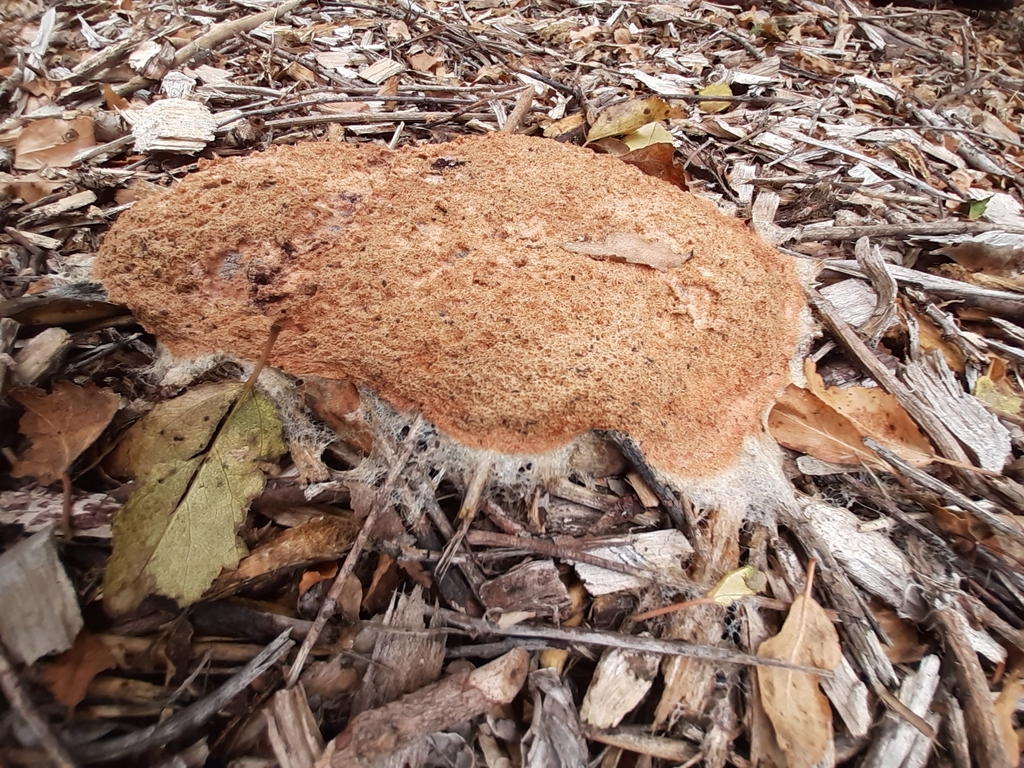
It’s definitely fungi season and with the wet and cool end to what passed as summer it has come earlier in the year than usual. A good place to look for fungi is on tree mulch and that’s where Eleanor came across a good example of what is imaginatively named Dog Vomit Slime Mould. “The term slime mold is something of a misnomer, for these creatures aren’t molds or fungi at all. They’re amoeba-like, and typically single-celled organisms classified as Myxomycetes in the kingdom Protista.” “Slime molds also reproduce in the way that fungi do, by producing spores. But their cellular structures are very different from fungi. Slime molds can also do some amazing things far beyond what a simple fungal growth can do.” “While they possess no legs, wings or other limbs to propel them, slime molds can move, although they generally won’t break any land-speed records doing it. Once it’s on a surface, the blob-like slime molds have pseudopods that allow them to creep along at a rate of about a millimeter per hour.”
Quotes from Discover Magazine.
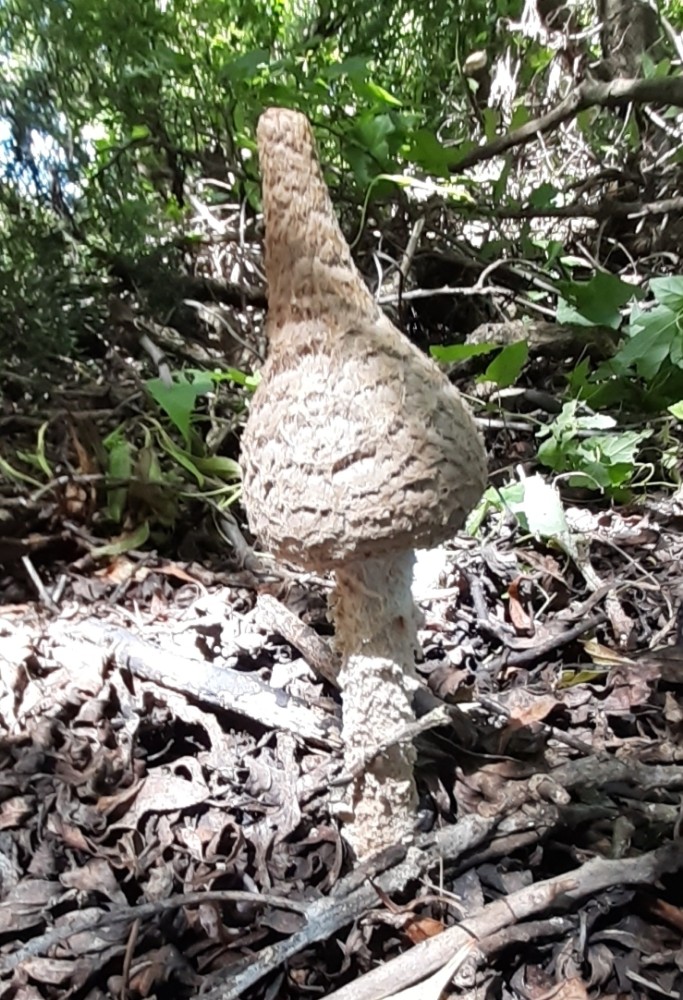
Another imaginatively named fungus is Gandalf’s cap (Saproamanita galerumgandalfi) a member of Amanita Mushrooms and Allies. It seems that this name for a NZ species has been proposed by Jerry Cooper a kiwi fungi specialist, but is not yet internationally official. It seems like a fitting name to me. Saproamanita fungi are found in many places around the world, including Ōruapaeroa Travis Wetland.
Article: Dave Evans; Images: Eleanor Bissell
Car Park Trimming
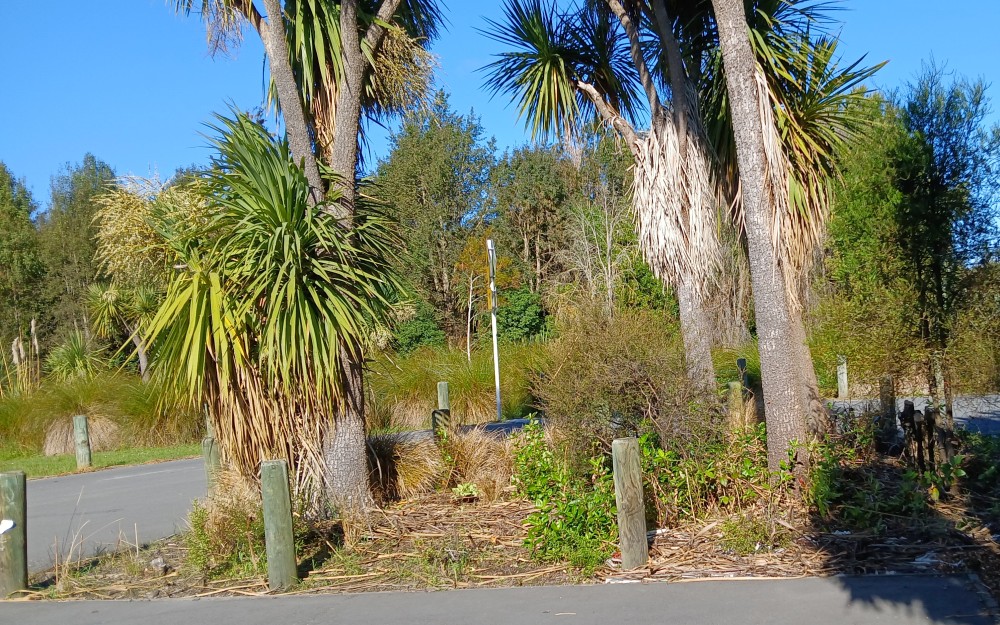
The Wednesday Weeders, with help from ranger Matt Rose, have opened up the understory of the vegetation next to the Beach Rd car park to improve visibility in that area. We hope this will help deter vehicle breakins, which are still occurring sporadically. Remember never to leave valuables in your vehicle when it’s parked at Travis and warn others you see parking there.
Article Dave Evans and image Sue Britain
Kākāpō Cam
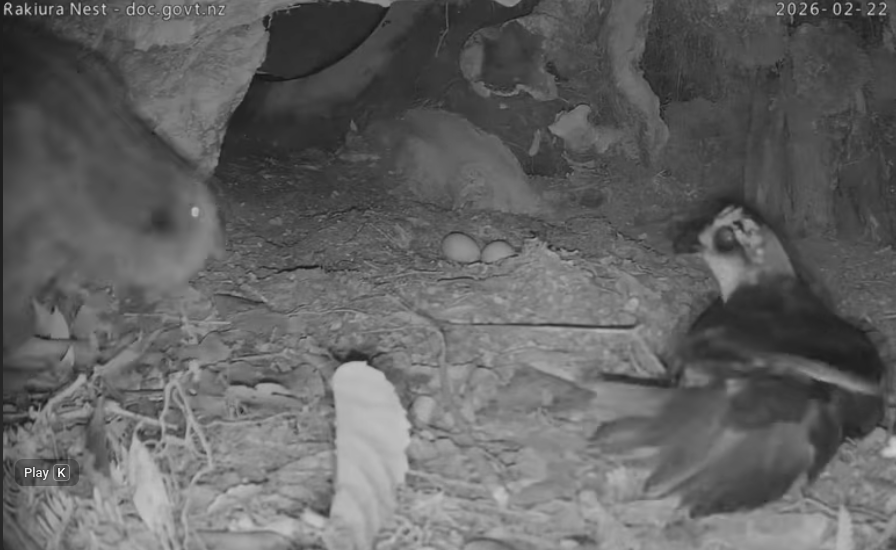
How many of you have been monitoring the kākāpō soap opera playing out on Whenua Hou / Codfish Island? Watching a kākāpō sleep can be a bit like watching grass grow, but there are moments of intense activity like the time an unwary Mottled Petrel invaded Rakiura’s nest cavity and met with a fury it was not expecting. It was easy to see why such events are very dangerous for precious eggs just lying around on the ground. No wonder viable eggs are usually moved to an incubator in a DOC hut. The livestream is here: Kākāpō Cam: Rakiura the kākāpō – 2026 nest
If you don’t have the time or the patience to monitor the YouTube livestream then DOC has a playlist of the highlights of the past few weeks: Highlights from Kākāpō Cam: Rakiura – 2026
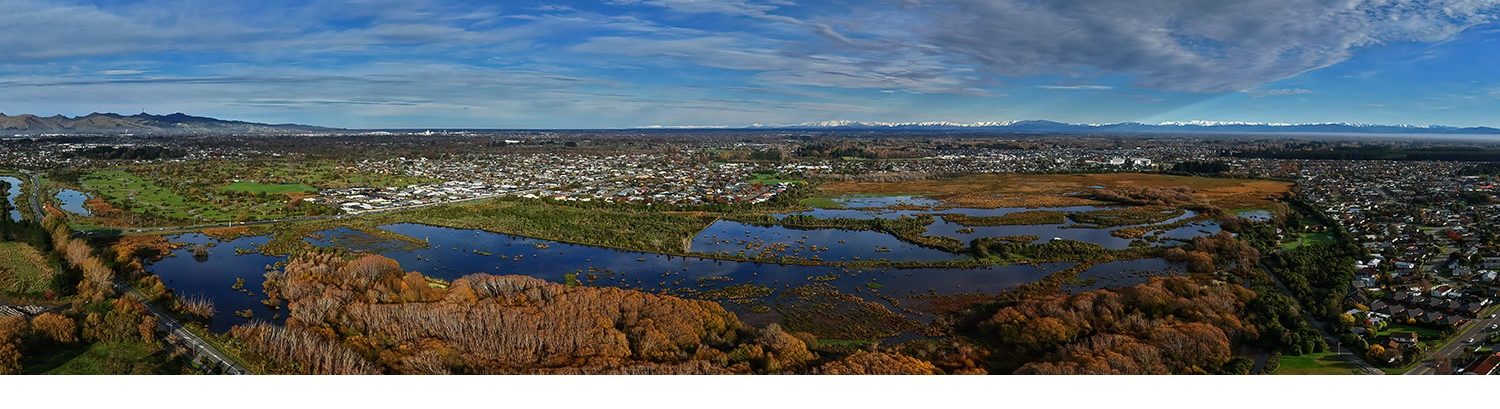
Recent images from Ōruapaeroa Travis Wetland
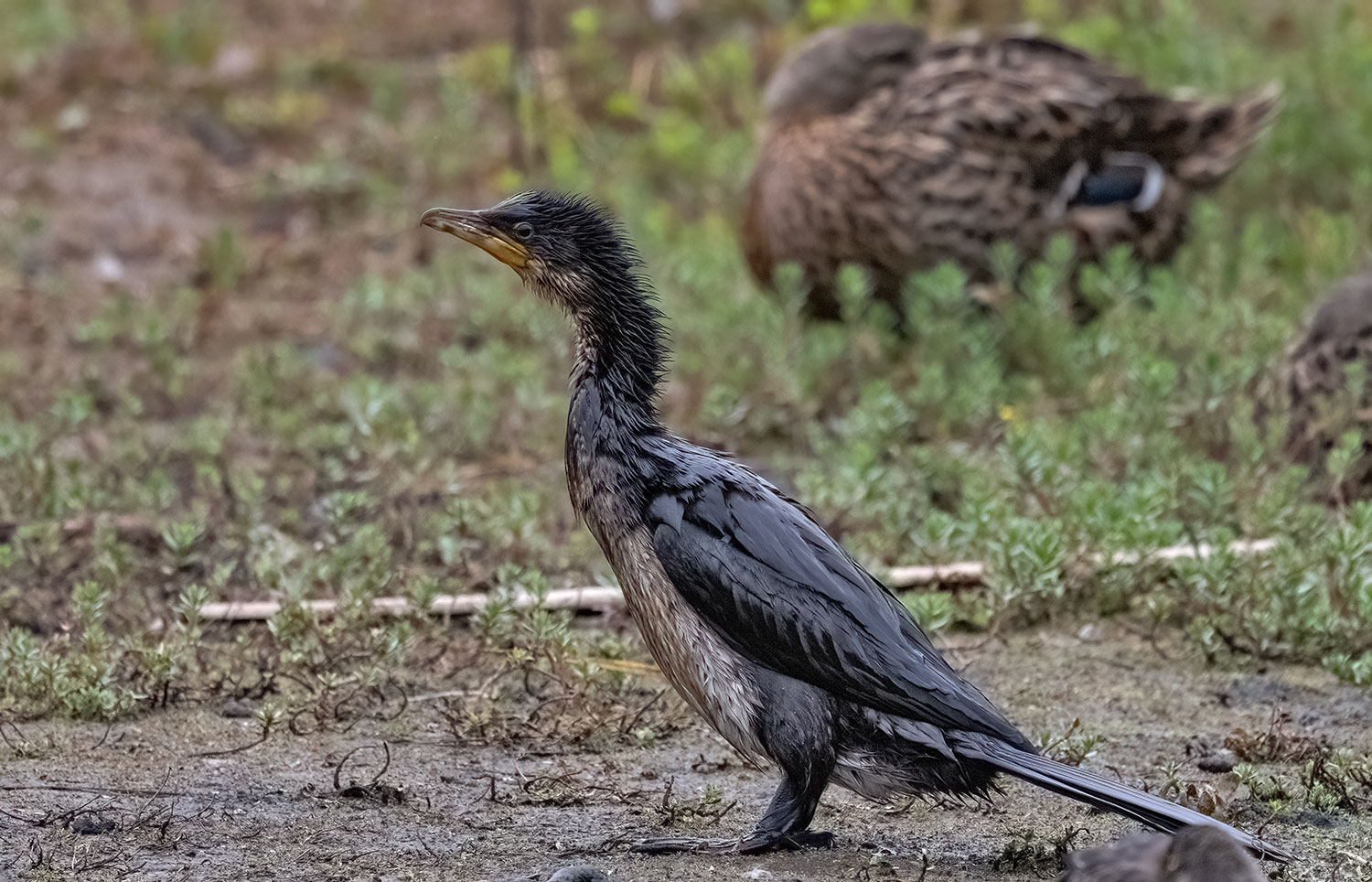
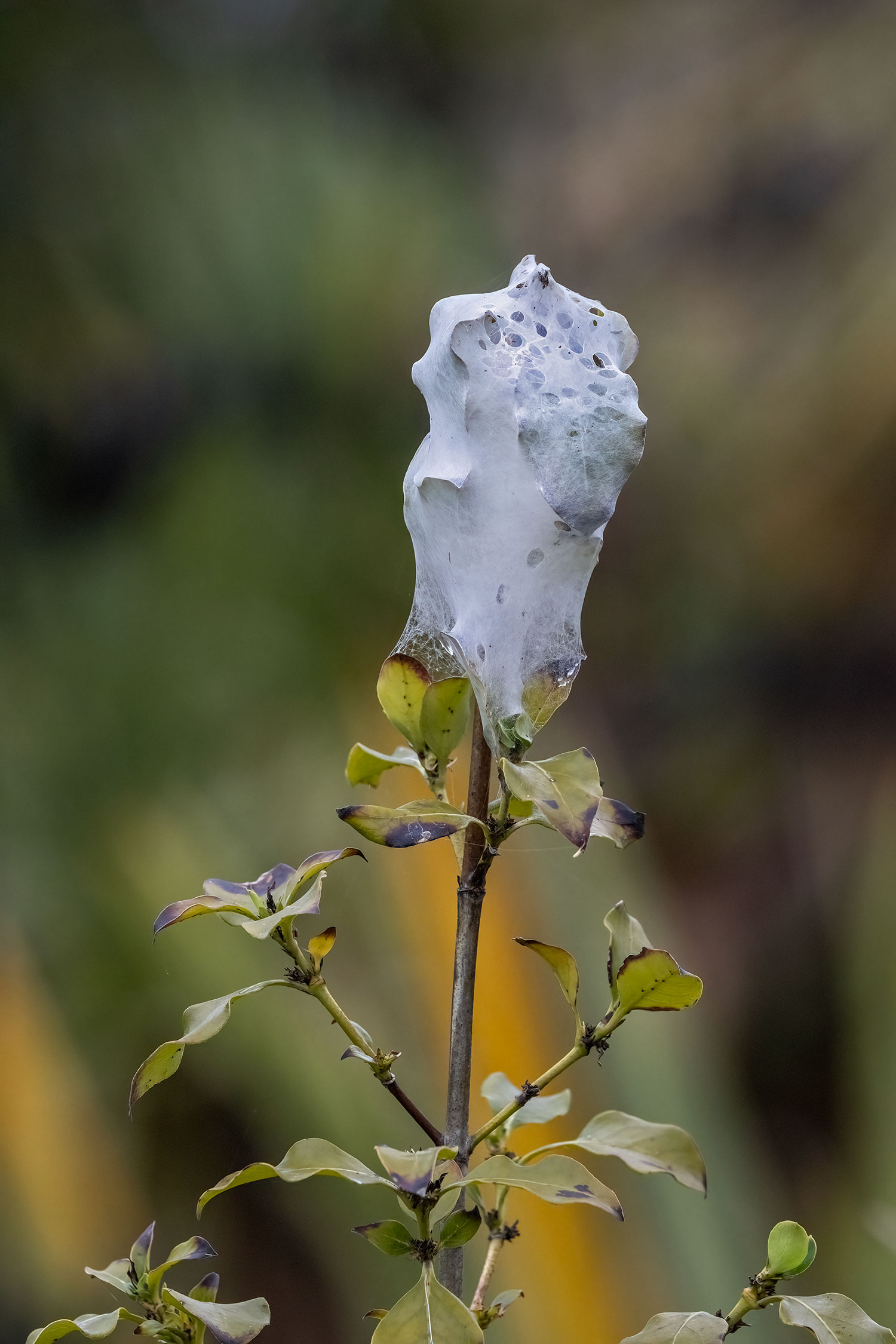
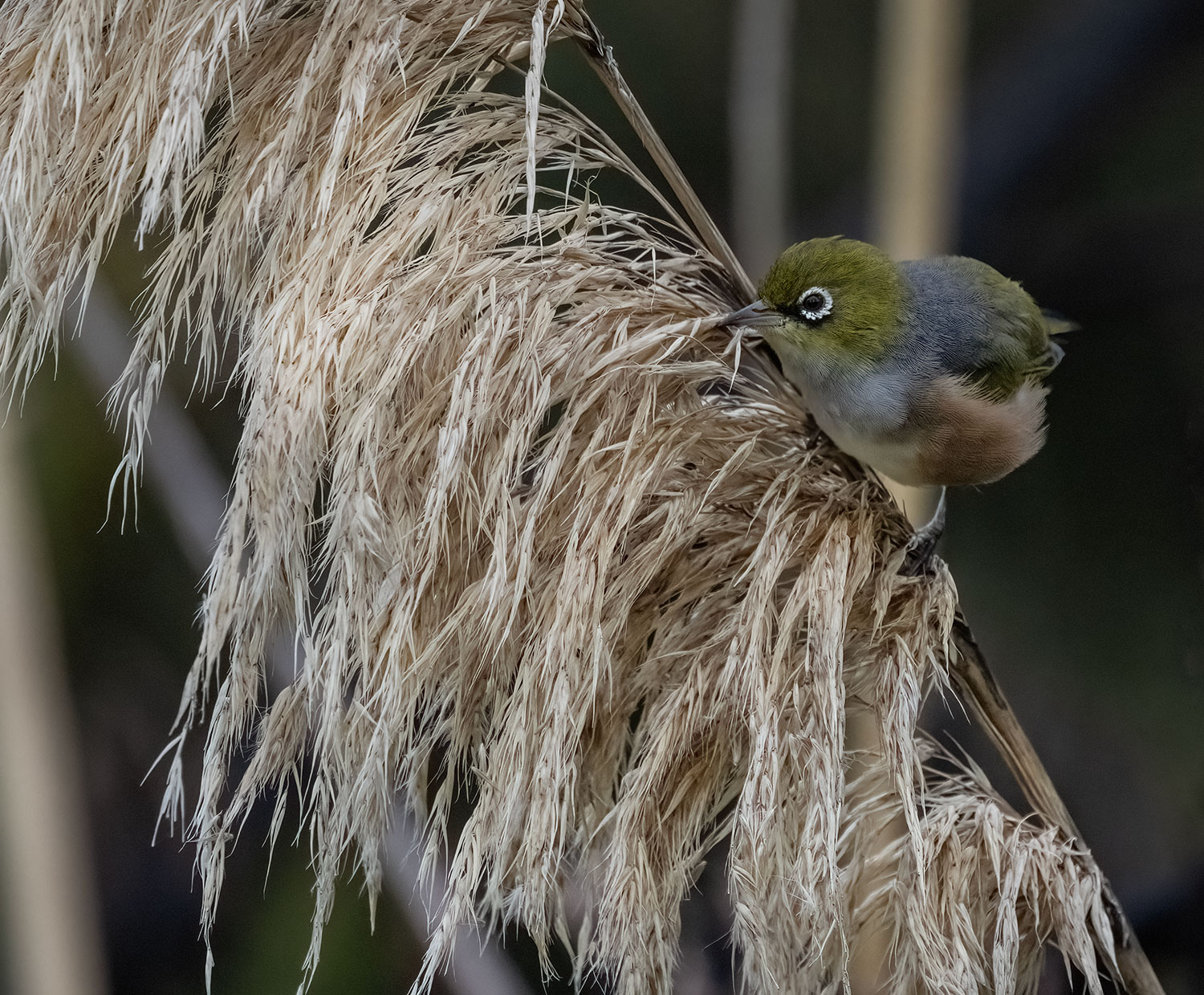
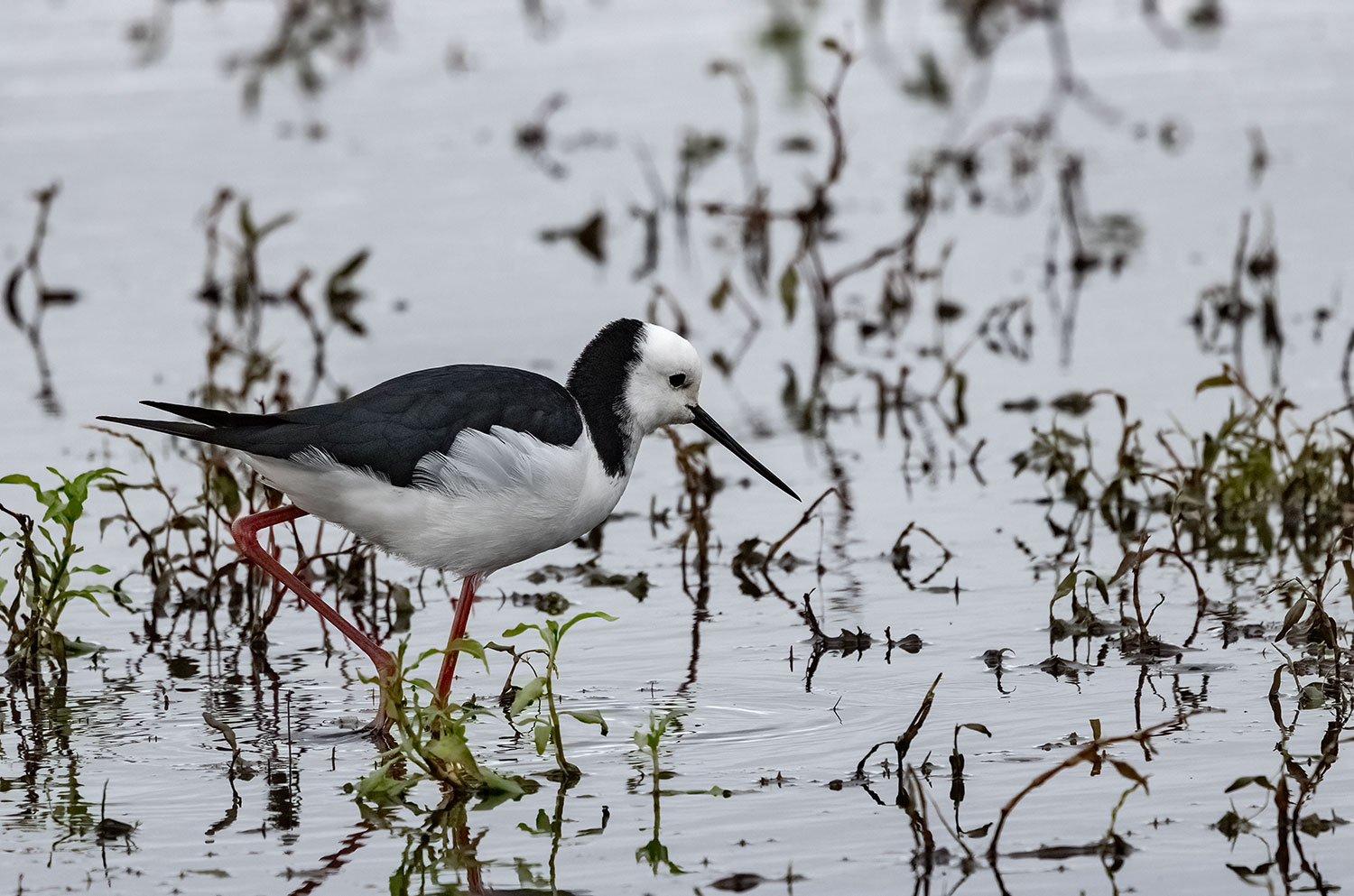
All images by Grahame