
All previous newsletters can be found here.
Work Day Reminder, June 20 2026
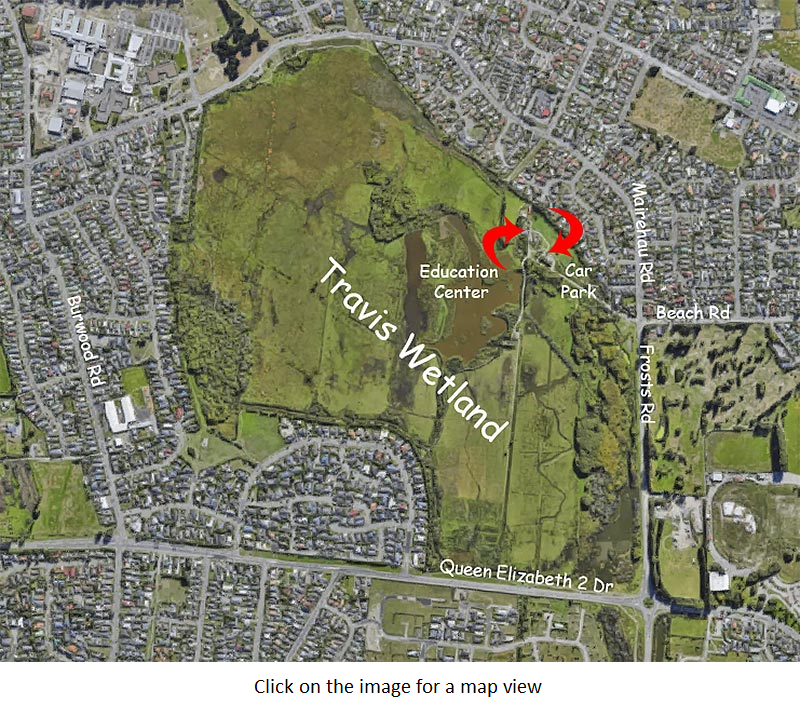
The next monthly work day will be from 9.00am – noon this coming Saturday.
This month we’ll be planting some recently arrived plants somewhere, depending on conditions. If you arrive late there will be a notice on the Education Centre door explaining where we have gone and a phone number for you to call if you need more guidance to our location.
All tools provided. Gumboots are recommended. If you don’t have any we have pairs for loan at the Education Centre. Please bring your own gloves if you can, but we have some of them for loan too.
If the weather on the work day is poor and we decide to cancel then an email will be sent by 8am on Saturday morning. So if you think the conditions are marginal, please check your emails.
If you’re reading this on the website and are not on the email list then you can add yourself to it through the form at the foot of the home page. If you change your mind there’s an unsubscribe link in each newsletter.
Volunteers welcome
Would you like to volunteer to help with caring for the wetland? We would be interested to hear from you. You may have a community group, workplace or extended family that would like to be involved too. Please contact us via info@traviswetland.org.nz
Report on the last work day, 16th May
A sunny Saturday morning saw 20 adults plus 5 young people planting at the Beach Road, Frosts Road corner then down the Frosts Rd margin towards Travis Road. Suitable plants for that area included tōtara, kaikōmako, coprosmas, carex (sedges) and cyperus (reeds). After putting the plants in the ground they followed up with watering-in and guarding the plants. What time there was after that was soaked up by weeding to further raise an appetite for morning tea!
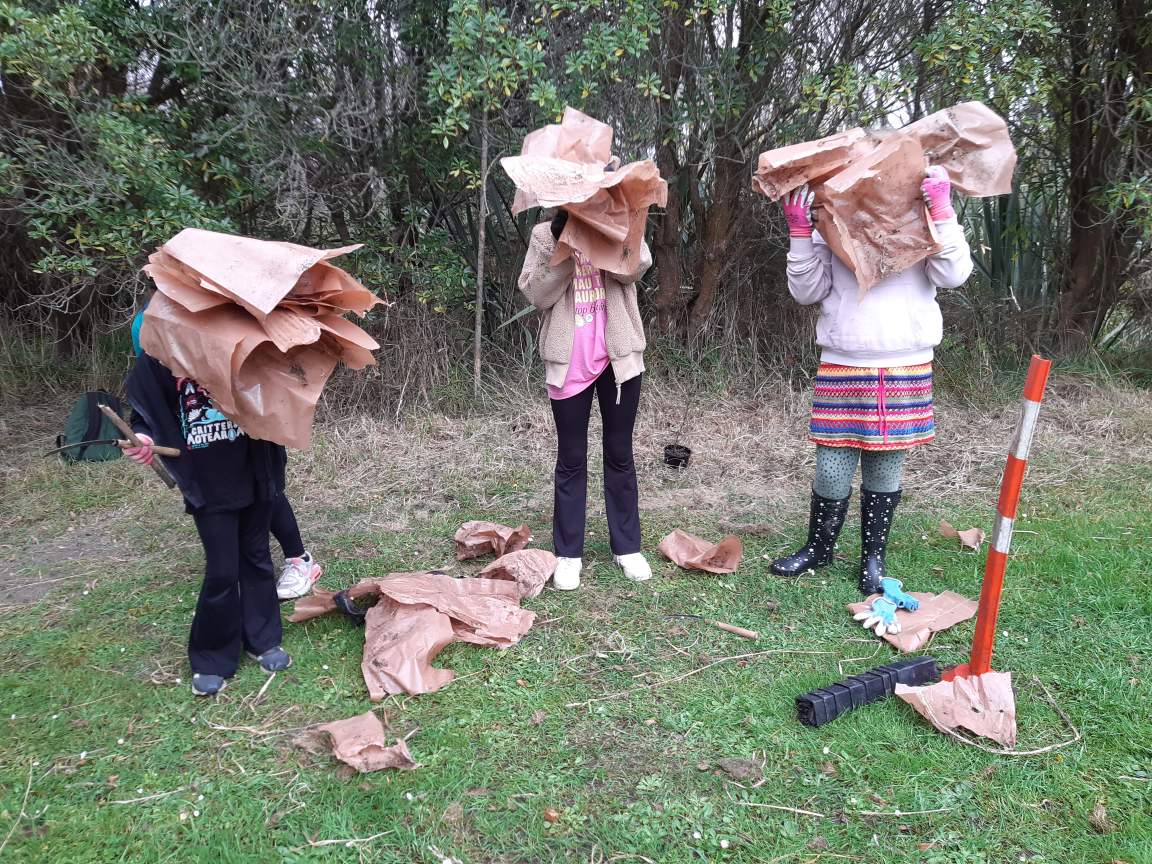
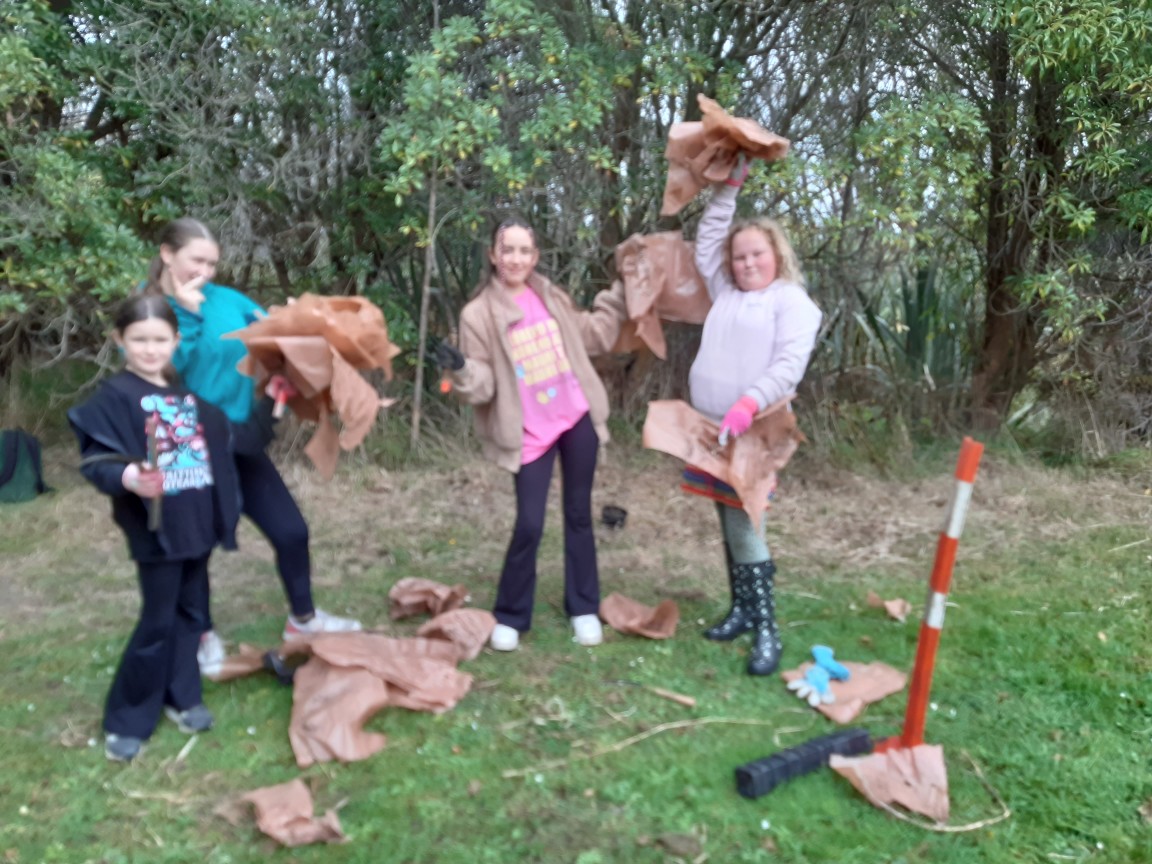
The young people attending had some slightly different tasks. They watered plants, ‘spotto – ed’ plastic guards no longer serving a purpose on maturing plants and removed them. They then moved on to the butterfly habitat between the car park and the Information Centre (see below).
All the workers had an enjoyable and worthwhile time. Thanks to everyone for coming along and pitching in.
Article and images: Eleanor Bissell
Travis Stream 20 years ago
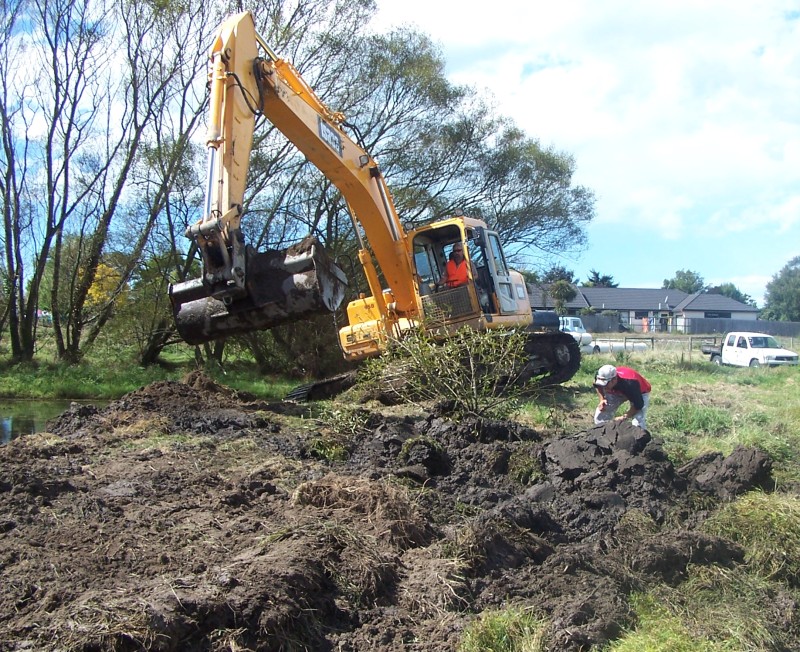
Following our recent workday planting near the Frosts Road boundary of the wetland, it is interesting to read about work to improve Travis Stream in this area in March 2006.
The stream had become narrow and clogged with grass, so a large digger was needed to widen it to 5m – 8m in the hope of reducing crossings by animal pests. Beaches and shallow areas were formed, much to the delight of local water birds. Read the full story in our newsletter from May 2006.
Article: Sue Britain, image: John Skilton
Giant Puffball
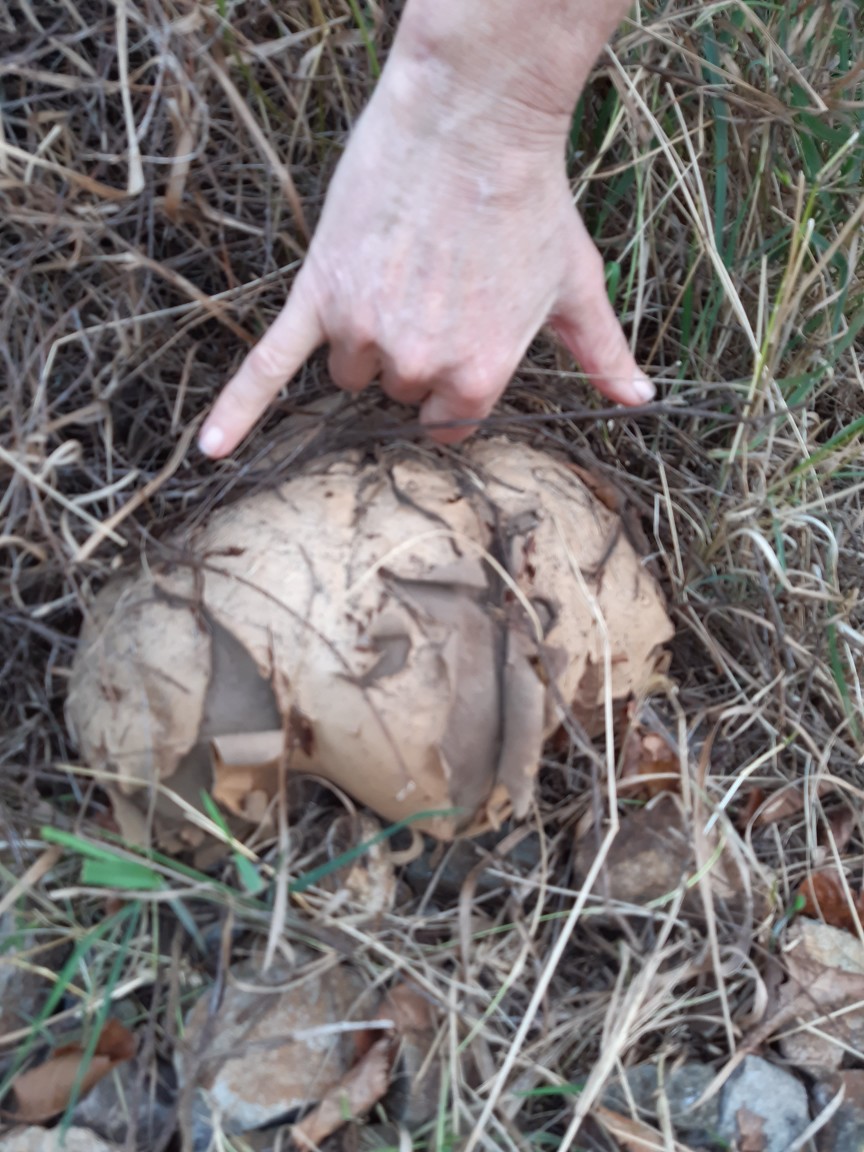
I heard from Eleanor that a Pumpkin Fungus had been found at Travis. Wow! I’d never heard of a Pumpkin Fungus. Turns out there was a bit of creative licence in play. It was a fungus rivalling a pumpkin in size. The proposed identification is Giant Puffball, Calvatia gigantea. I had seen one of those on a farm in South Canterbury and a sheep was eating it! I was assured that they are edible, when young – more on that below. After the sheep had had a go at it I wasn’t so keen, so left them to it.
The observation was posted on iNaturalist, but it hasn’t attracted a second identification that would make it a Research Grade observation. The Wikipedia entry for the Giant Puffball says “Identification techniques make it relatively easy to distinguish from others of its genus.”but the puffball needs to be observed when young and the one Eleanor observed was definitely not young. This observation will probably never achieve a Research Grade status.
The Wikipedia page is quite intriguing. Here are a few excerpts.

Calvatia gigantea can grow to 80 cm diameter and weigh several kilograms. A specimen weighing over 23 kg (51 lb) was recorded in Thunder Bay, Ontario, Canada.
The interior of an immature puffball is white, while that of a mature specimen is greenish brown. The fruiting body of a puffball mushroom develops within a few weeks and soon begins to decompose and rot, at which point it becomes dangerous to eat. Unlike most mushrooms, all the spores of the giant puffball are created inside the fruiting body; large specimens can easily contain several trillion.
Prof. John Lindley has calculated that C. gigantea grows at a rate of sixty million new cells per minute on its way to making seven quintillion (7,000,000,000,000,000,000) spores.

Puffball mushrooms on sale at a market in England, showing slices uniform and white all the way through
The giant puffball is commonly found in meadows, fields, and deciduous forests in late summer and autumn. It is found in temperate areas throughout the world.
The large white mushrooms are edible when young, as are all true puffballs, but they can cause digestive issues if the spores have begun to form—as indicated by the flesh being yellowish or greenish-brown instead of pure white. An overripe puffball will fall apart and release spores when touched or if cut open, and should be discarded. Some people experience a laxative effect from eating this species.
In addition to consuming the mushroom, the Māori people of New Zealand used it to stem bleeding and treat burns.
Article: Dave Evans Images: Eleanor Bissell and Wikipedia
Native Copper Butterflies live here
New Zealand’s smallest Copper Butterfly [Lycaena salustius] lives here growing to only 2 centimeters. They are sun worshipers and need to absorb warmth from these very important stones to survive. Butterflies fly close to the ground rarely flying higher than 1 meter. They stay close to this special site, which is their home and lay their eggs among the plants. Larvae depend and feed only on these plants [Muehlenbeckia axillaris.]
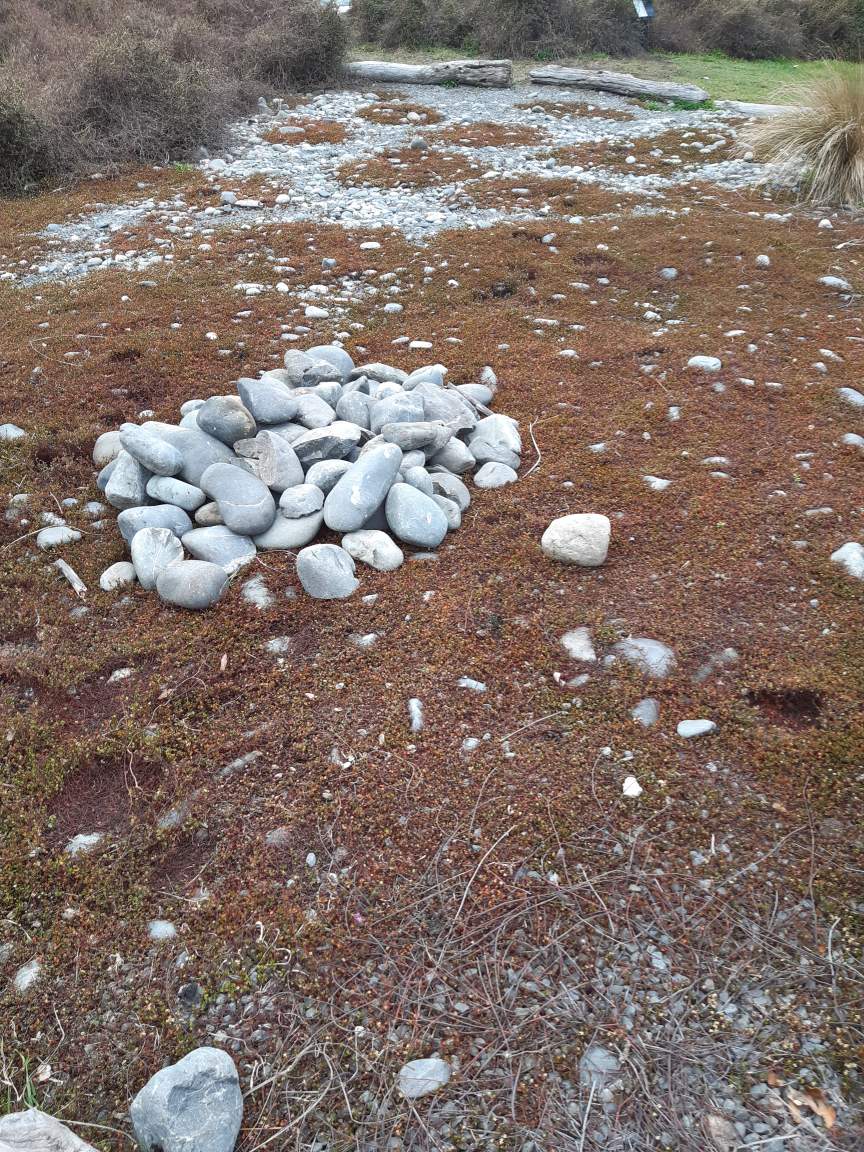
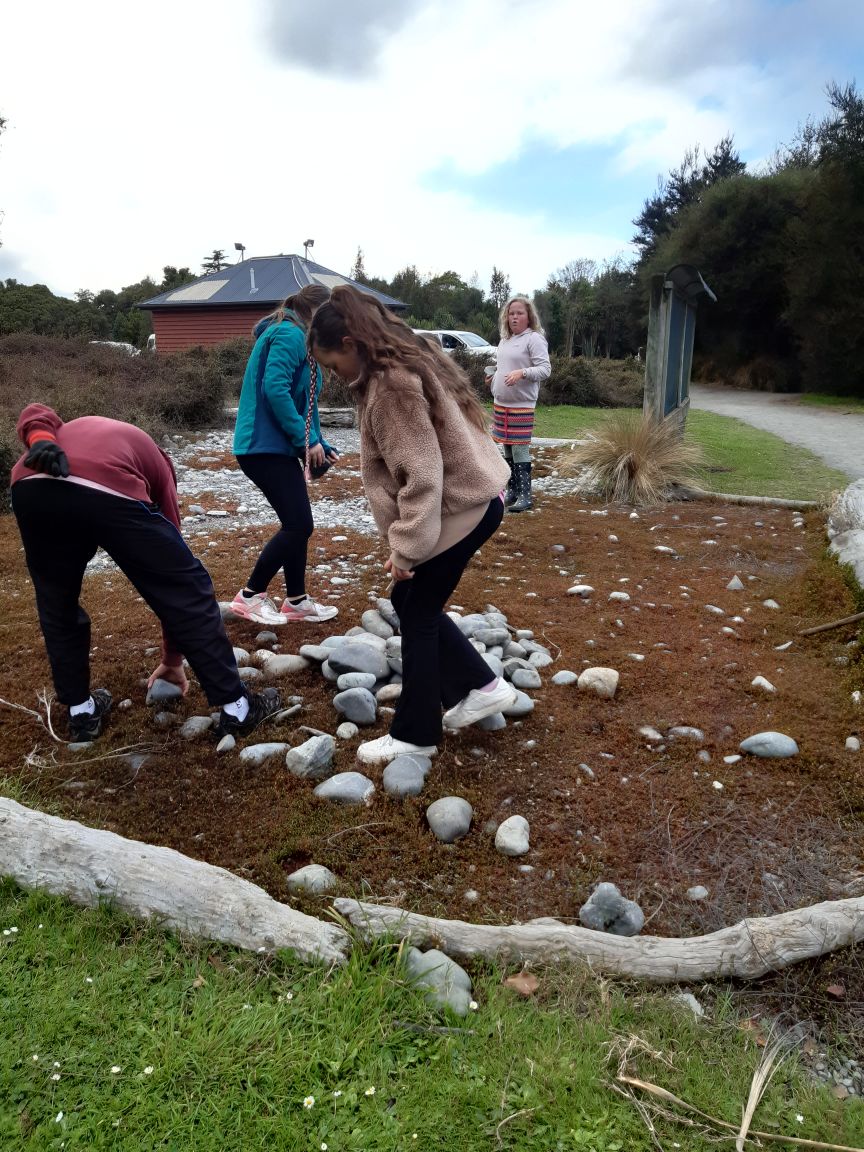
Please stay outside of the logs all year, stay very still and be really quiet if you would like to see the butterflies. Best viewing times to see the butterflies is between October & April. Their pupa larvae are busy growing during the winter. Thank you for not disturbing this site.
Article and images: Eleanor Bissell
Snippets from the Rangers
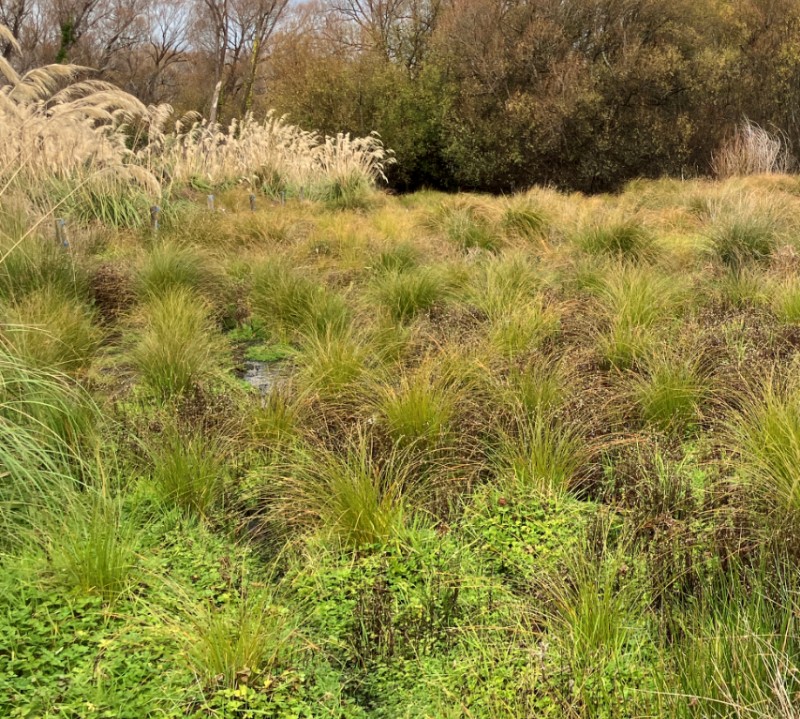
Areas that are infested with Beggars Ticks are being heavily planted with Carex secta in the hope that the Carex will out-compete the Beggars-ticks. This weed control strategy has been tested elsewhere at the wetland.
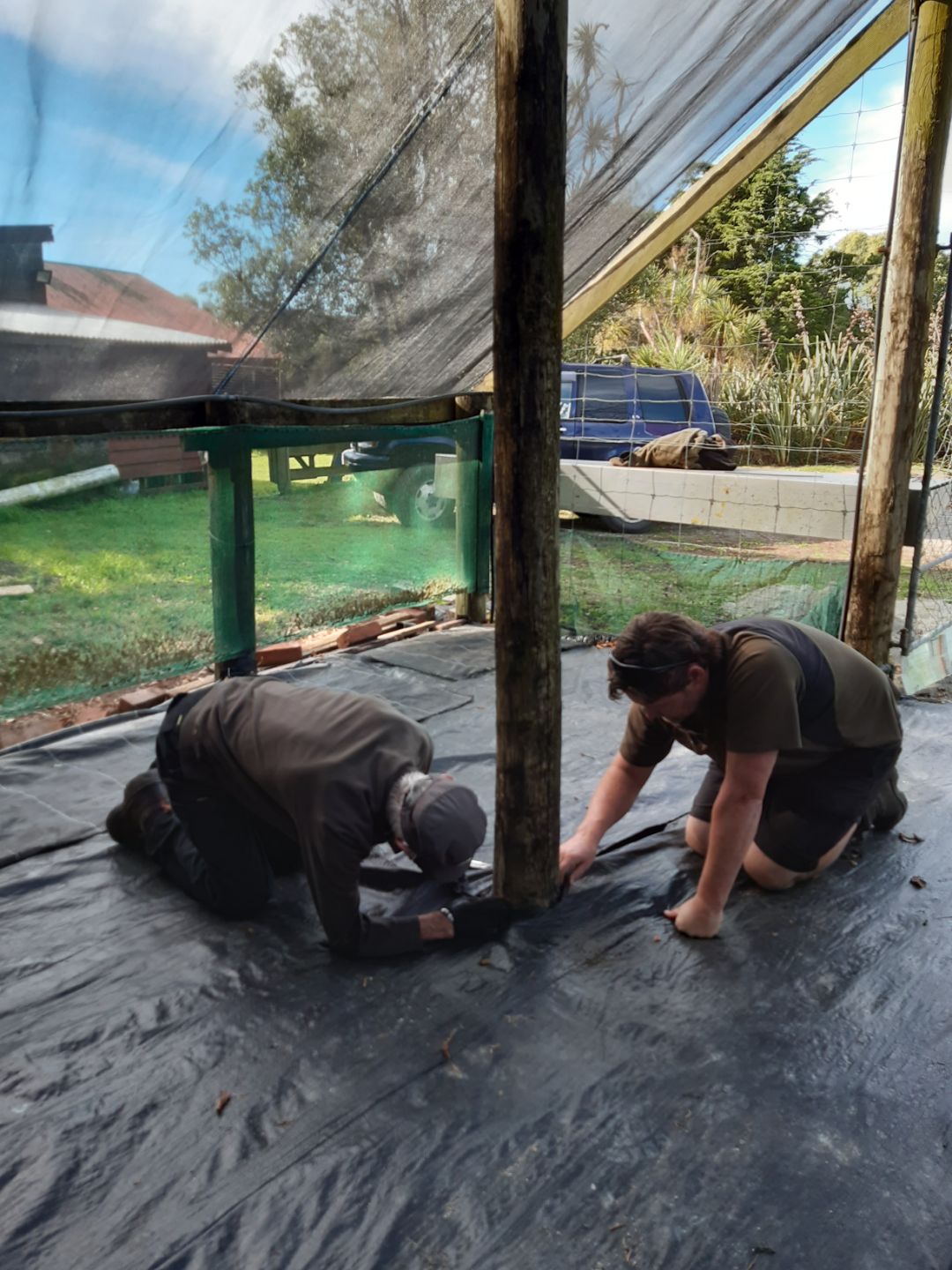
Shade house repairs have been completed with help from Wayne. It meant removing the old shade cloth, replacing it and adding a new floor.
The Beach Rd stormwater drain was planted out by Medbury School year 4 students as part of their service day on 15th May.
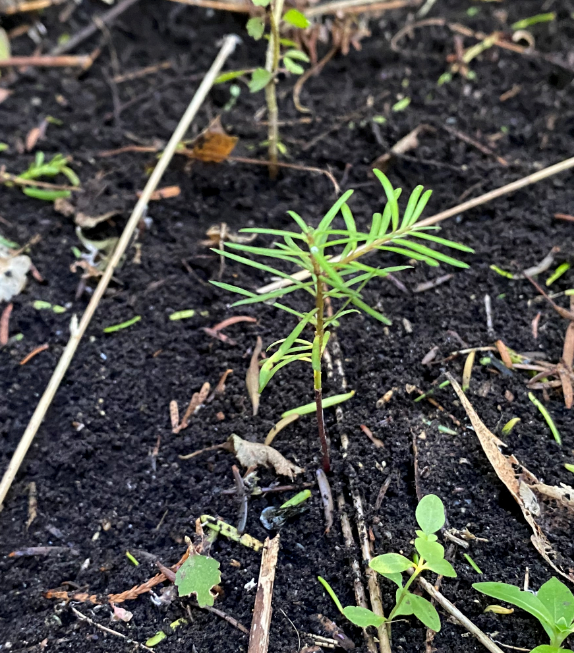
What may be the first naturally seeded matāī was found by Alice on the Angela Stream Walkway in early May.
Alice/Jo & Tom completed the monthly pest animal trap round last month – 17 rats and 2 mice. It’s a good time to target rodents when the natural food supply reduces and they are looking for alternative food sources.
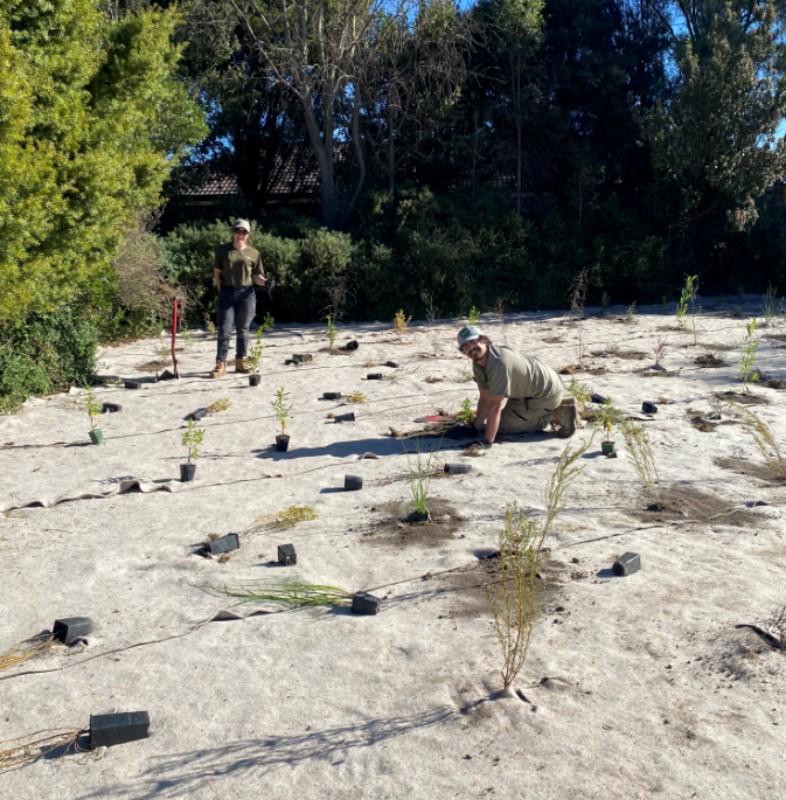
The first of a number of difficult areas to mow along the Angela Stream path has been planted out. In the long term this will reduce the amount of time the amenity ranger team will spend mowing. The first area is near Travis Rd. Wool matting was installed across the sprayed area, then holes cut for planting through the matting.
Excerpts from ranger Matt Rose’s report to the Trust’s board meeting in May.
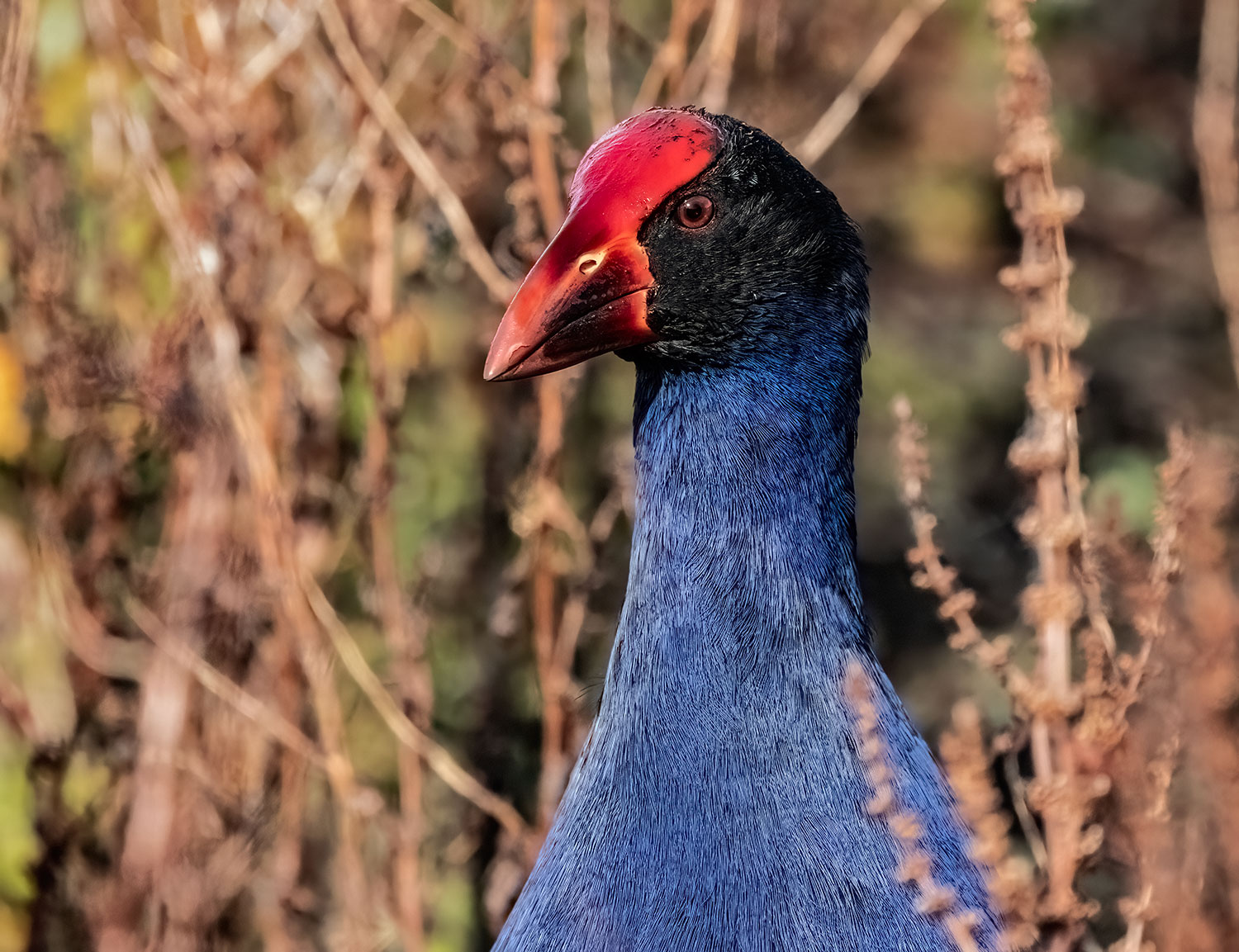
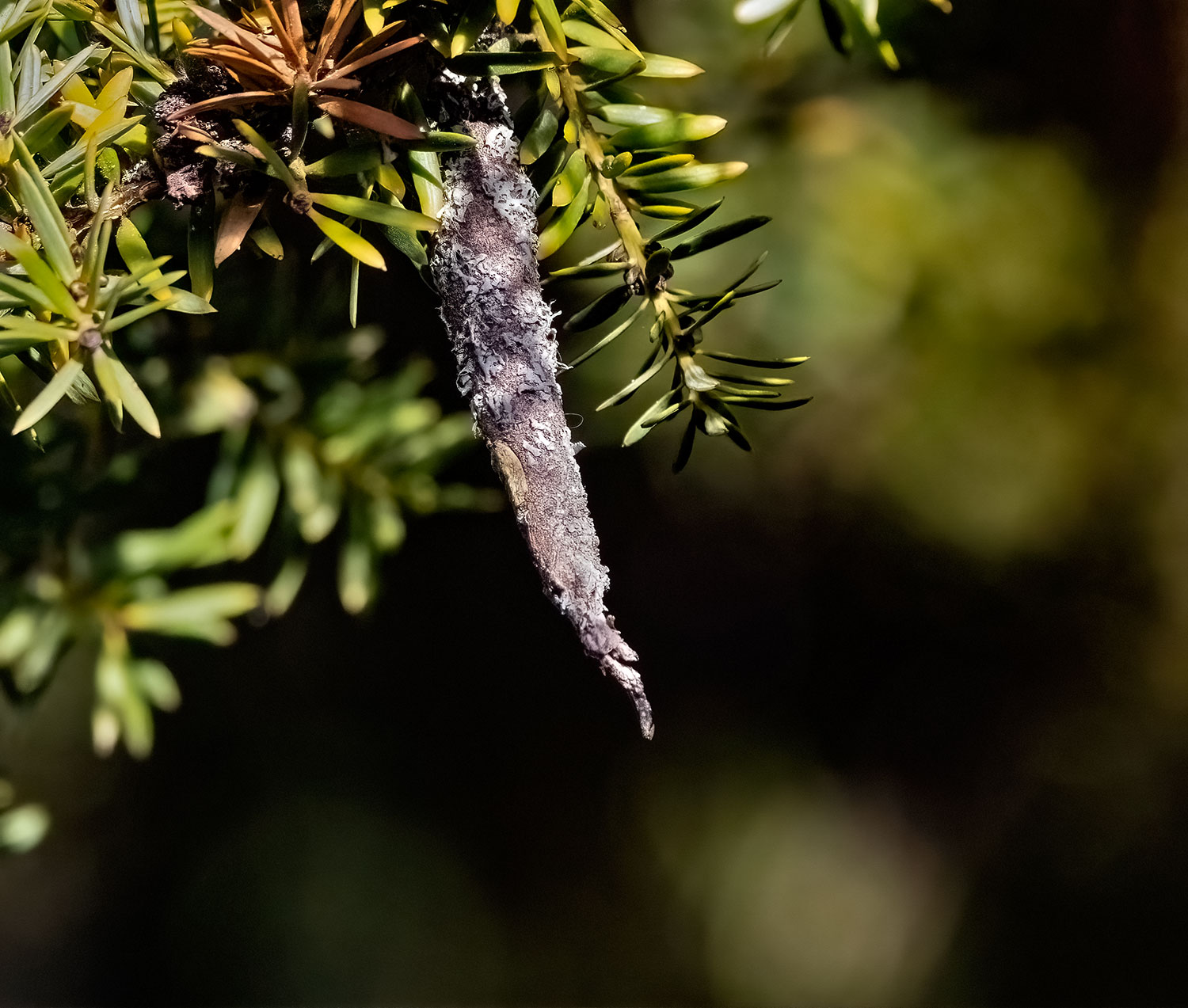
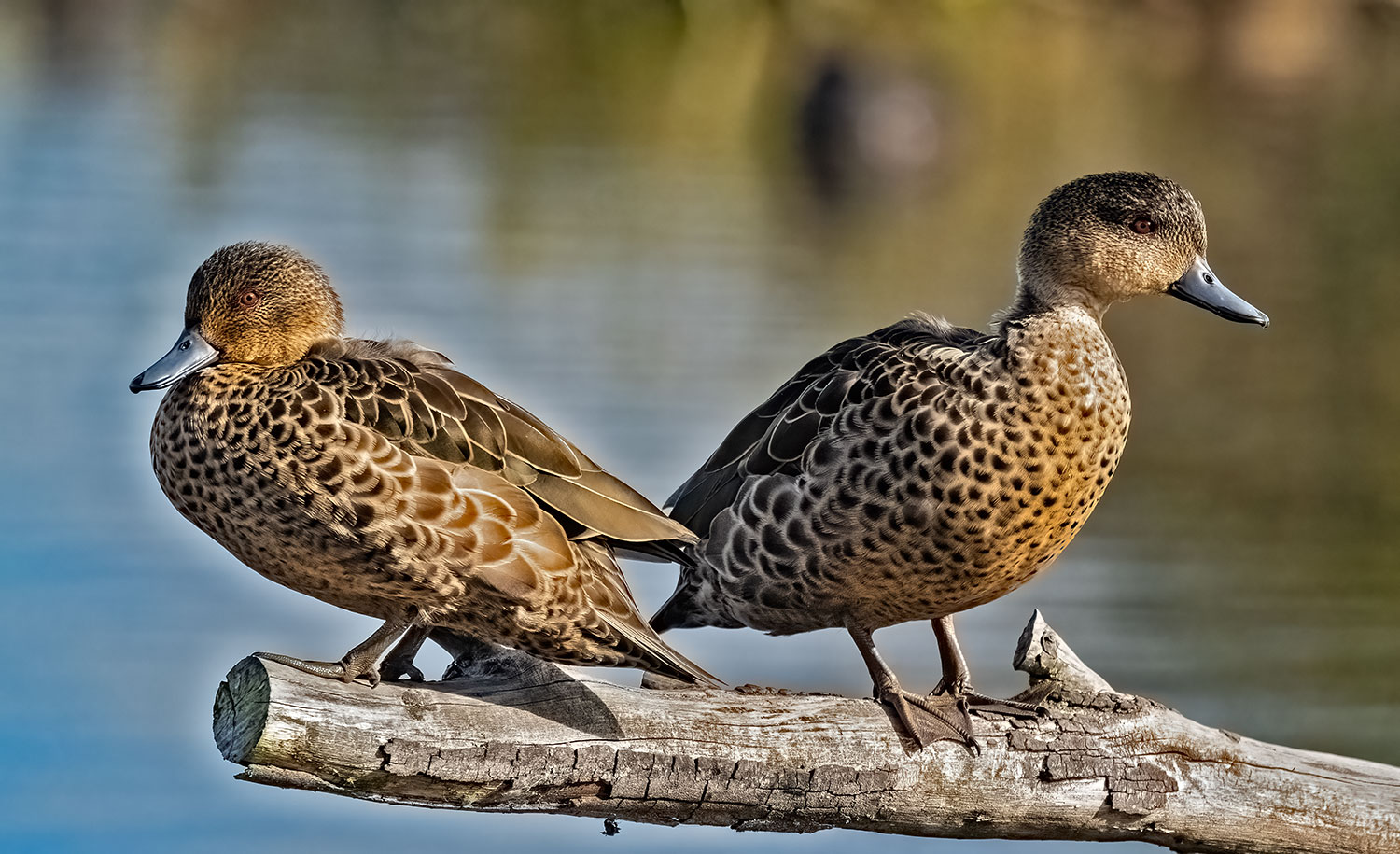
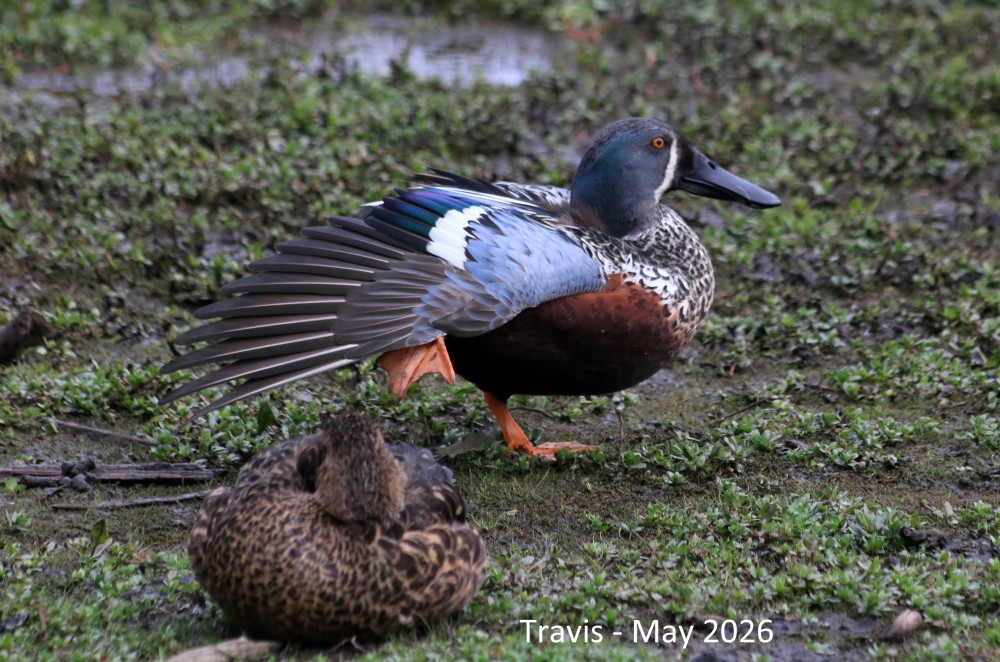
Recent images from Ōruapaeroa Travis Wetland