
All previous newsletters can be found here.
Work Day Reminder, April 12 2025
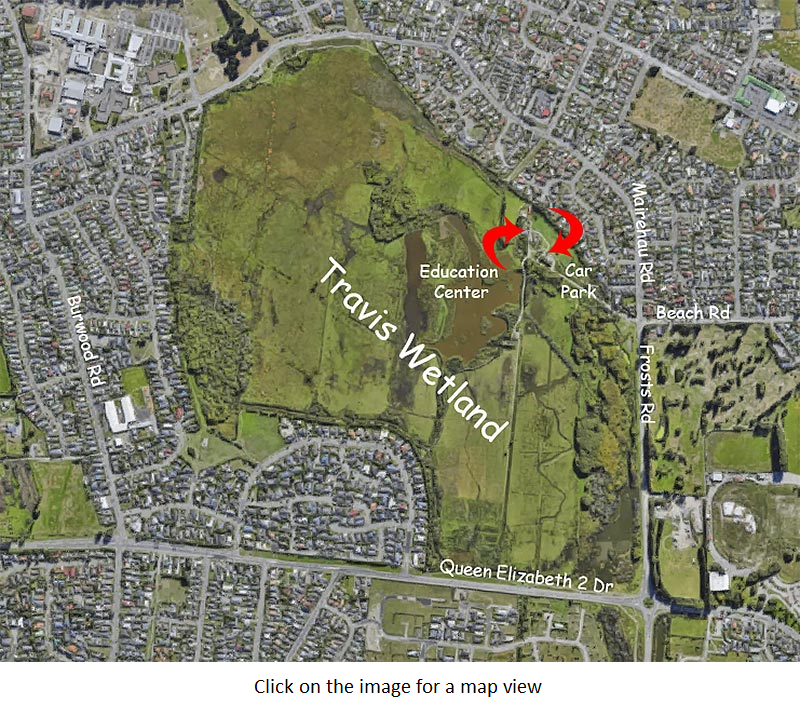
The next monthly work day will be from 9.00am – noon this coming Saturday.
This month we’ll be working somewhere around the wetland yet to be decided.
If you arrive late there will be a notice on the Education Centre door explaining where we have gone and a phone number for you to call if you need more guidance to our location.
All tools provided. Gumboots are recommended, but if you don’t have any we have pairs for loan. Please bring your own gloves if you can, but we have some of them for loan too.
If the weather on the work day is poor and we decide to cancel then an email will be sent by 8am on Saturday morning. So if you think the conditions are marginal, please check your emails.
If you’re reading this on the website and are not on the email list then you can add yourself to it through the form at the foot of the home page. If you change your mind there’s an unsubscribe link in each newsletter.
Note that this month’s work day is a week early
to avoid Easter Saturday
Volunteers welcome
Would you like to volunteer to help with caring for the wetland? We would be interested to hear from you. You may have a community group, workplace or extended family that would like to be involved too. Please contact us via info@traviswetland.org.nz
Latest News
Report on the Previous Work Day, 15 March
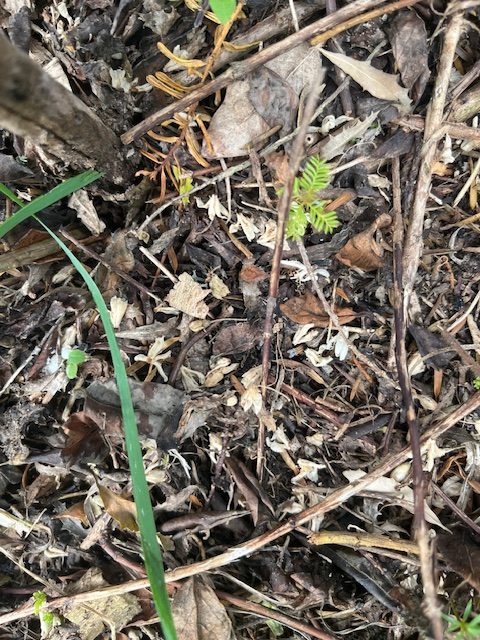
There is much work to do in the wetland in autumn and we divided the 20 volunteers into two groups. One group headed to the southern woods with the prime intention of dealing to a troublesome patch of honeysuckle. This had made prolific growth since our last visit and it was pleasing to knock back about 80% of the growth. Releasing of small trees was also undertaken, after admiring some self seeded kahikatea and tōtara. Colin lamented the presence of patches of Beggars Tick and it is hoped that these can be controlled before they set seed. The name Tick refers to the way the ripe seeds stick to clothing and lead to the spread of the weed.
The smaller second group worked along the Beach Road entrance track. The main task here was Convolvulus removal, particularly from areas of flax near the car park. Scrambling plants of Bittersweet (Solanum dulcamara) with bright red berries were also removed and overgrown small plants were weeded.
Eleanor found tasks for our regular volunteer family who also had fun finding stick insects as well as more serious tasks:
“Our enthusiastic young people enjoyed pulling the culms [stem with seed heads] from wind grass. These will be relocated under trees as ground cover. While they were doing this their sharp eyes spotted a small green spider, which Heath photographed for iNaturalist.
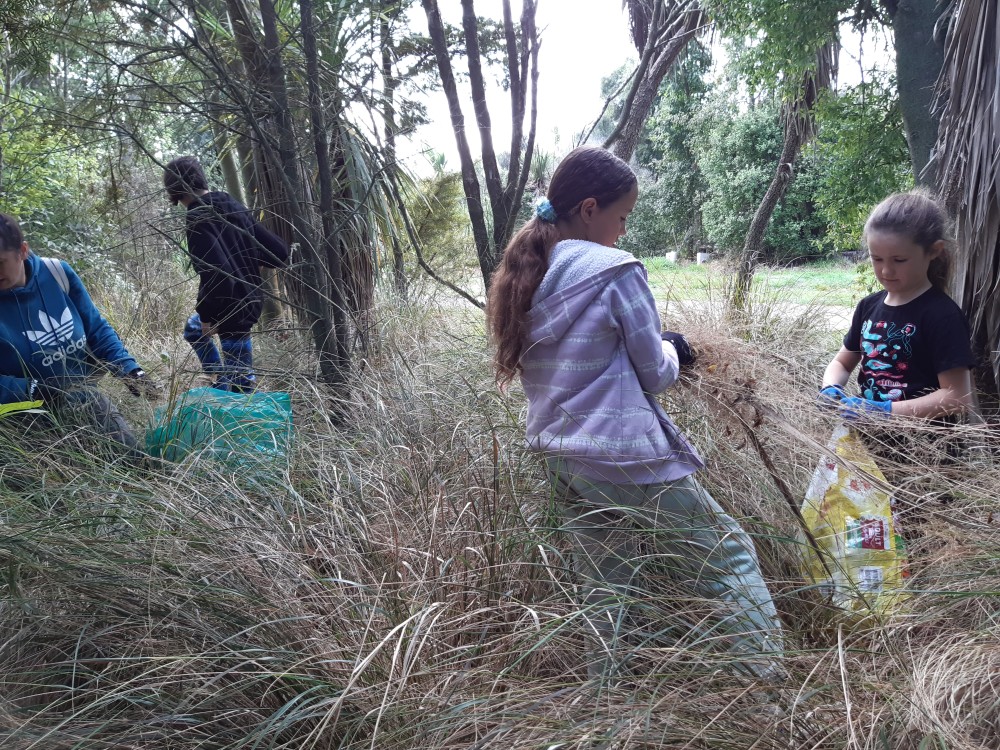
Many thanks to them for preparing morning tea for the volunteers each month. They set up the tables, cut bread, put out glasses for drinks and arrange the food very attractively. Their efforts are much appreciated by the rest of the volunteers.”
The refreshments ended a satisfying morning. Thanks everyone.
Article: Sue Britain and Eleanor Bissell, images: Bruce Craig and Eleanor
Paper Wasps (part 2)
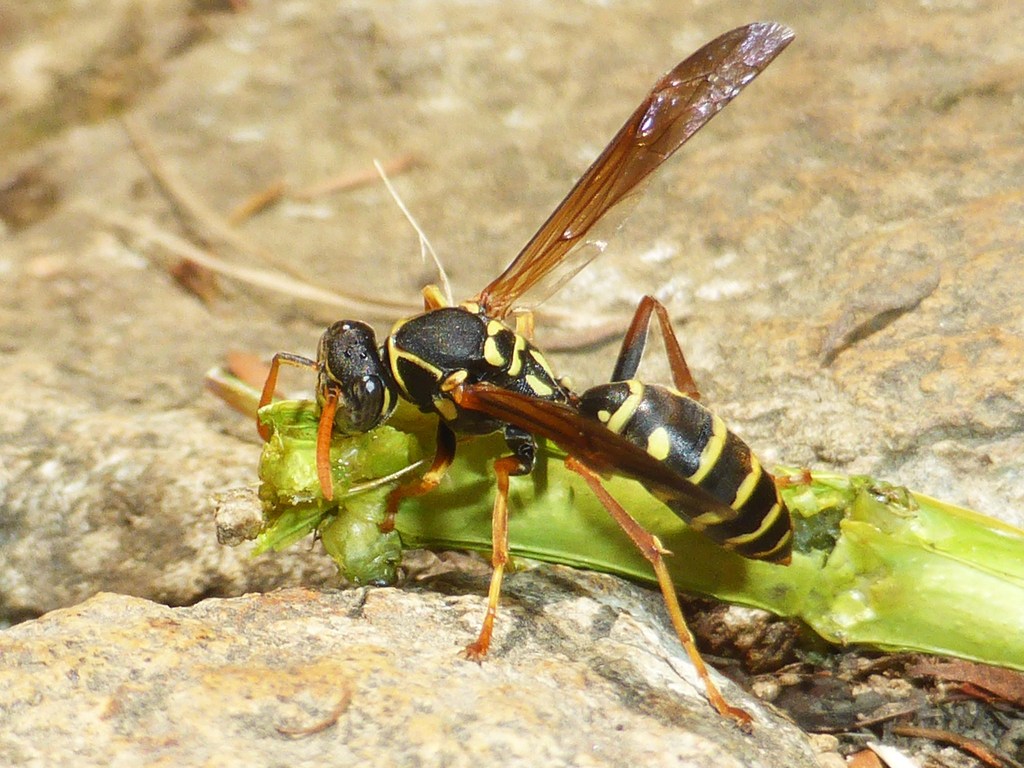
(For part 1 click here) Paper wasps feed on live arthropods such as aphids and caterpillars, and unlike many other predators will happily eat Monarch butterfly larvae. They may also eat fruit, nectar and honeydew. As they eat only live prey they cannot be killed with baits such as Vespex, though luckily nests can be poisoned with insecticides.
Paper wasps may assist with plant pollination and reduction of pest insect populations, but overall they are considered as environmental pests. They like to nest on or near human structures and this results in frequent stings for humans, sometimes resulting in serious reactions. Paper wasps have no natural enemies in NZ and lack of competition results in high arthropod losses, particularly caterpillars. For example, at Travis Wetland this could have a detrimental effect on the native Winter Copper butterflies introduced into a Muehlenbeckia patch in 2022. Paper wasps may also prey on insects introduced for biocontrol purposes. An example of this is the Honshu White Admiral butterfly released to control our persistent weed Japanese Honeysuckle.
It will be interesting to watch the progress of paper wasp populations at Travis and to consider what control methods may be possible in the future.
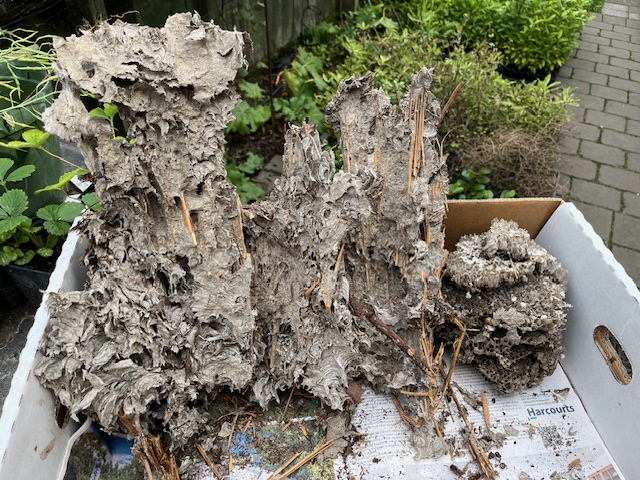
For comparison with the tennis ball sized paper wasp nest pictured in the newsletter last month here’s an image of a Vespula wasp nest found at the base of a Carex sedge that Bruce dealt to recently. It was in a Mānuka seeding area near the Clarevale Reserve.
Article: Sue Britain, images: As credited.
Whio Forever

You won’t see one of these precious taonga at Travis, but they are very much worth learning a bit about. Last month was Whio Awareness Week and this page on the DOC website has lots of great information and images of whio. They are found in remote wild places but there is an observation on iNaturalist from the Bealey River not far from the Devils Punchbowl waterfall! You’re more likely to see one in the upper Otira or upper Bealey valleys. They are not as cryptic and shy as many other endangered species.
City Nature Challenge – 25-28 April
A quick reminder that the City Nature Challenge is later this month. The challenge is to photograph and record as much of our city’s biodiversity as possible! The Christchurch City Council is holding some events to support the challenge, including this one that features Morgane Merien of the Canterbury Museum, who spoke at the trust’s AGM last year.
Observing the Natural World: Dr Morgane Merien
Drop in to see live stick insects, cool museum specimens, sea creatures and learn about the City Nature Challenge and iNaturalist app.
Meet Dr Morgane Merien from Canterbury Museum and hear how you can help observe the natural world around you.
We encourage you all to get out and about, photograph and upload anything interesting you see during the four days of the challenge and see if we can beat last year’s record of 20,310 observations! It’s a great way to record what’s living in your park.
More information on how to get involved is here.
Recent images