

All previous newsletters can be found here.
Work Day Reminder, August 16 2025

The next monthly work day will be from 9.00am – noon this coming Saturday.
This month we’ll be doing some planting at Brooker Ave off New Brighton Road so please go there directly. Look for signs marking a turnoff from Brooker Ave to the right (eastwards). If you arrive late there will be a notice on the Education Centre door explaining where we have gone and a phone number for you to call if you need more guidance to our location.
All tools provided. Gumboots are recommended. If you don’t have any we have pairs for loan at the Education Centre. Please bring your own gloves if you can, but we have some of them for loan too.
If the weather on the work day is poor and we decide to cancel then an email will be sent by 8am on Saturday morning. So if you think the conditions are marginal, please check your emails.
If you’re reading this on the website and are not on the email list then you can add yourself to it through the form at the foot of the home page. If you change your mind there’s an unsubscribe link in each newsletter.
Volunteers welcome
Would you like to volunteer to help with caring for the wetland? We would be interested to hear from you. You may have a community group, workplace or extended family that would like to be involved too. Please contact us via info@traviswetland.org.nz
Latest News
Report on the Previous Work Day, 19 July
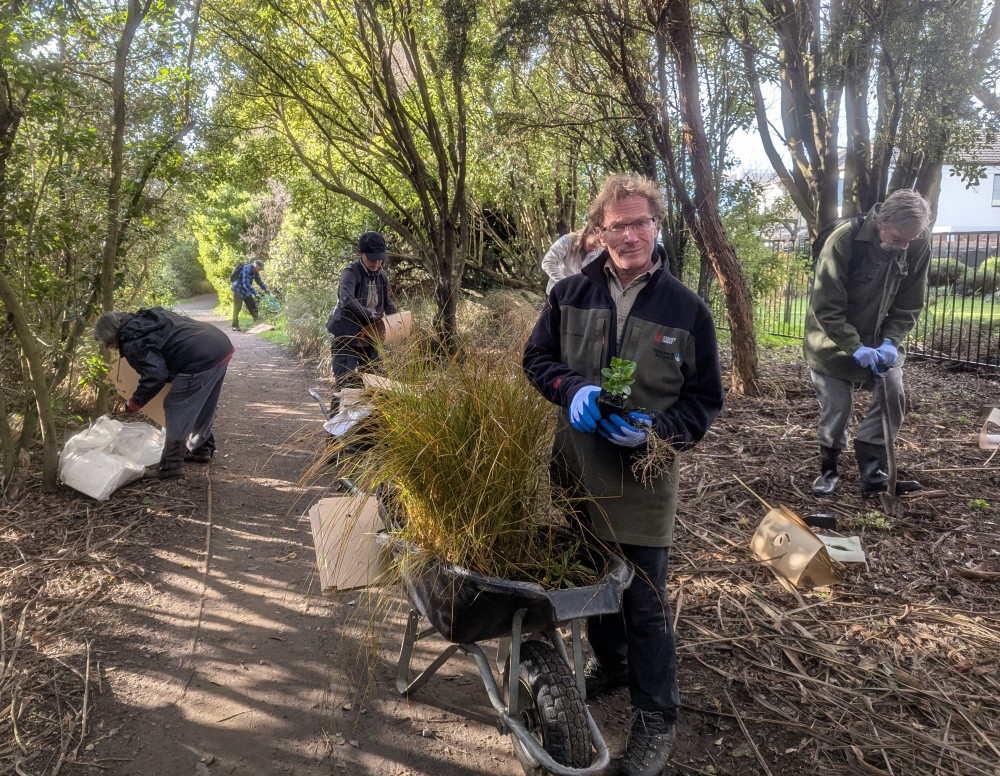
This month we were working beside the track close to Travis Country Drive. Fifteen volunteers turned up on a fine morning to help tidy up this area, which is close to housing.
Our warm up task was to help disperse some small logs from recently felled lacebark trees. These will rot down and enrich the soil.
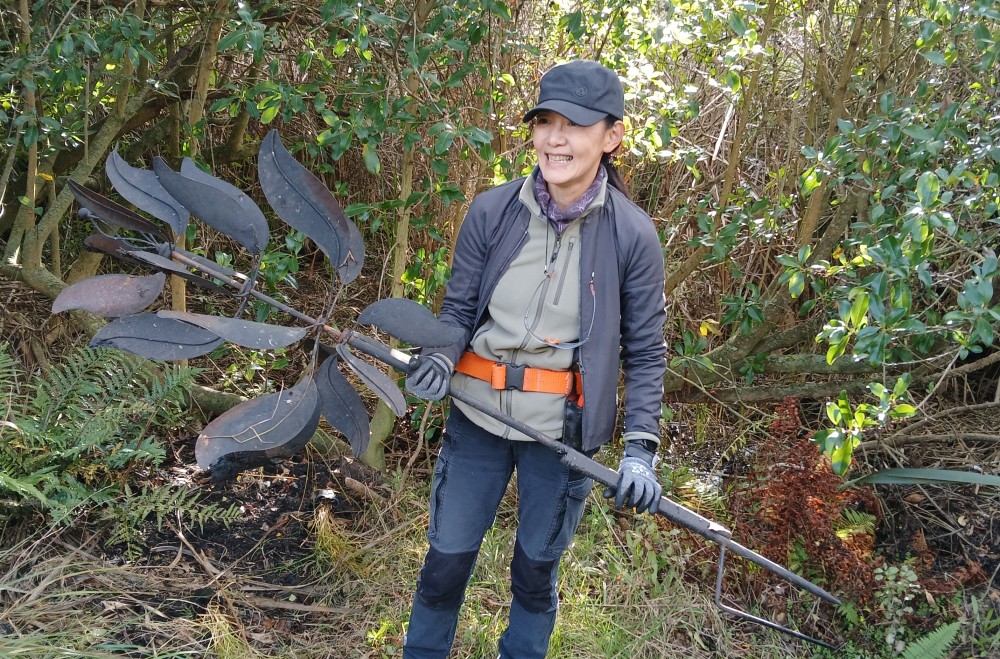
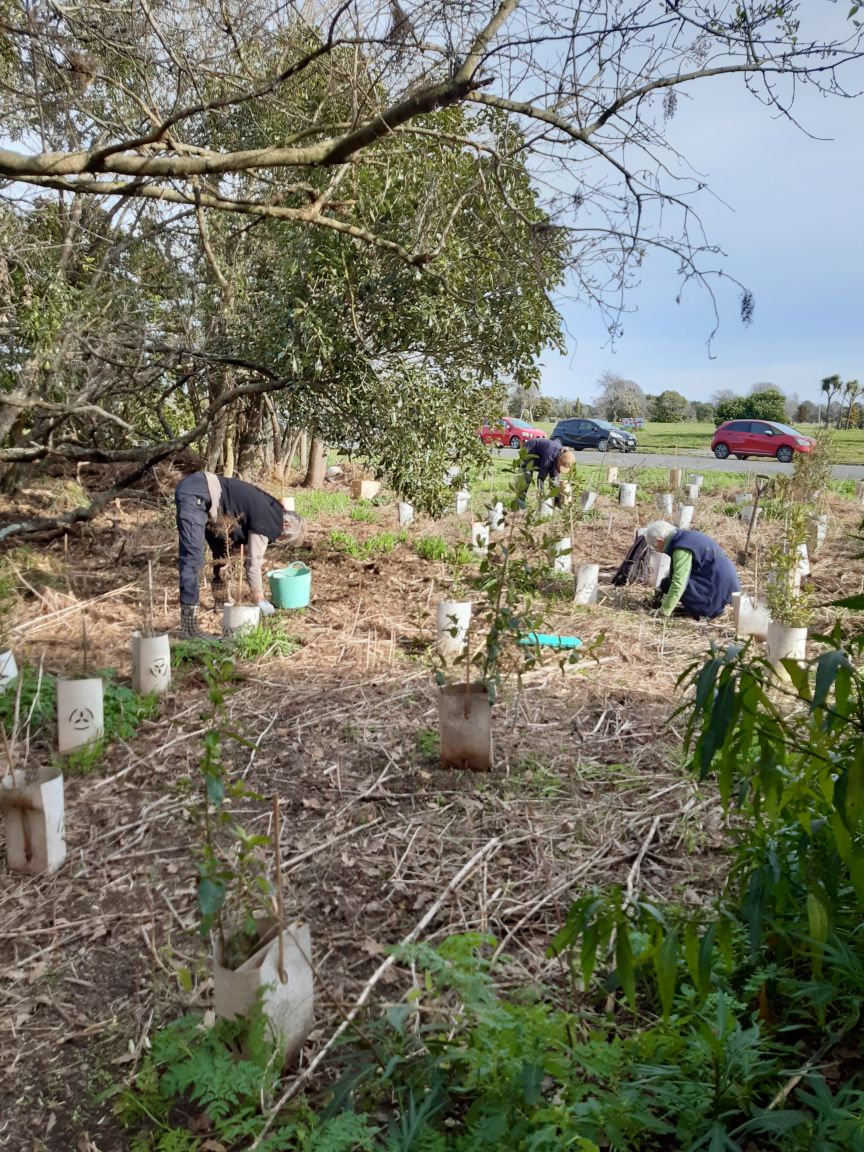
Next up was planting about 75 plants to fill in some gaps and slow weed growth. We put in a variety of species including grasses, sedges, small shrubs and trees. Along the way we did some weeding too, removing nightshade, willow and other non-natives. Mika found the largest weed of the day, which turned out to be a discarded garden ornament.
We were pleased to see plenty of young seedlings of lacebark, pittosporum and a large patch of thriving young tōtara.
As usual refreshments at the Ed Centre were greatly appreciated.
Thanks to all who attended.
Article: Sue Britain, images: Dave Evans and Sue Britain
Black fronted dotterel, an elegant visitor
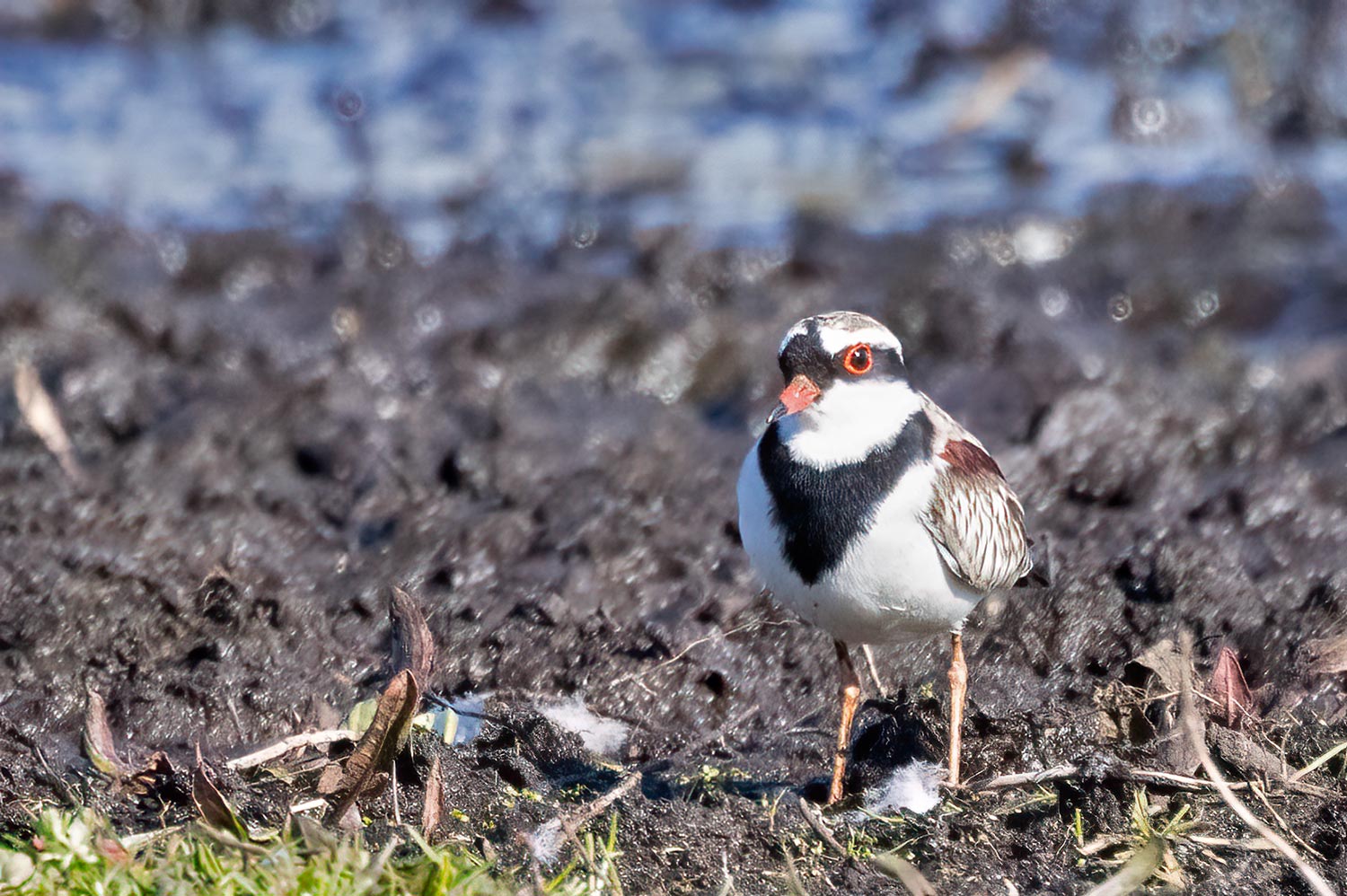
The Black fronted dotterel or Charadrius melanops, as the scientists call it, is a relative newcomer to Aotearoa. This elegant wader arrived from Australia in the 1950s, with the first nest seen in Hawkes Bay in 1962 then moving south to arrive in North Canterbury around 1956 with the first South Island breeding being reported in 1970 (Opihi River, Sth Canty). Today its range spans much of the country, down the east coast from Auckland to Southland, with Canterbury’s braided rivers being one of their strongholds.
At Travis we get a visit from these pretty little birds every couple of years or so. Sometimes they stay around for a few weeks, other times they are just moving through. Currently there are at least 2 of them at Travis.
Keep an eye out for them on the fringes of ponds. Behind the info centre or the paddock behind the stockyards are good places to scan. As always the habitat is constantly changing with the sun, wind and rain, their preferred restaurant moving with it. Good luck finding one of these elegant little birds, if you’ve never seen one the hunt will be worth your while.
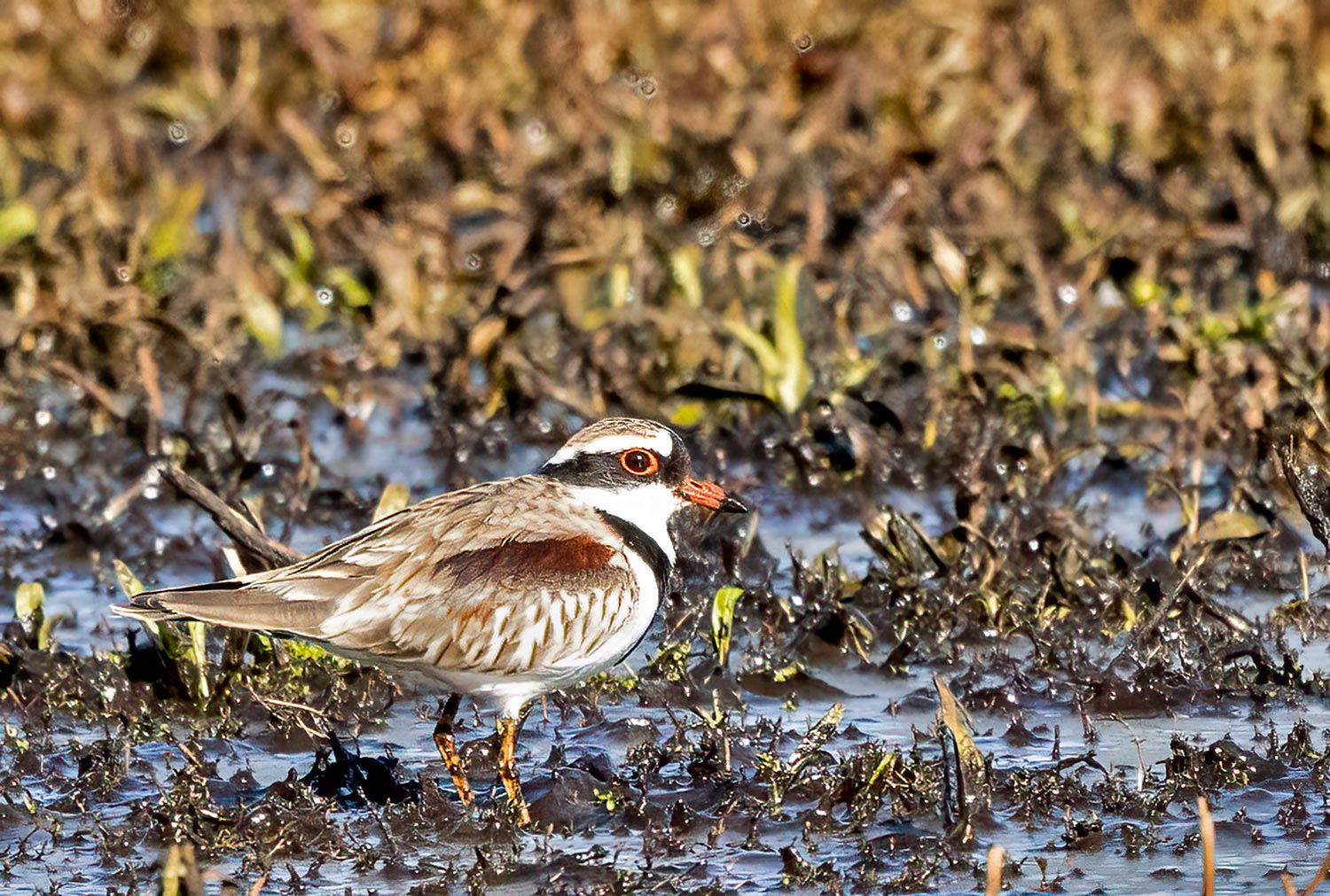
Its size is modest, around 17 cm from beak to tail and it has an alert stance. You often see the flash of orange from it’s bill or legs before you spot the bird. Nationwide, the black-fronted dotterel’s numbers are estimated in the low thousands — a robust figure compared to some of our endangered shorebirds. But in a world of shrinking habitats, no bird’s fortune is guaranteed. In Canterbury, where water extraction, river engineering, and invasive weeds have changed the nature of our braided rivers, the dotterel’s preferred stony flats are under constant pressure. While they adapt better than some species to modified habitats, they still need undisturbed stretches to feed and breed. Protecting their nesting grounds, which they share with several other species ( Wrybills, Black fronted tern, stilts and oystercatchers among them), protects not only them but a whole ecosystem of inverts, fish, plants etc.
Article and images: Grahame
Wonderful Wednesday Weeders
In spite of bitter cold, wind, severe frost and rain too [very unsuitable weather for working outdoors], the Wednesday group have continued operating!
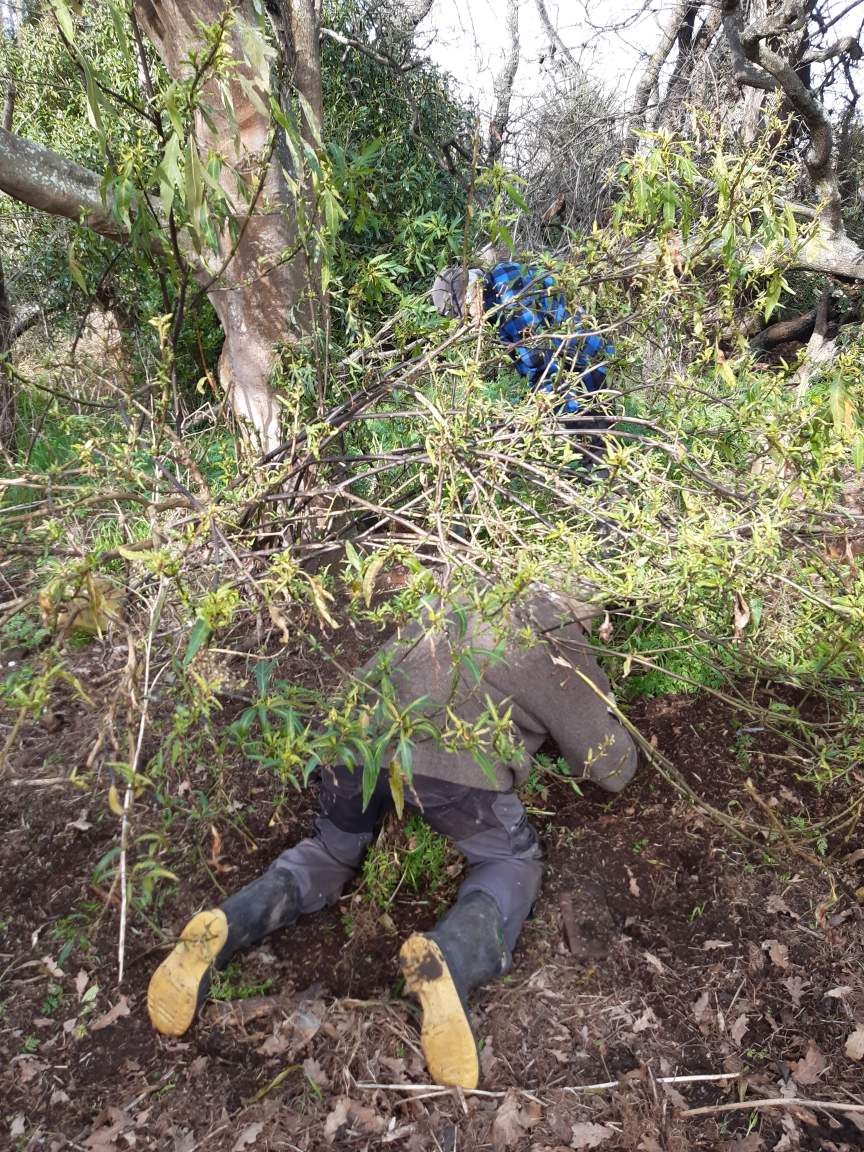
Various areas have been well tended by participants giving ongoing attention. Weeds have suffered in the targeted areas, which includes along Anzac Drive.
Special mention of three of our volunteers who have been managing ferns. One has successfully taken Asplenium ‘babies’ from the adult plant and grown them on in the shade house – now they are planted out and look very healthy.
Unfortunately, some light-fingered person, or persons, keep removing punga, donated by two of our volunteers.
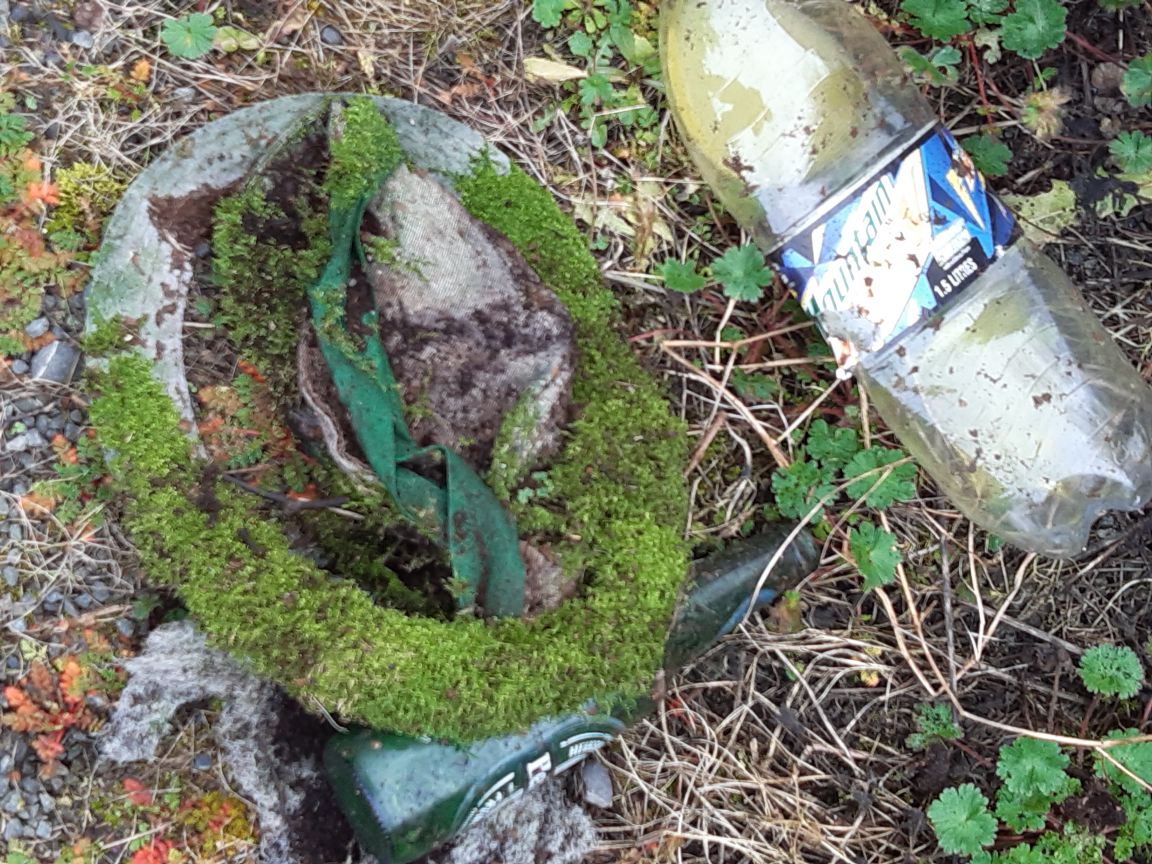
Removal of piles of branches cut by our busy Rangers revealed rubbish biffed over the boundary fence. Among one lot included a hat which has moss growing around its brim! Always something to laugh about!!!
Thank you for your dedication, lovely group!
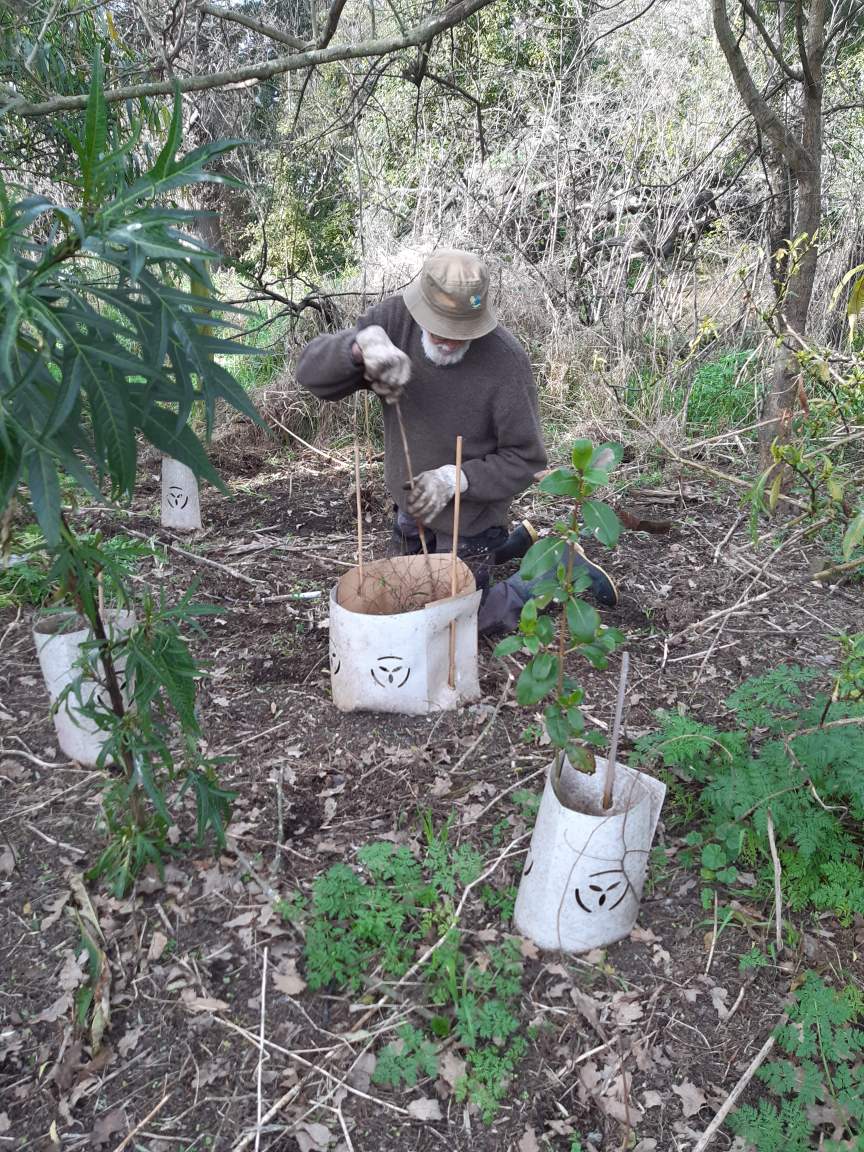
Article and images: Eleanor Bissell
Recent images
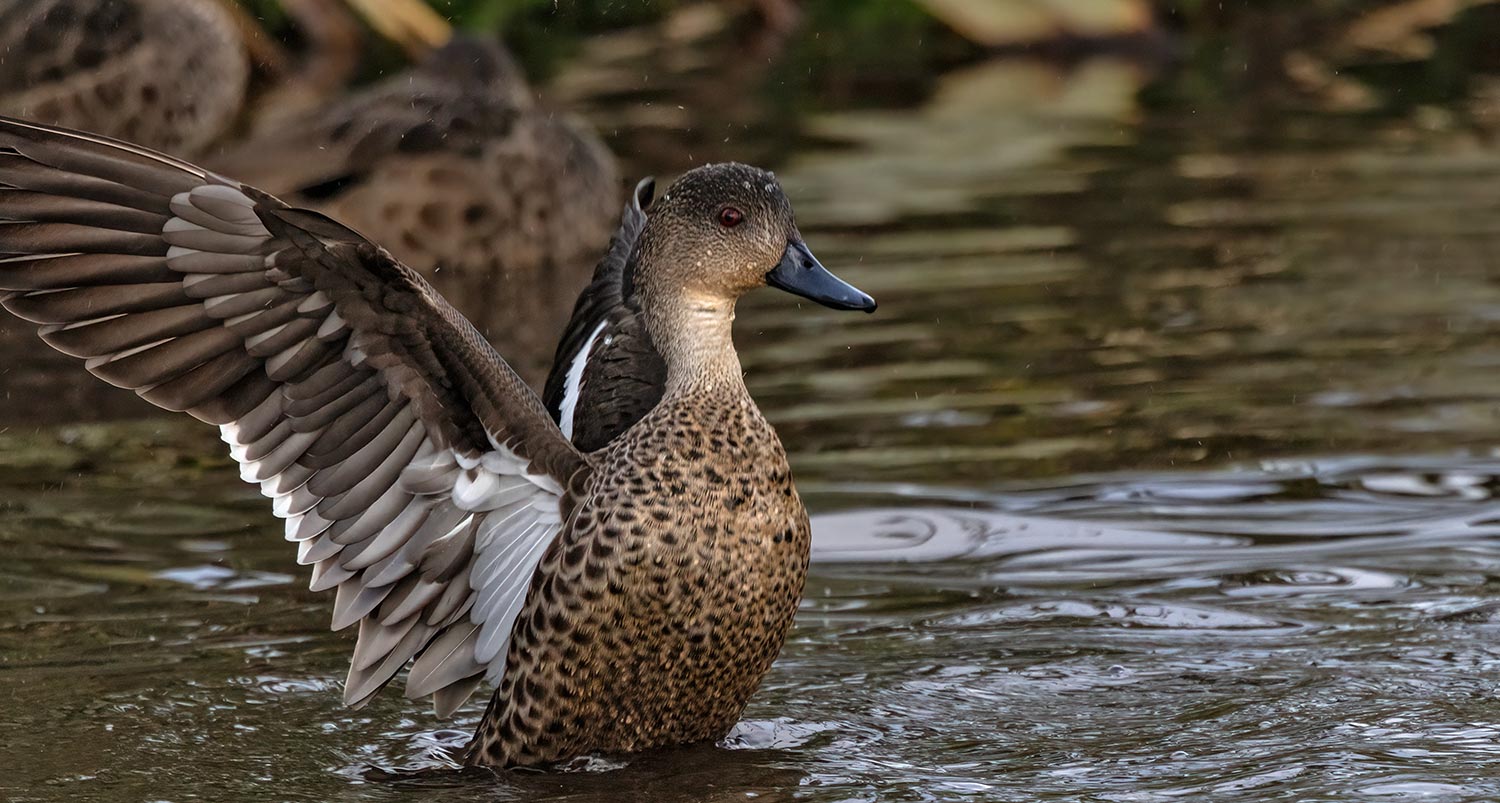
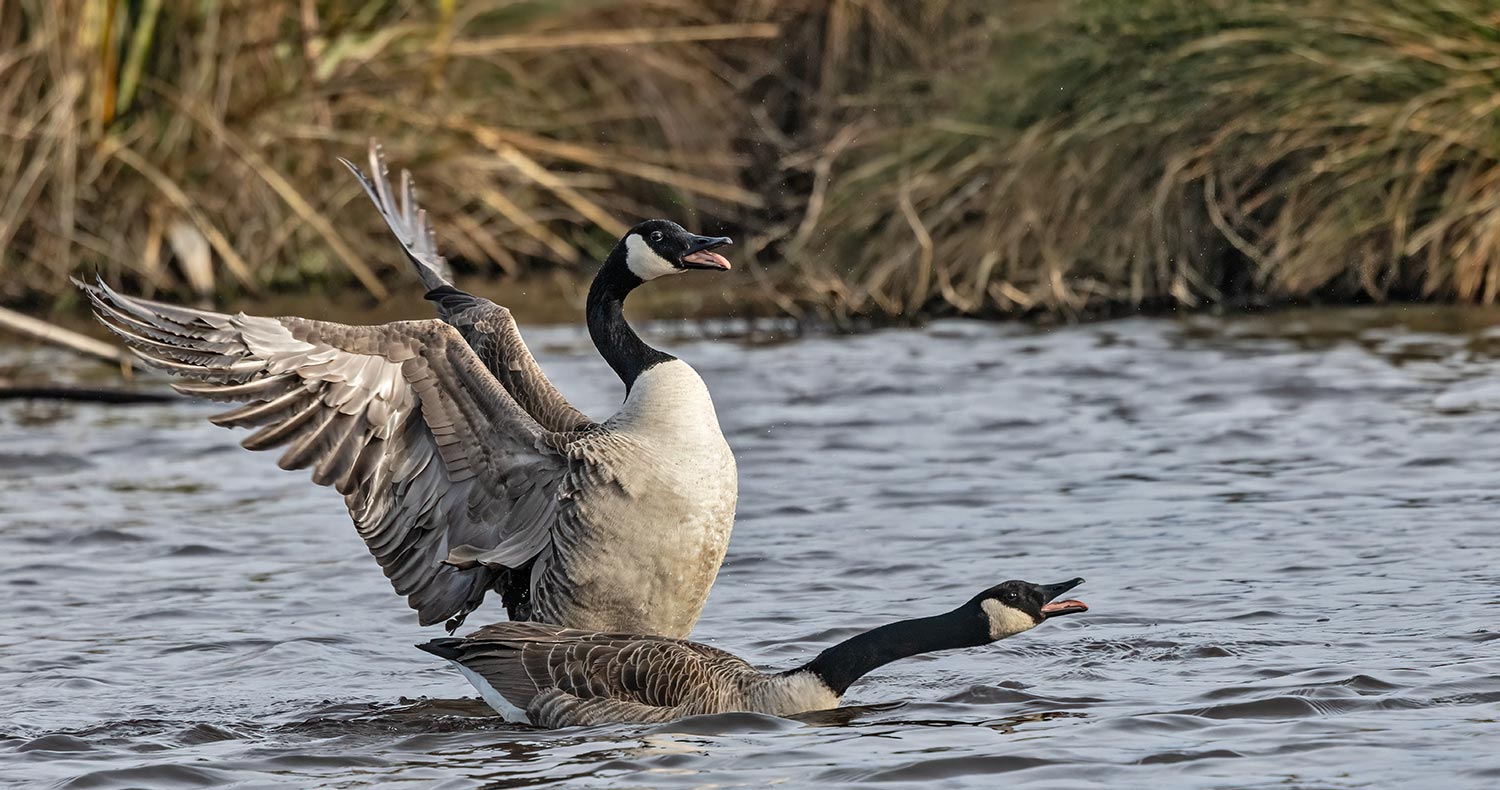
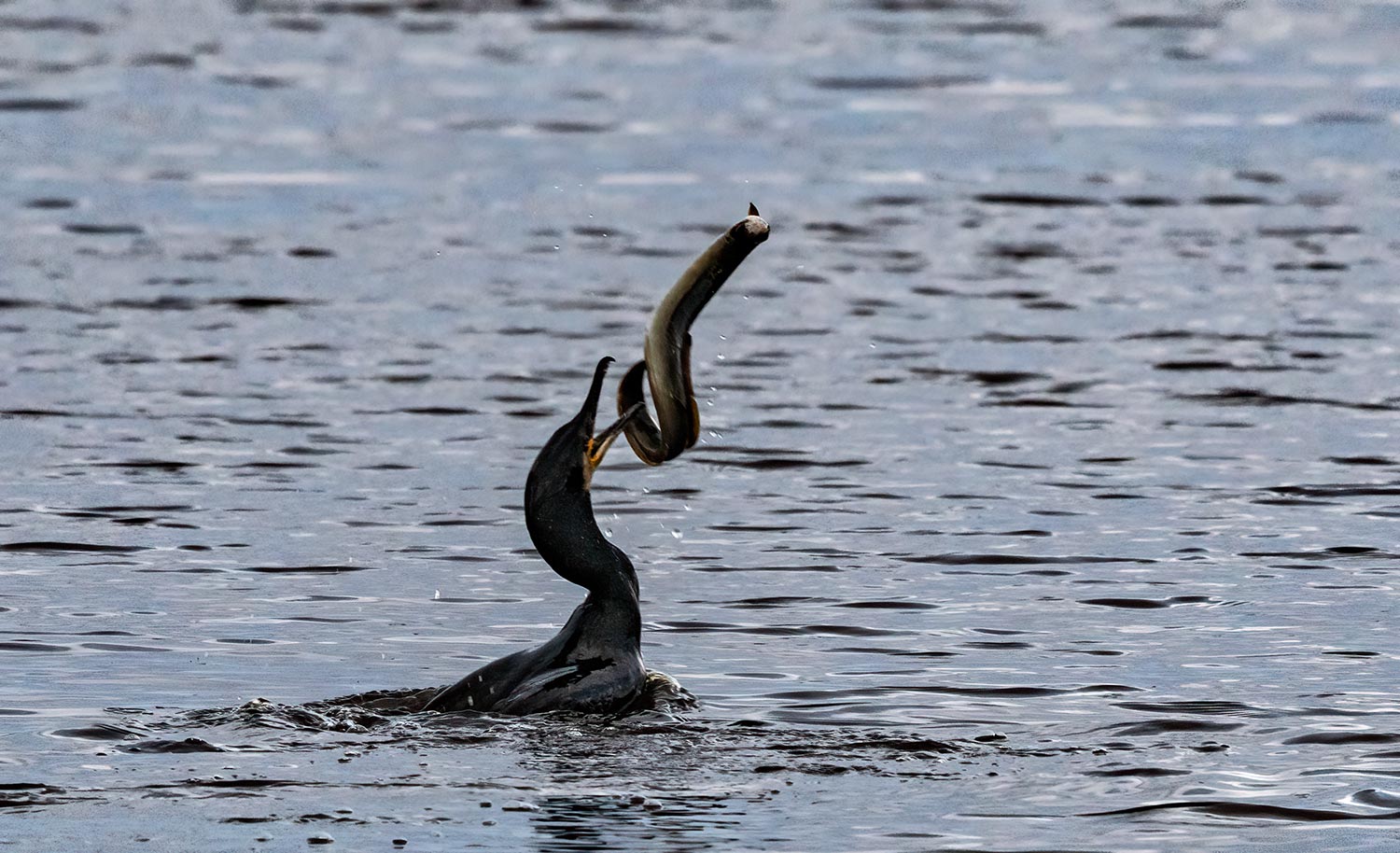
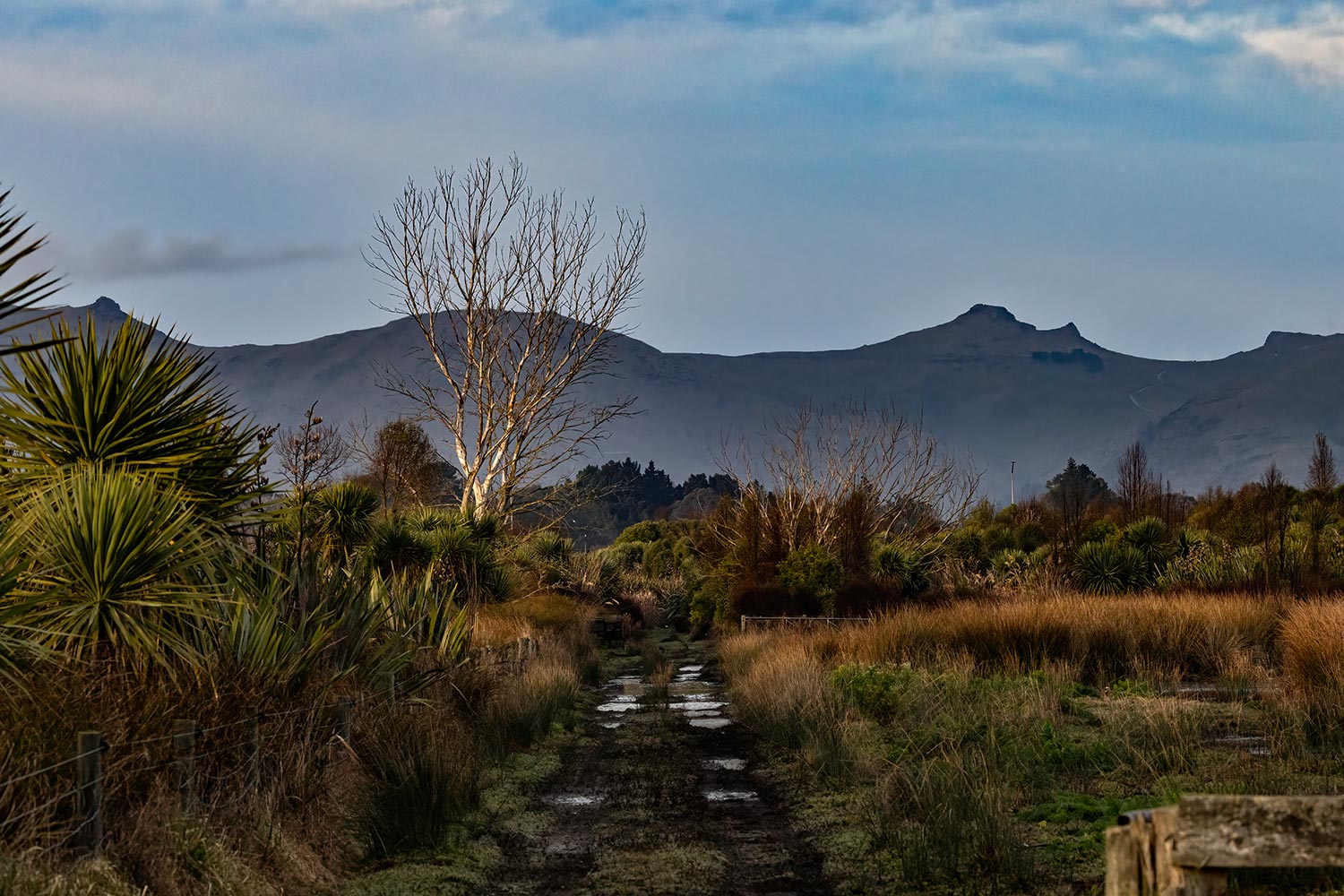
All images by Grahame