
All previous newsletters can be found here.
Work Day Reminder, December 21 2024
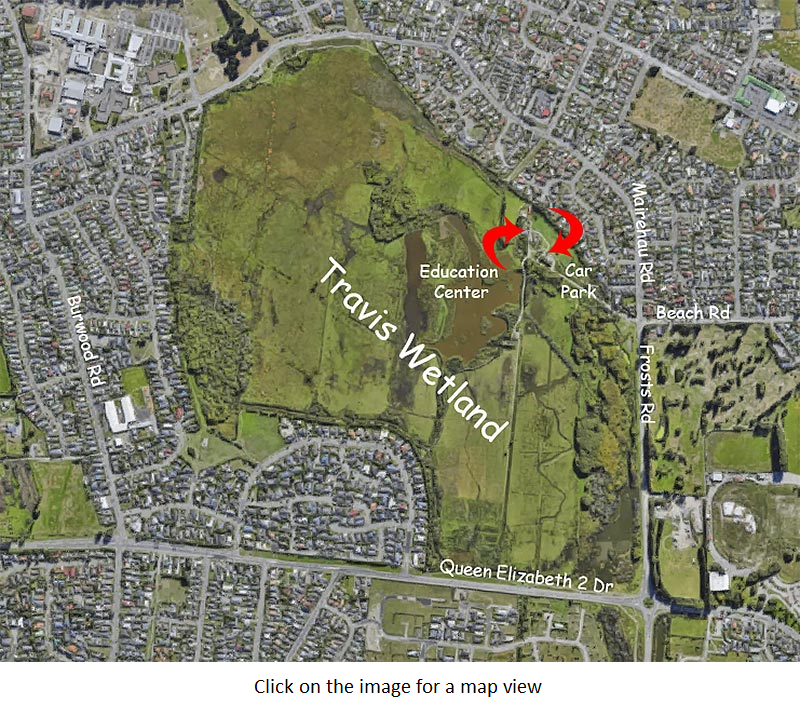
The next monthly work day will be from 9.00am – noon this coming Saturday.
This month we’ll be doing a bit of planting and releasing plants from weeds in the Southern Woods area the wetland. Approaching midday we will adjourn to the Education Centre for an end-of-year BBQ.
If you arrive late there will be a notice on the Education Centre door explaining where we have gone and a phone number for if you need more guidance to our location.
All tools provided. Gumboots are highly recommended, but if you don’t have any we have pairs for loan. Please bring your own gloves if you can, but we have some of them for loan too.
If the weather on the work day is poor and we decide to cancel then an email will be sent by 8am on Saturday morning. So if you think the conditions are marginal, please check your emails.
If you’re reading this on the website and are not on the email list then you can add yourself to it through the form at the foot of the home page. If you change your mind there’s an unsubscribe link in each newsletter.
Latest News
Report on the Previous Work Day, 16 November
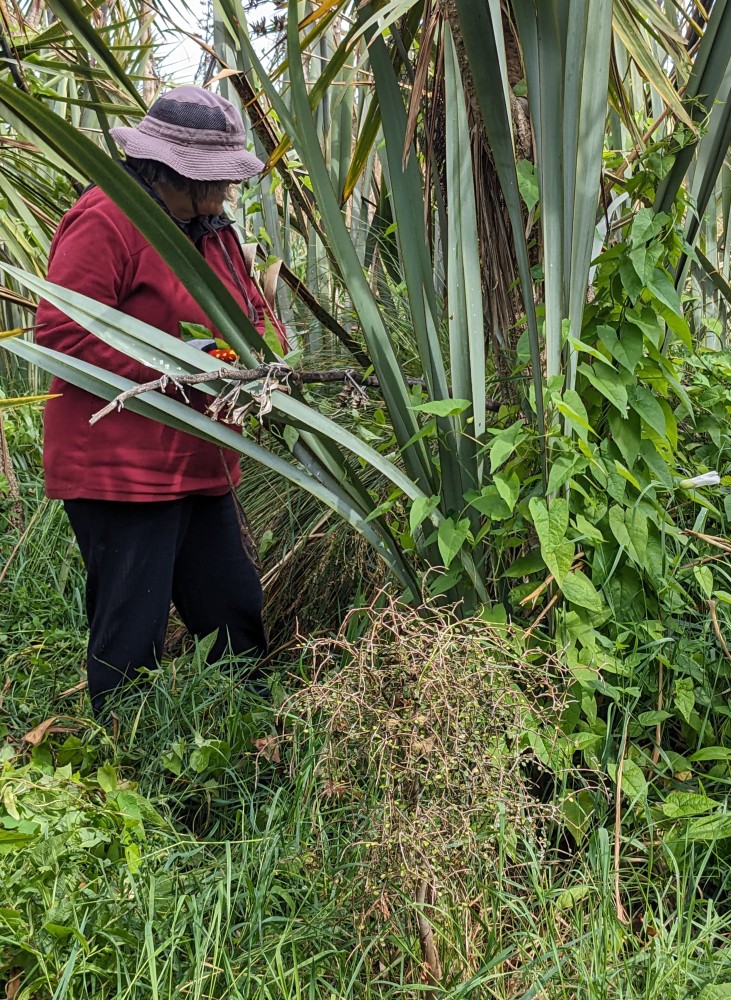
The morning was cool and cloudy with a forecast for rain but a dozen or so keen volunteers still turned up ready for work.
Our main task was removing convolvulus from plantings near the bird hide. Wednesday volunteers work repeatedly in this area and it was good to lighten the load for them. Convolvulus was present throughout and particularly bad on trees and flax towards the edge of the pond. A variety of other weeds were also cleared as necessary to release recent plantings.
Besides weeding we also planted some native clematis and passionflower, which we hope will grow up existing trees and enrich the area.
Soon after 11 am the rain arrived and there was soon a soggy procession back to the Education Centre for well deserved refreshments. Thanks to all who came along.
Article: Sue Britain and images: Dave Evans
Envirokids at Ōruapaeroa Travis Wetland
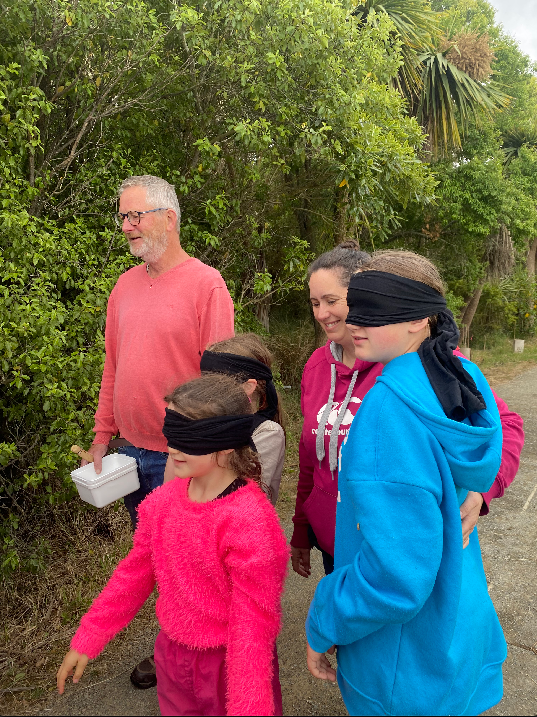
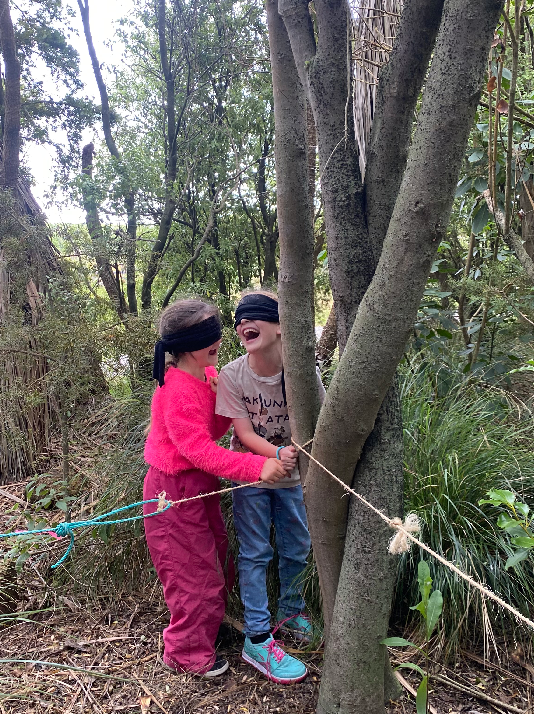
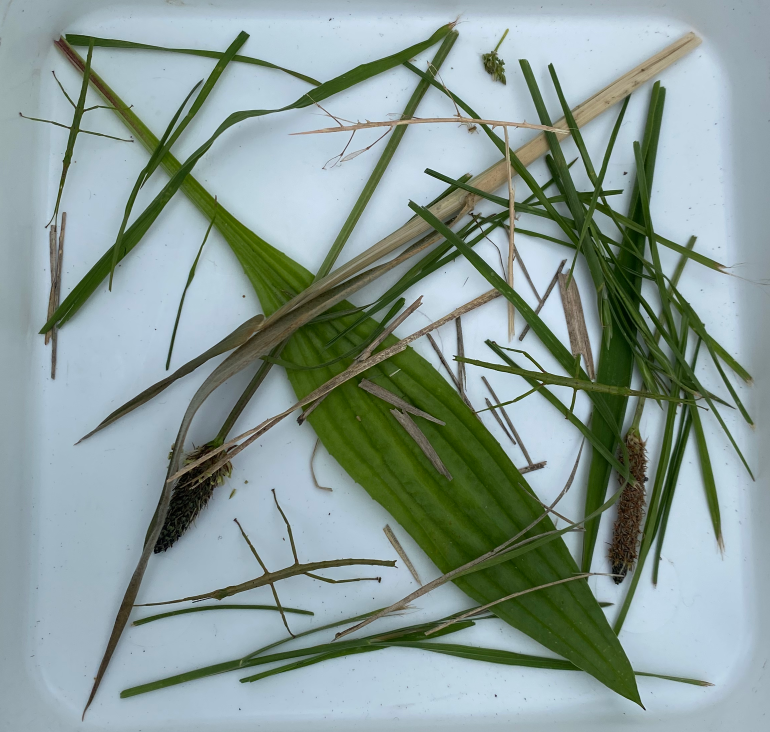
A pleasant Summer morning saw the group looking for ‘munched’ objects along the pathway to the Millenium Forest. Munchers everywhere, in the paddocks, at the Bird Hide, more munchers at the eel site! All who wanted to were blindfolded and felt their way through part of the forest along a rope trail, escorted by a sighted guide.
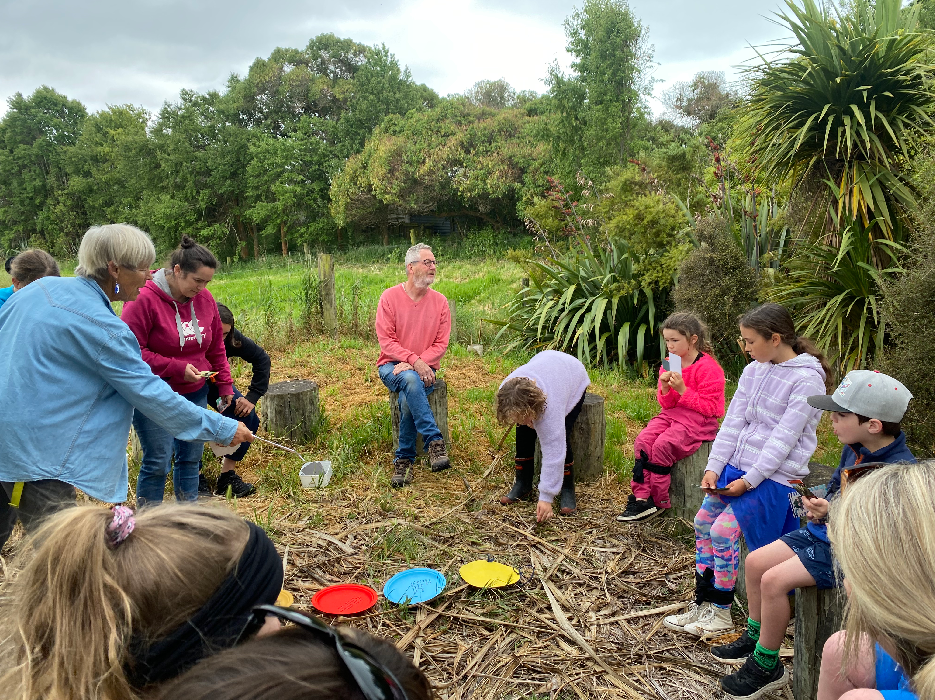
Back at the Learning Circle we discovered that the sun is the source of energy for all living things. We learned about the food chain. Predators came in to this as well.
The value of having open places such as Travis Wetland was obvious.
Article: Dave Evans, images: Jolie Sarginson
Pōkaka (Elaeocarpus hookerianus)

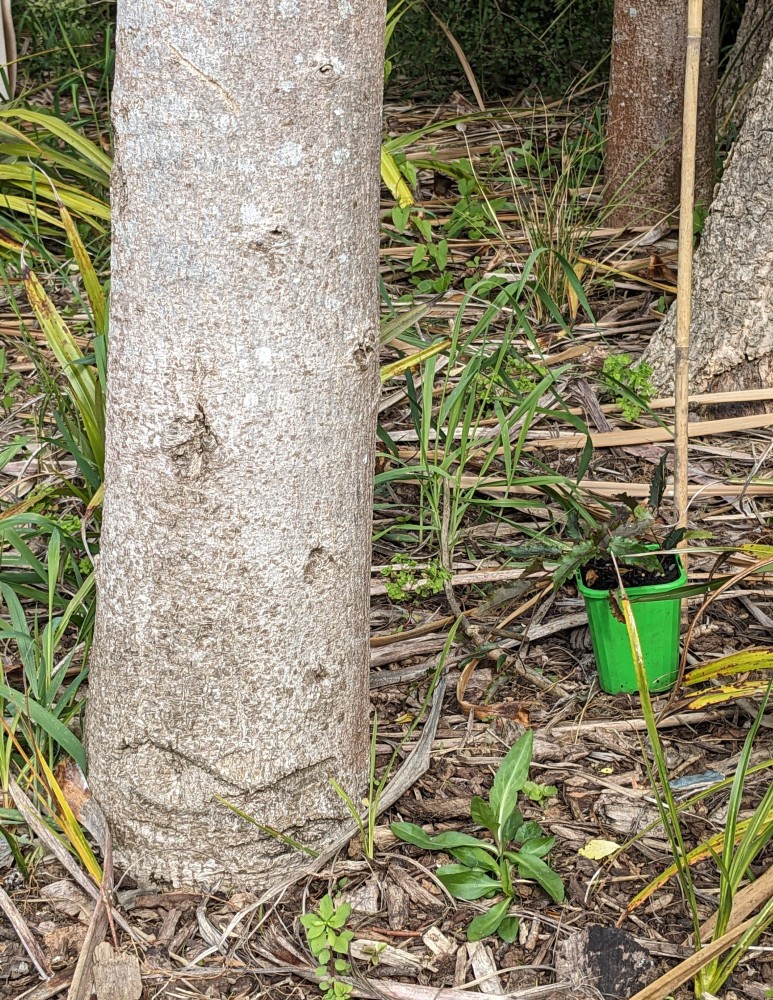
During our recent workday Colin Meurk was pleased to discover a pokaka seedling beneath a mature tree planted in 2000.
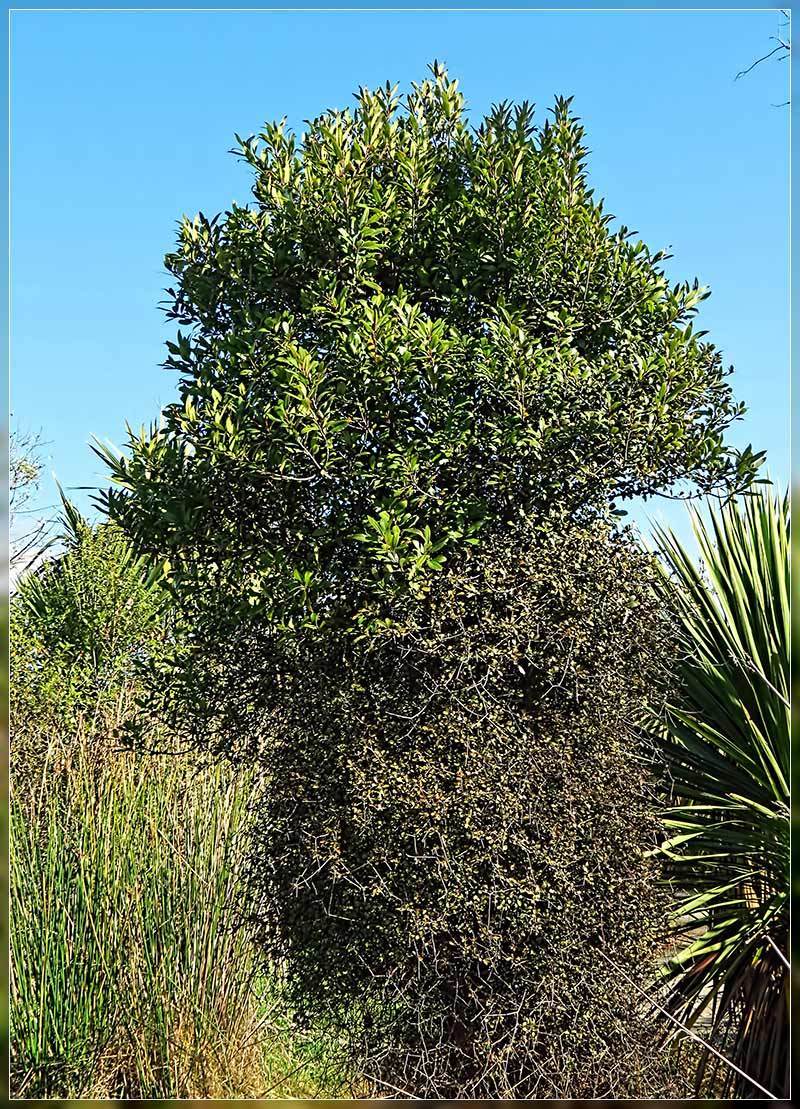
The seedling has large seed leaves with red veining. These leaves provide the first energy for the new plant and subsequent leaves are small and narrow with jagged edges. We hope our seedling will grow many more of these juvenile leaves as it grows into a tangled divaricating plant. Look out for the parent tree on the right as you walk along the track to the bird hide. The tree now sports much larger adult leaves up to 11 cm long on straight stems. Depending on the time of year you may also see its white flowers or purple fruit.
Article: Sue Britain, images: Colin Meurk and Grahame
Great willowherb – still a problem
Five years ago we had an article in the Travis newsletter about finding the pest plant Great Willowherb at Ōruapaeroa Travis Wetland. Since then it keeps turning up here, but hasn’t got out of hand. Recently it appeared in a biosecurity bulletin from ECan so perhaps it is becoming increasingly common across the region.
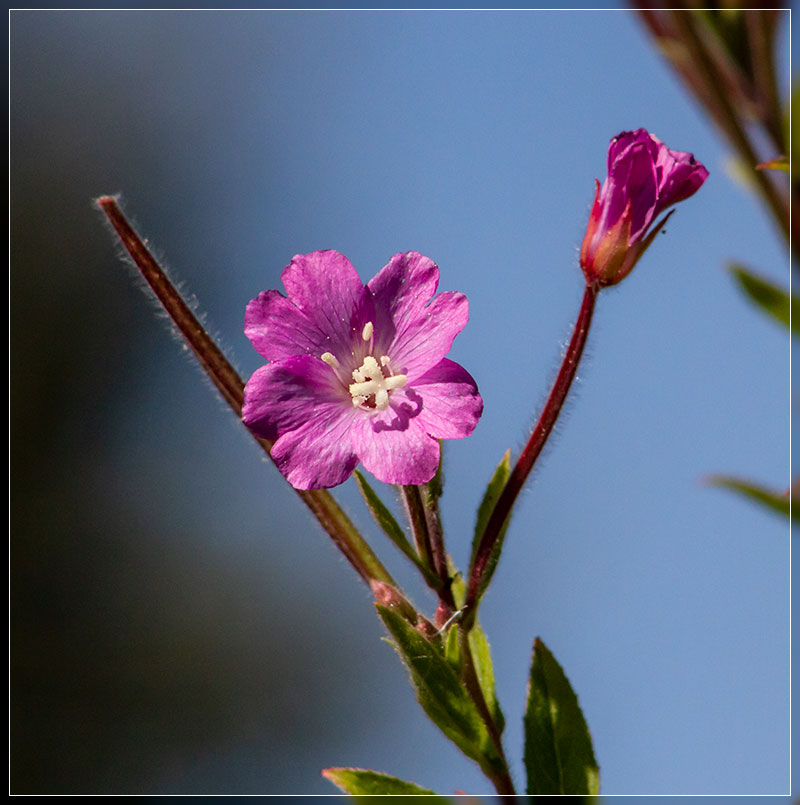

From the biosecurity bulletin:
Great willowherb goes incognito for much of the year but from December through to April it grows distinctive pink flowers with a white centre making it easier to identify:
- flower petals have a notch on the edge and are 2–3 cm in diameter
- leaves are slightly hairy with a ragged edge attached directly to the stem.
An aggressive invader, great willowherb can reach up to 2m tall and can rapidly form dense infestations that outcompete native species.
If you think you have found great willowherb, don’t attempt to remove it. Instead take a picture, report any sightings via the ECan online form or call them on 0800 324 636.
Article: Dave Evans, images: Grahame
Awhi Awa | Embrace a Stream
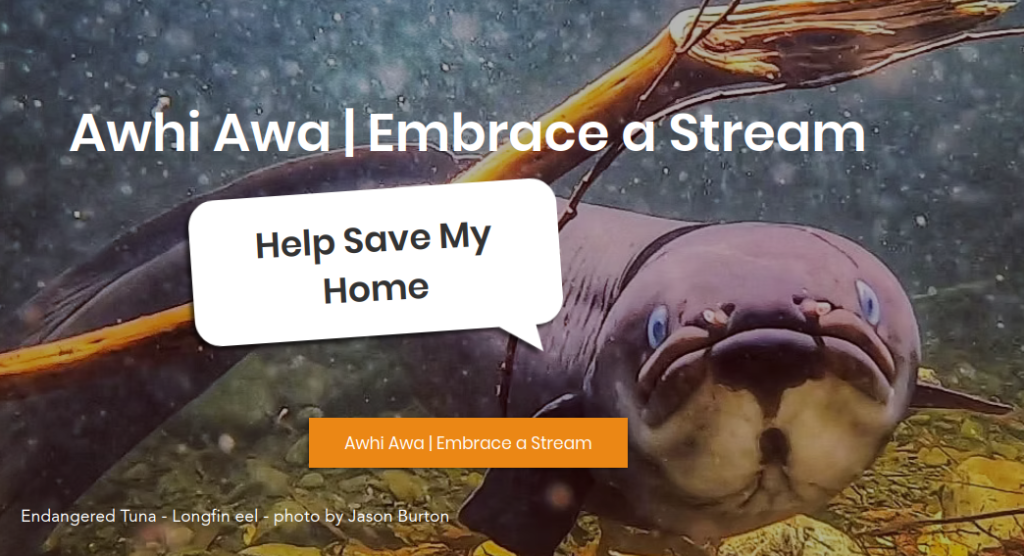
Aotearoa New Zealand’s freshwater is in a dire state. Sadly, 45% of our rivers are now unsafe for swimming and nearly half of our lakes in poor health. Wetlands are also suffering, and threatened birds, like the matuku-hūrepo (bittern), are also struggling.
This water care programme is a worthy initiative from the Endangered Species Foundation.
Images from Grahame