
All previous newsletters can be found here.
Work Day Reminder, February 15 2025
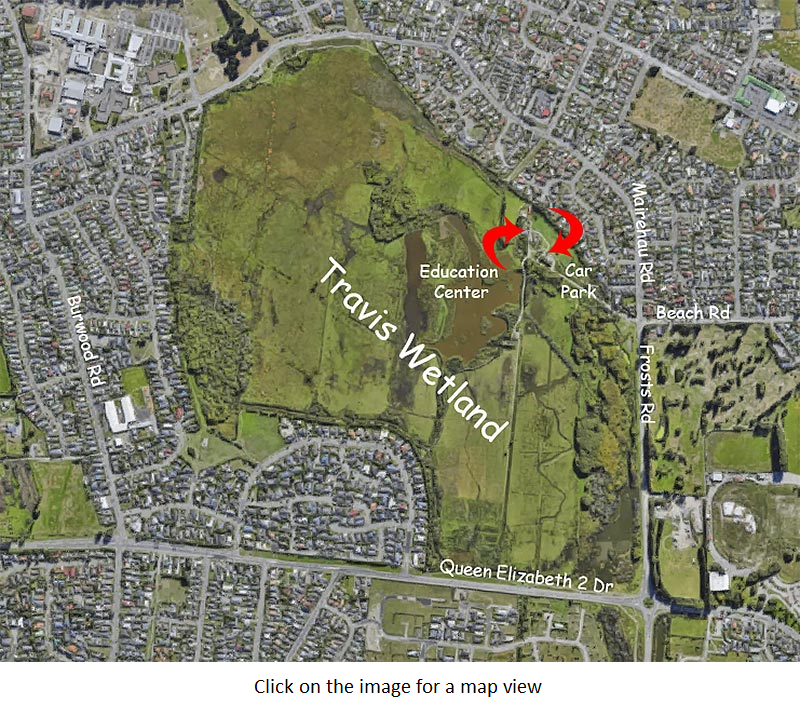
The next monthly work day will be from 9.00am – noon this coming Saturday.
This month we’ll be releasing plants from weeds somewhere around the wetland and maybe doing a bit of planting.
If you arrive late there will be a notice on the Education Centre door explaining where we have gone and a phone number for you to call if you need more guidance to our location.
All tools provided. Gumboots are highly recommended, but if you don’t have any we have pairs for loan. Please bring your own gloves if you can, but we have some of them for loan too.
If the weather on the work day is poor and we decide to cancel then an email will be sent by 8am on Saturday morning. So if you think the conditions are marginal, please check your emails.
If you’re reading this on the website and are not on the email list then you can add yourself to it through the form at the foot of the home page. If you change your mind there’s an unsubscribe link in each newsletter.
Latest News
Report on the Previous Work Day, 18 January
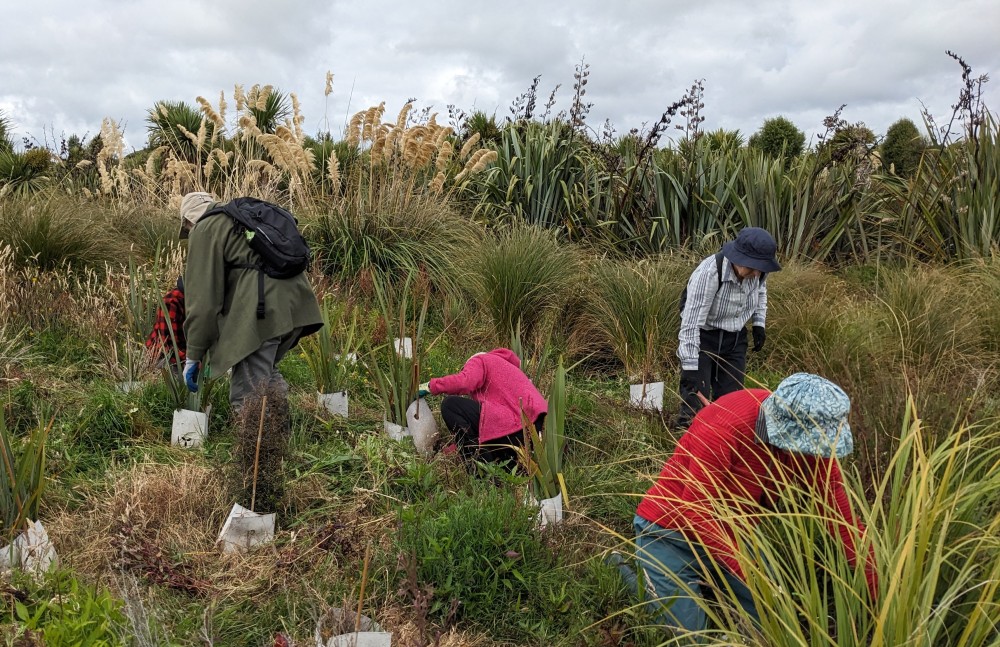
A mild cloudy morning was perfect for a second visit to the southern woods to continue our work from December. A crew of around 20 people, including 2 first-timers, were soon busy releasing young plants from the usual array of summer weeds. There had been rapid weed regrowth since December, including a troublesome honeysuckle patch. Once again there were many nursery web spider nests and a large adult emerged from its spot for a photo-shoot.
Later in the morning ranger John took us for a walk into an area of more mature trees, planted around 2012. Many of these were tall enough to shade the ground well and allow the growth of native seedlings, including tōtara. Several wineberry (Aristotelia serrata, makomako) showed healthy growth and displayed red berries to attract birds for seed dispersal.

Welcome refreshments back at the Ed Centre included a delicious chocolate cake, baked by Nicholas, to celebrate the birthdays of Colin (sadly absent) and Joe. Thanks everyone.
Plus from Eleanor in another part of the wetland
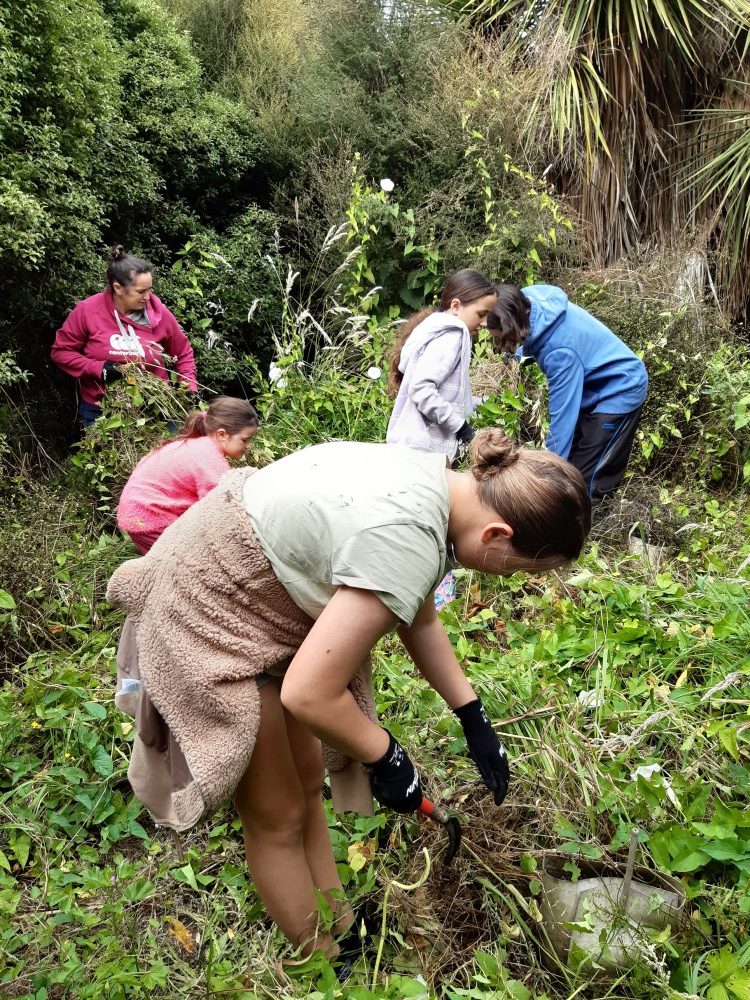
Completely covered by convolvulus, the young people worked on uncovering hidden treasures. Some of these included mataī and tōtara struggling to survive under their captor’s intrusive presence. Removal required a lot of persistence on the part of participants and it paid off.
Article: Sue Britain and Eleanor Bissell, images: Dave Evans, Sue Britain and Eleanor Bissell
Marsh Crakes Attract Attention
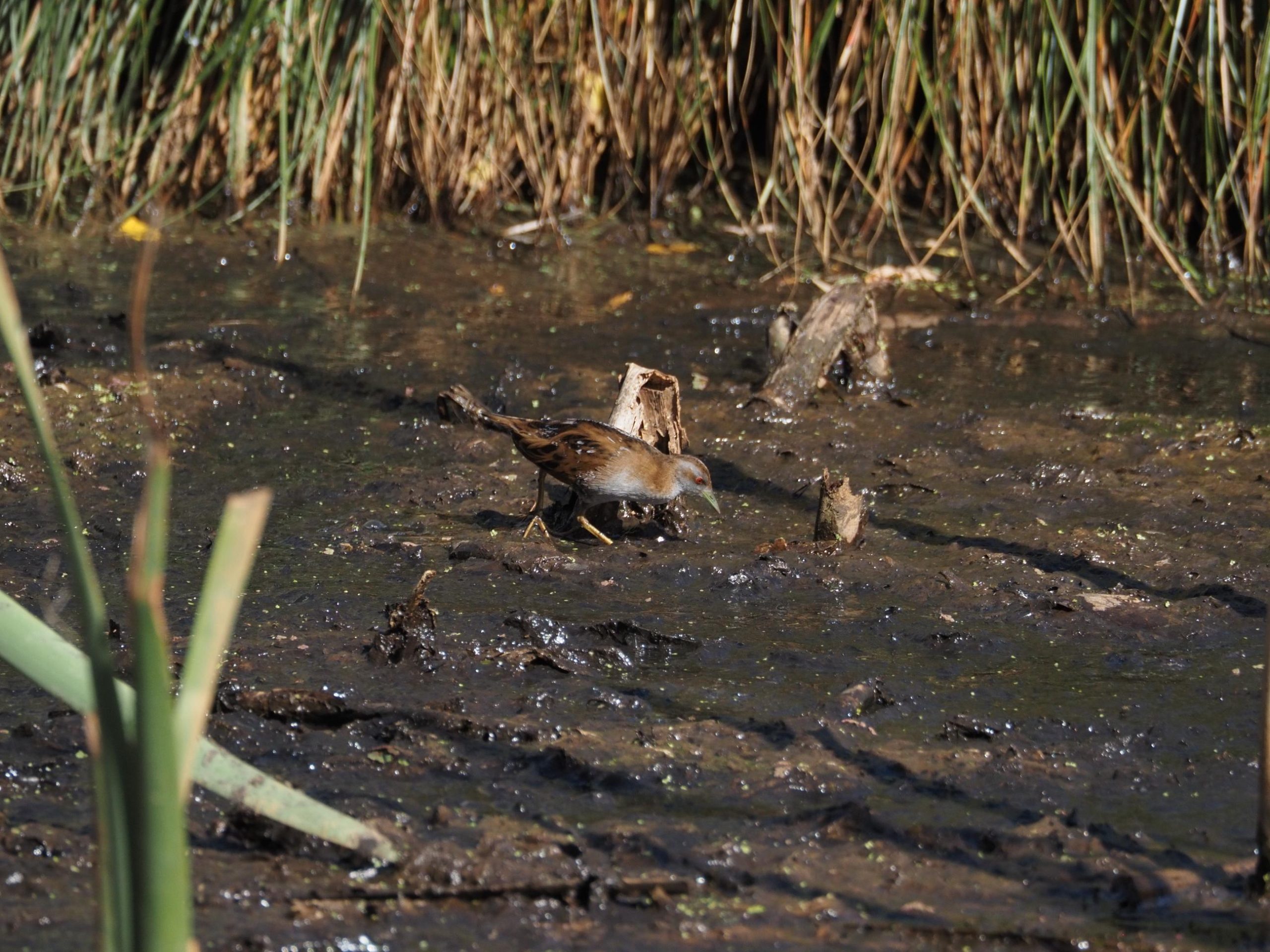
In January a pair of rare marsh crakes allowed themselves to be seen from the Information Centre. Marsh crakes are secretive birds that are seldom seen, so their presence in such an ideal location created quite a stir among the birders. The bird was frequently seen over the next few days.
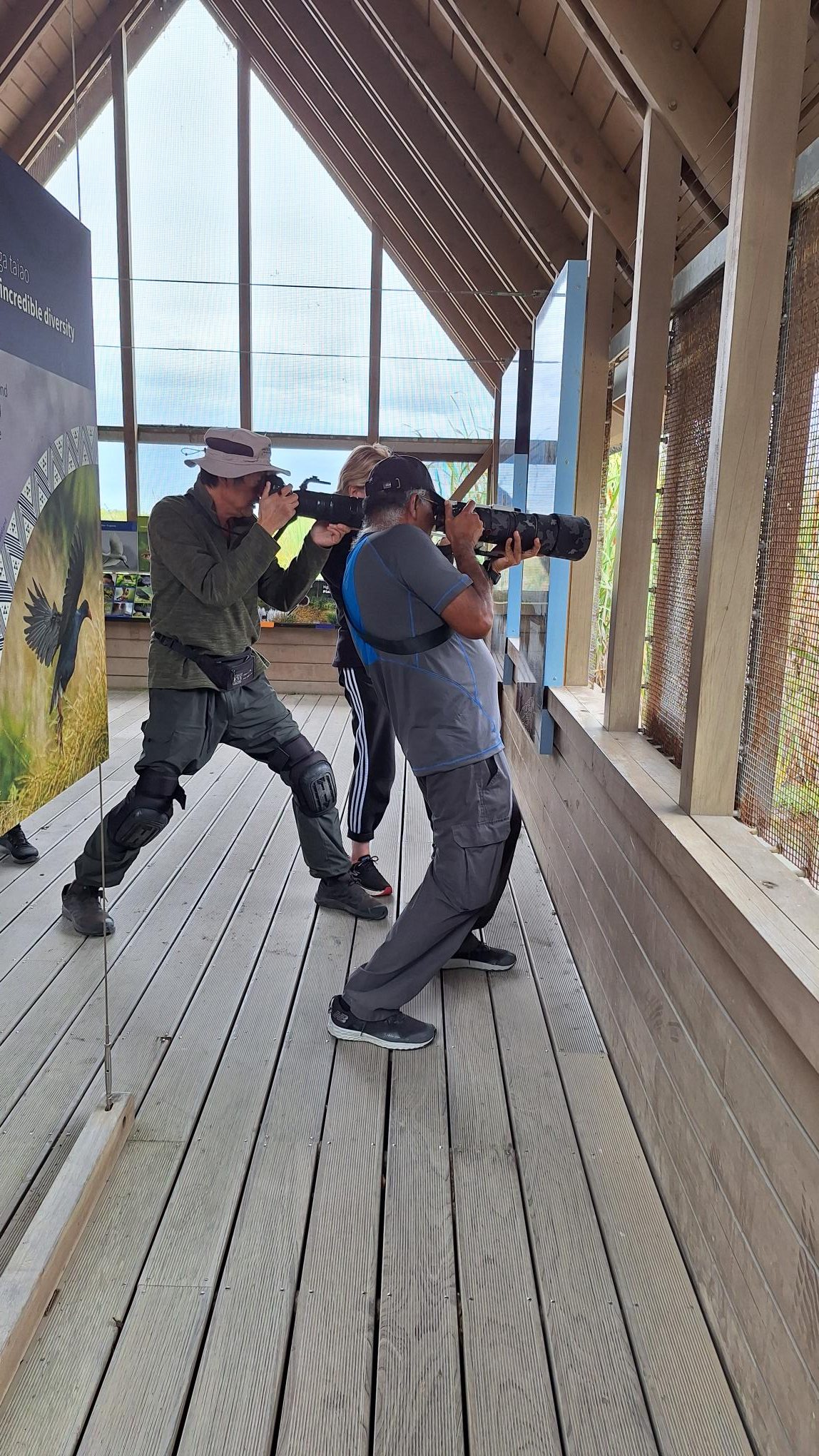
Marsh crakes have been intermittently seen and heard around the wetland over the past 25 years, but this is the first time they have been so public. Perhaps the pair has chicks secreted in the raupō.
A few sentences from NZ Birds Online deserve quoting:
These small rails are half the size of the common blackbird but have spectacular plumage. They appear stout or dumpy because of their short tail and relatively long legs for their body size.
Although marsh crakes are still widespread, they are threatened by habitat loss (c. 90% of wetlands have been drained and some drainage continues) and predation by introduced mammals such as cats, stoats and dogs.
Marsh crakes primarily feed on invertebrates and seeds of aquatic plants.
Article: Dave Evans, images: John Skilton
World Wetlands Day
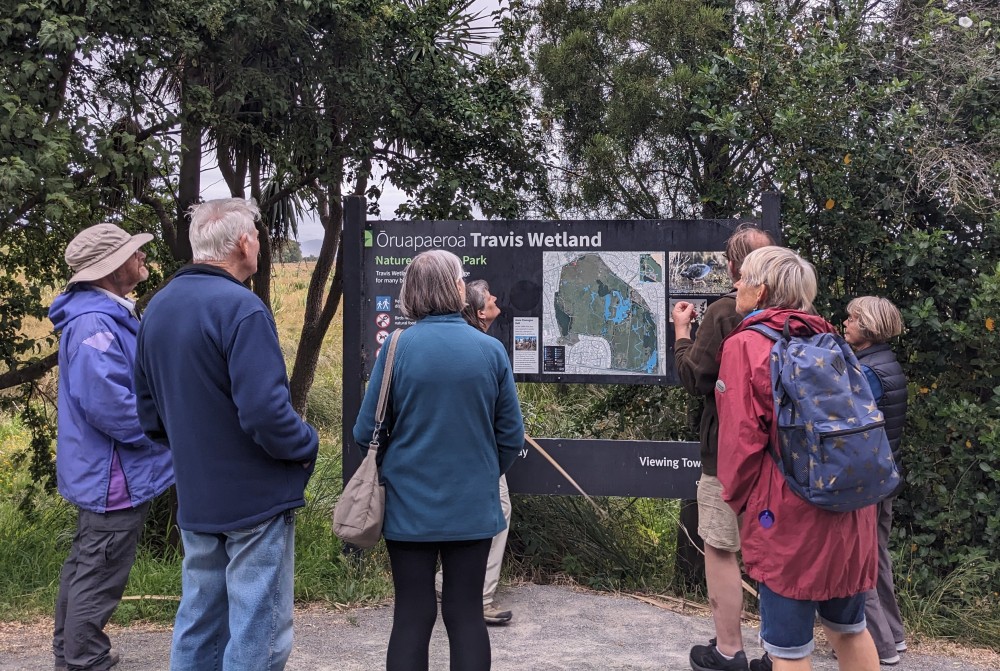
World Wetlands Day is celebrated each year on 2 February to raise awareness about wetlands. This year we decided on an evening guided walk along the board walk from Clarevale Reserve to Mairehau Road and back.
On a rather cool, grey Sunday evening ten people came along to enjoy the wetland. Colin pointed out interesting plants along the way, including native and introduced buttercups growing together. He examined every big tōtara looking for a female bearing fruit. There were several male trees with cones and eventually his persistence paid off and a couple of females bearing drupes were found. Eleanor pointed out some rare Celmisia daisies growing beside the board walk and we admired the stand of remnant mānuka.
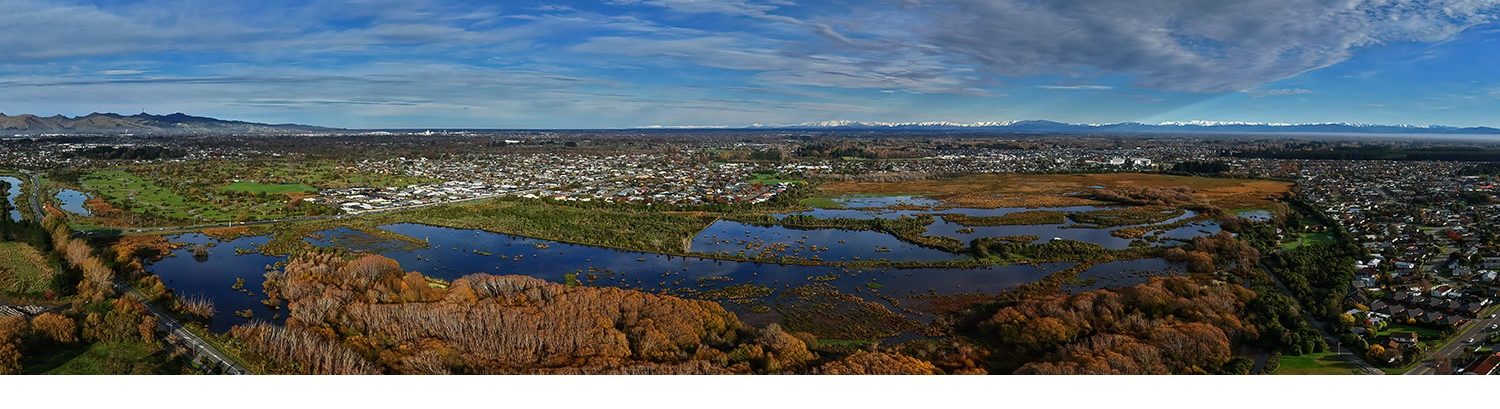
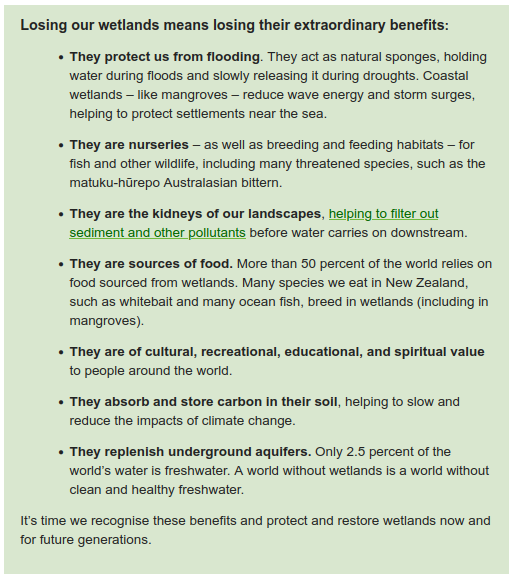
Wetlands used to cover nine percent of Aotearoa New Zealand, but a whopping 90 percent have already been destroyed. Ōruapaeroa Travis Wetland is the largest urban wetland in the country and a vital wetland remnant in Canterbury. Eleanor read the many benefits of wetlands from a recent Forest & Bird campaign asking the government to stop destroying our freshwater protections:
Show your love for these crucial ecosystems today by signing the F&B letter to the Prime Minister, asking him not to change our world-leading freshwater policy, which protects the health of New Zealand’s remaining freshwater wetlands, as well as rivers, lakes, and groundwater.
Travis Top Ten Circuit
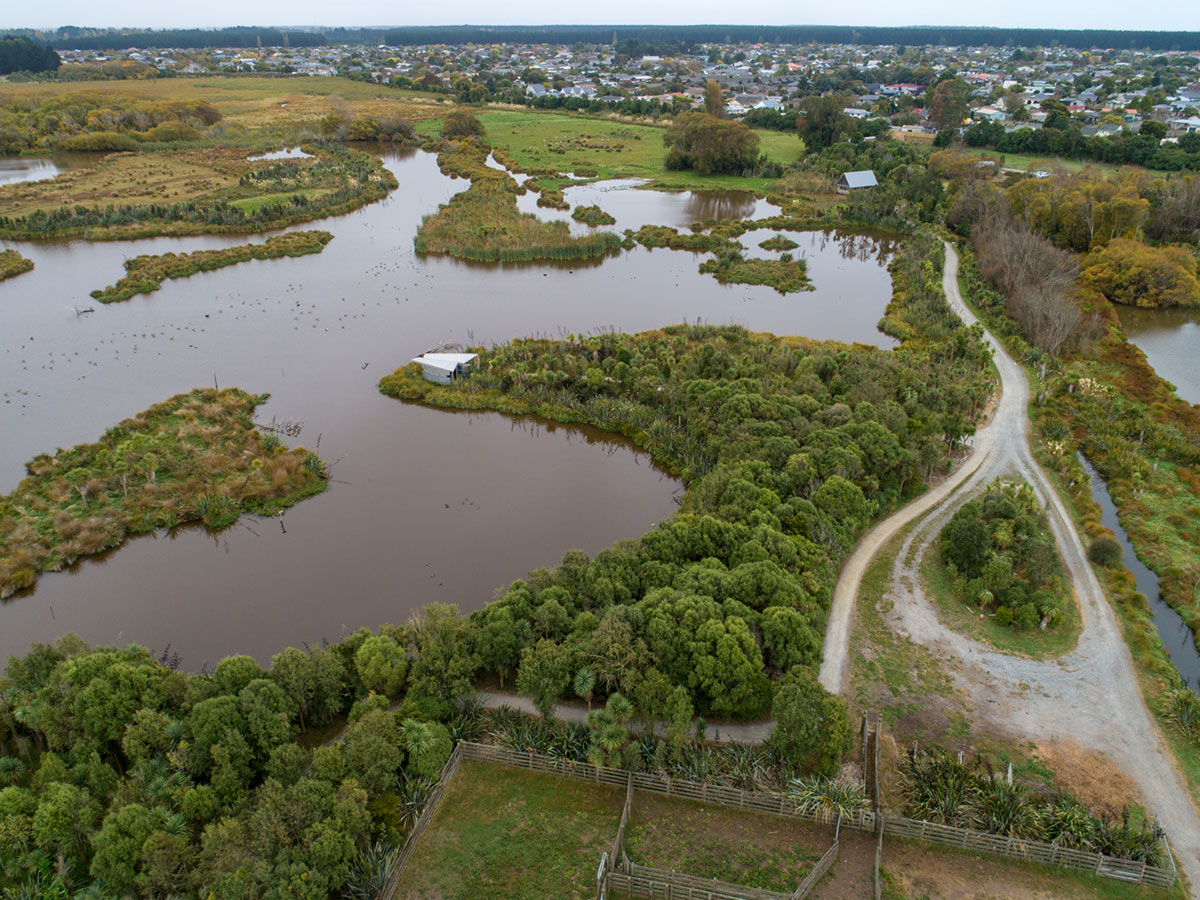
Over the summer break Radio NZ rated the Travis Wetland Walk one of the country’s best loop walks. It’s great to see the recognition for all the work that goes in to keeping it looking great. Especial thanks to Al on the weed eater and the tireless Wayne’s Wednesday Weeders.
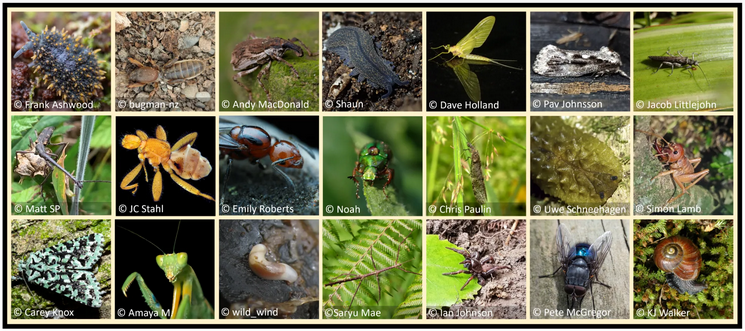
Choose your Bug of the Year
It’s that time of year again. Voting closes midnight, 17 Feb 2025.
Images from Grahame