
All previous newsletters can be found here.
Work Day Reminder, October 17 2026
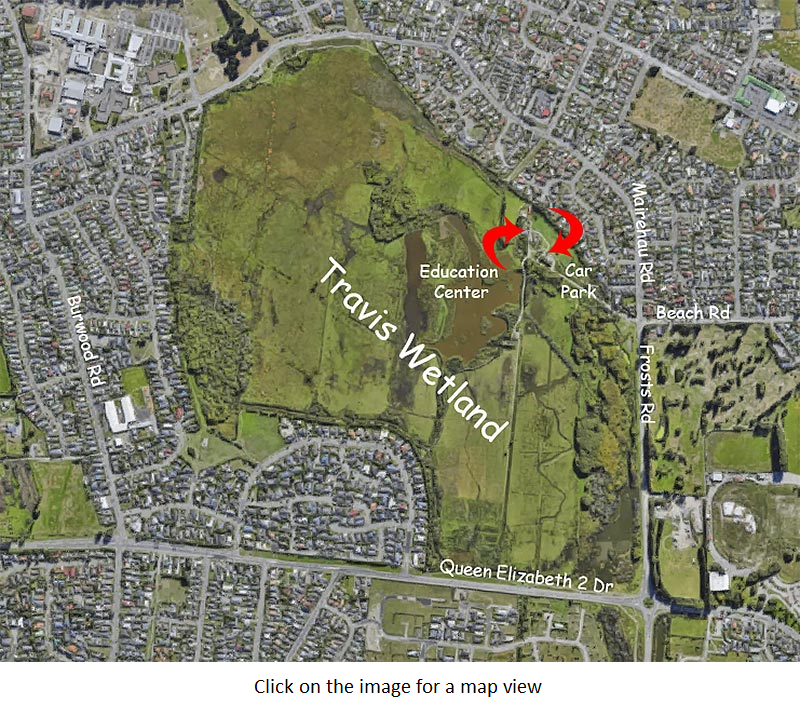
The next monthly work day will be from 9.00am – noon this coming Saturday.
This month we will be doing some planting and weeding somewhere around the wetland. If you arrive late there will be a notice on the Education Centre door explaining where we have gone and a phone number for you to call if you need more guidance to our location.
All tools provided. Gumboots are recommended. If you don’t have any we have pairs for loan at the Education Centre. Please bring your own gloves if you can, but we have some of them for loan too.
If the weather on the work day is poor and we decide to cancel then an email will be sent by 8am on Saturday morning. So if you think the conditions are marginal, please check your emails.
If you’re reading this on the website and are not on the email list then you can add yourself to it through the form at the foot of the home page. If you change your mind there’s an unsubscribe link in each newsletter.
Volunteers welcome
Would you like to volunteer to help with caring for the wetland? We would be interested to hear from you. You may have a community group, workplace or extended family that would like to be involved too. Please contact us via info@traviswetland.org.nz
Report on the last work day, 19th September
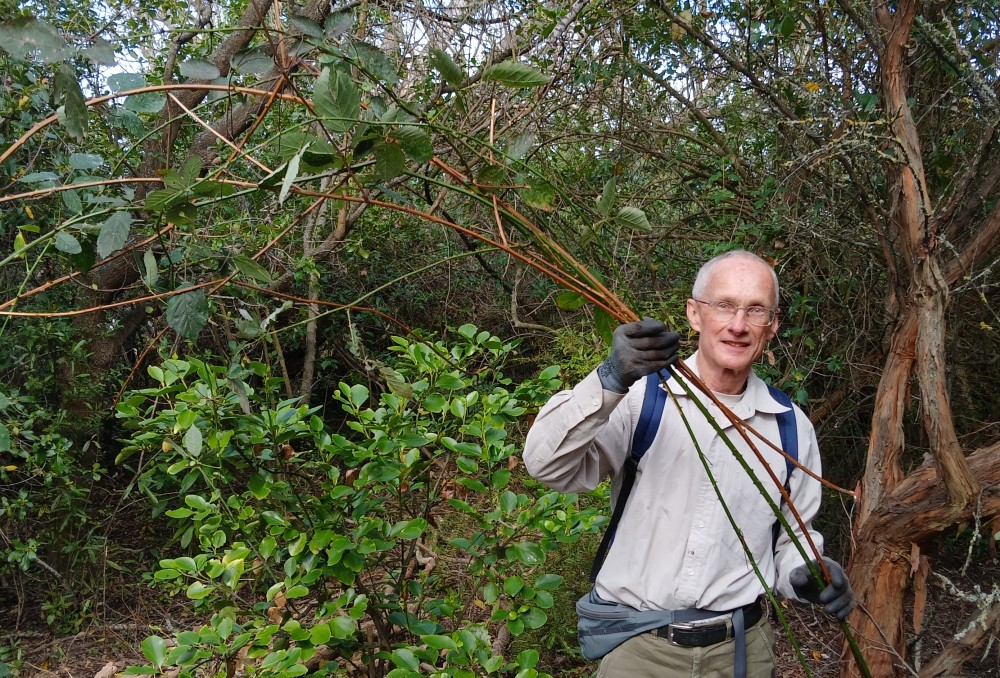
The overcast morning was perfect for our team of 17 to attend to troublesome weeds near Mairehau Road. An area of gnarly old willows has long been a stronghold for invasive ivy and blackberry, so our aim was to remove as many of these weeds as possible, including their roots. This was hard work with tangled masses of prickly stems and swampy patches impeding progress. At least one of us found muddy water deeper than gumboots. However, it was pleasing to see plenty of self sown native seedlings growing well under the canopy.
Meanwhile a planting team was busy placing over 100 Carex Secta in bare swampy patches near the car park. A small number of matāī and tree fuchsia were also planted on the southern side of the track.
Yet another team did a sterling job watering plants that were put in back in July on the dry dunes near the road.
Colin noted mosses starting to appear in the dry dune area and marsh ribbonwood sporting hibiscus-like white flowers in more moist sites. Workers in the willow area noted 2 kingfishers and hoped they may be setting up home.
Eleanor and a family group had a busy morning working closer to the Ed Centre and then presented us with an array of tasty refreshments. Thanks to everyone for coming along.
Article and images: Sue Britain

Annual General Meeting
7pm Tuesday 20th October,
Travis Wetland Education Centre
Following the AGM (and supper) Tommy Copeland, a PhD student from Lincoln University, will speak about his research at Travis. This includes invertebrate monitoring and a paper written on the human ecological history of the wetland. All welcome, please join us.
Sacred Kingfisher (Kōtare)
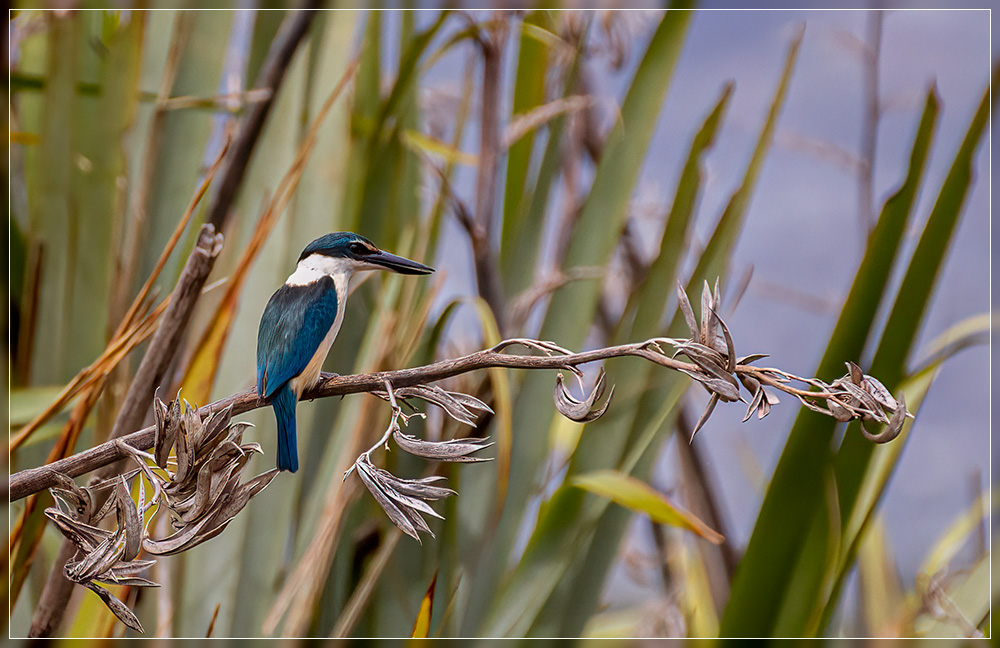
This bird is well known around coastal or inland waters and is often seen quietly waiting for prey on a raised observation perch. This habit has lead to the bird being given sacred status by Maori, due to its sentry like behaviour at marae and burial grounds.
Besides water, kingfishers like habitat with some open ground and banks or trees nearby. They tend to move towards lowlands and coastal areas over winter. Bird numbers are increasing and it is thought that forest clearance and riparian willow planting have played a role in this.
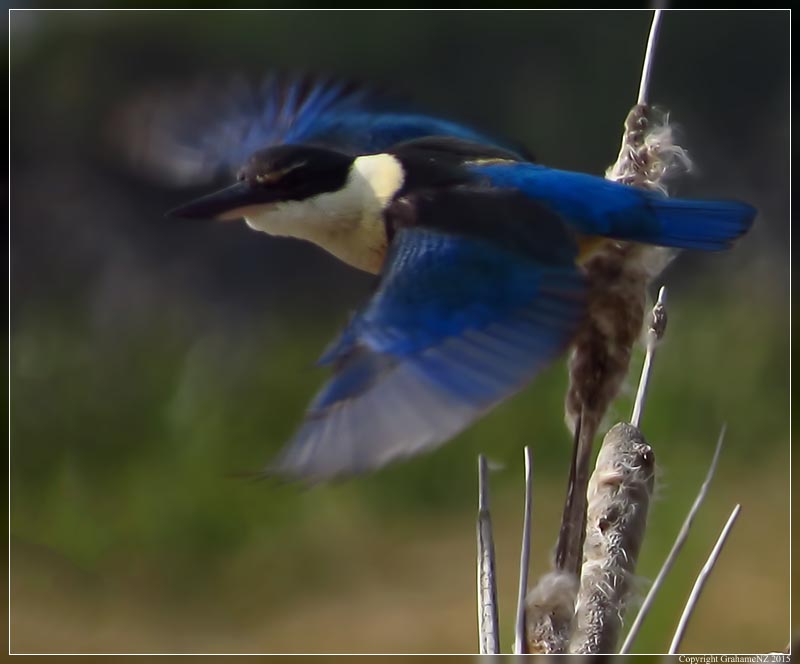
Kingfishers take live prey and their stout bills allow a wide food range. This includes crustaceans, lizards, frogs, fish and more. From a lookout they swoop on prey then carry it back to the perch before battering and swallowing it.
Nesting occurs October to February, usually in a burrow in a bank or tree hollow. Adults and young make a variety of non-musical calls and adults protect the nest aggressively.
You may be lucky to see or hear kingfisher while walking at Travis as 5 were recorded in the September bird count.
Sources : NZ Birds online, Wikipedia
Article: Sue Britain, Images: Grahame
Waitākiri School Students Visit the Wetland
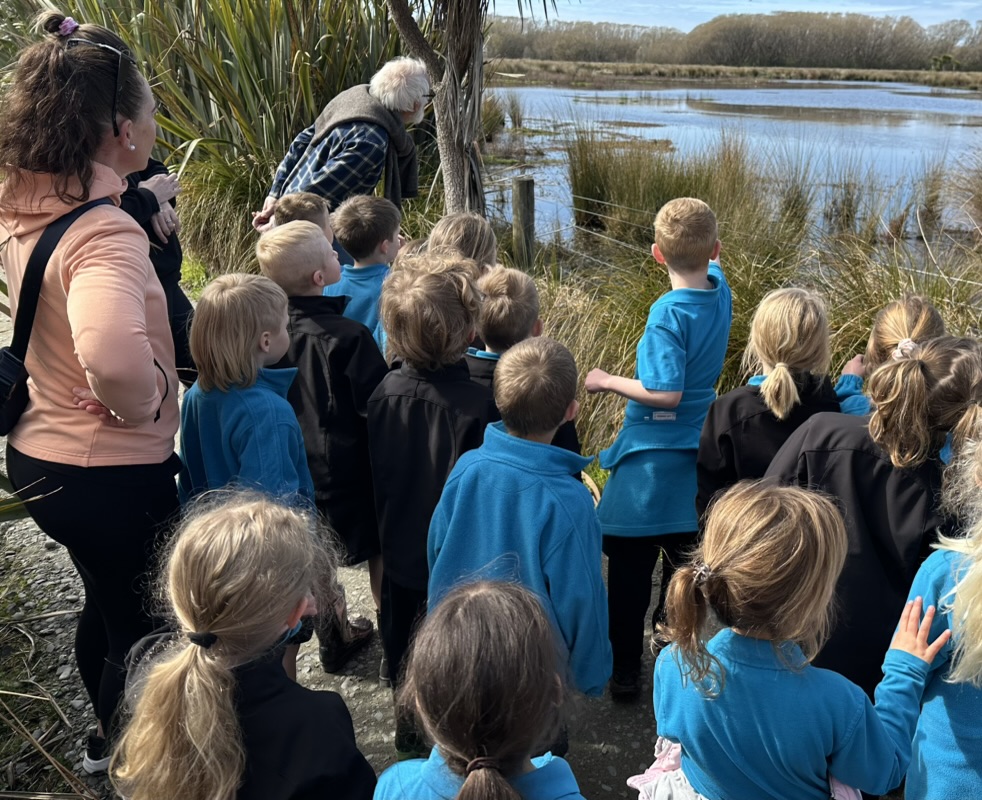
Happy chatter, smiling faces, warm jackets & gumboots greeted us as the year 1 children entered Travis over several sessions. Kids spotted swans occasionally calling, pūkeko hunting, noisy Canada geese, pied stilts squawking, shoveller, paradise & mallard ducks dabbling for food. A hawk flew overhead circling to see if it could spot any of the just hatched ducklings!
Collected locally, bird nests were on display and examined by the children. [Big discussions about how the birds could build nests when they didn’t have hands.] Finding plastic pieces woven into some nests reminded the children not to leave rubbish lying around.
Swallows were trying to build a nest in the Bird Hide. They waited patiently on a branch close by while the participants learned what the various types of feathers did for the birds.
They also touched on how bird food can hide from the birds. [Night feeding by insects helps their survival!]
Programmes were led by John & Lilian Dunlop and Eleanor Bissell.
Article: Eleanor Bissell, Image: Waitākiri School staff
Snippets from the Rangers
Alice heard first Shining Cuckoo of the season (at Ōruapaeroa, that is) on 22 September in the Central Willows!
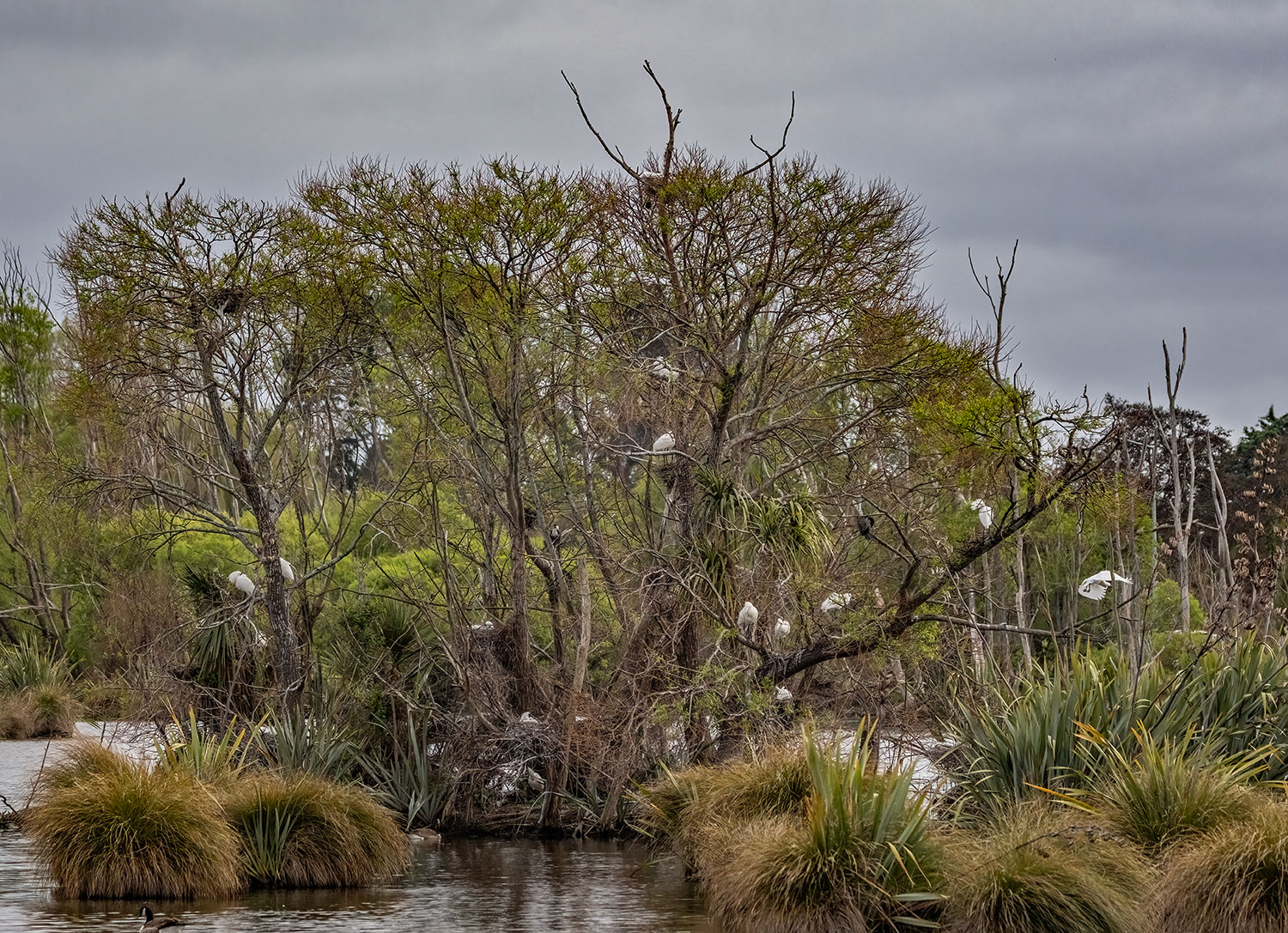
There are currently 17 Royal Spoonbills settling in on their island in Hard Rush Corner (near the Travis/Frosts Roads roundabout). Their favourite tree is looking a bit worse for wear and it may not last many more seasons (see image at bottom of newsletter).
DOC have monitoring devices for Australasian Bitterns out in the wetland.
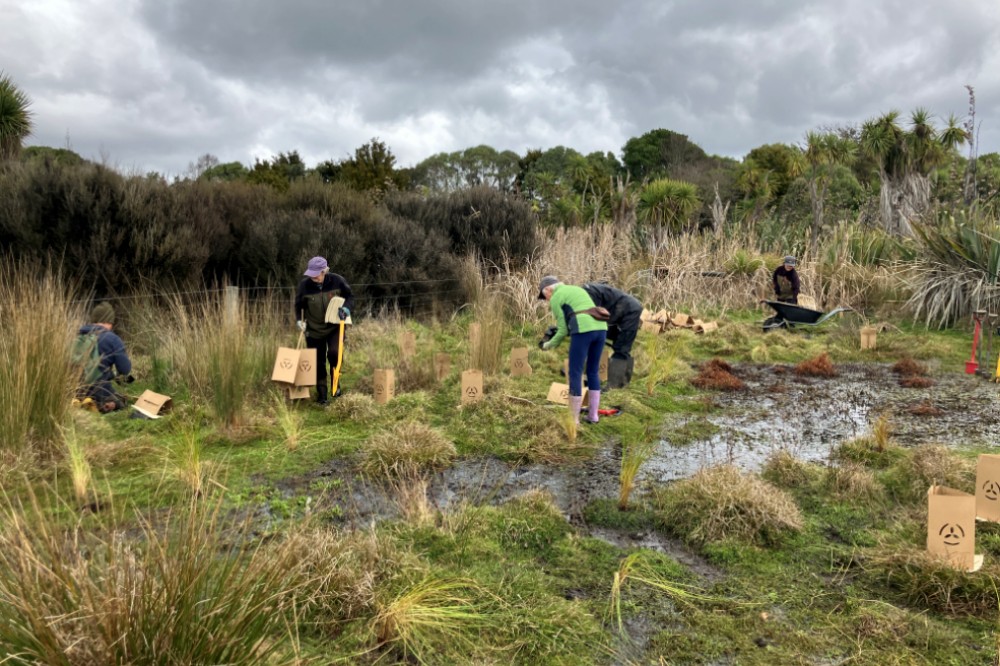
Preparing for the October Trees for Canterbury public planting day adjacent to the stock yards.
Worked with the Wonderful Wednesday Weeders to plant Southern Woods/paddock edge (pictured).
Excerpts from ranger Matt Rose’s report to the Trust’s board meeting in September.
Stay Vigilant for Bird Flu
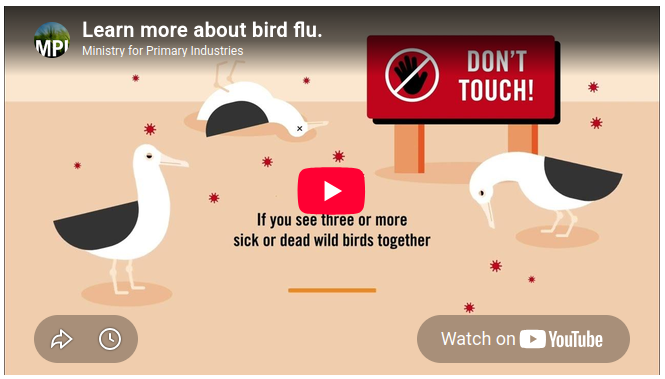
H5 bird flu has been detected in NZ. While confirmed cases are currently low, it’s important to stay vigilant.
MPI is leading the response. For the full story visit MPI’s website for the latest updates and advice and/or learn more about ECan’s response here.
The short story is: if you notice groups of three or more sick or dead birds, or other affected wildlife such as seals, don’t touch them. Report them to MPI on 0800 80 99 66 or online at report.mpi.govt.nz.

Newspapers wanted
Intact newspapers are in demand for covering the ground before mulching around planted areas. Our volunteers, including teams from IDEAS, are doing a great job keeping plants moist and suppressing weeds using this method.
We need whole newspapers, either in bags or tied with string. You can leave them on the doorstep of the Education Centre. Please no glossy colour magazines. Thank you !
Recent images from Ōruapaeroa Travis Wetland