
All previous newsletters can be found here.
Work Day Reminder, January 18 2025
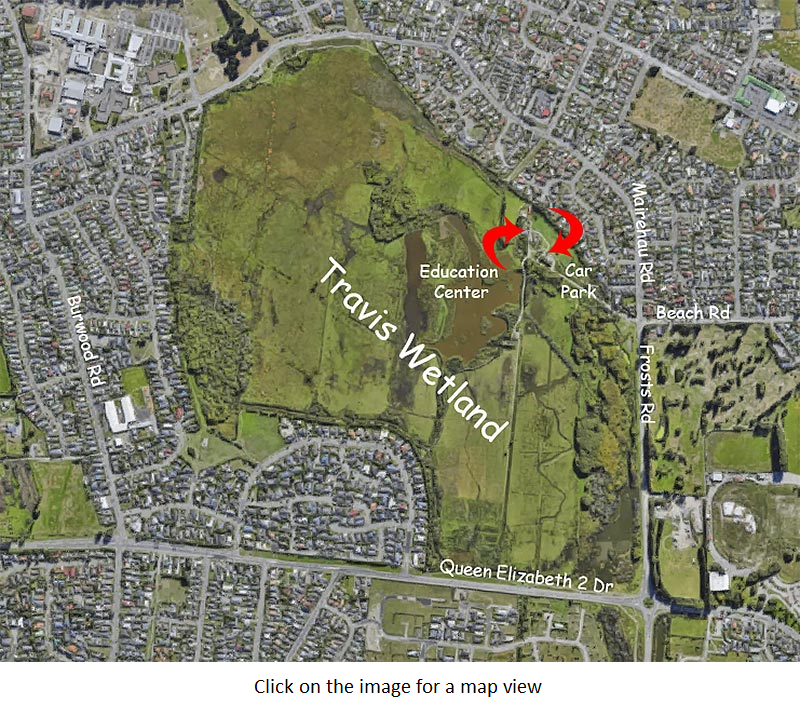
The next monthly work day will be from 9.00am – noon this coming Saturday.
This month we’ll be releasing plants from weeds somewhere around the wetland and maybe doing a bit of planting.
If you arrive late there will be a notice on the Education Centre door explaining where we have gone and a phone number for you to call if you need more guidance to our location.
All tools provided. Gumboots are highly recommended, but if you don’t have any we have pairs for loan. Please bring your own gloves if you can, but we have some of them for loan too.
If the weather on the work day is poor and we decide to cancel then an email will be sent by 8am on Saturday morning. So if you think the conditions are marginal, please check your emails.
If you’re reading this on the website and are not on the email list then you can add yourself to it through the form at the foot of the home page. If you change your mind there’s an unsubscribe link in each newsletter.
Latest News
Report on the Previous Work Day, 21 December
Luckily Friday’s rain cleared just in time to give us a partly cloudy morning and encourage 15 volunteers away from Xmas shopping. We trudged down to the southern woods to weed around plantings, particularly those put in at our 2023 public planting day.
Most plants were thriving well, though some mānuka had not survived. Despite the recent hot and windy conditions many smaller plants were completely engulfed by lush weeds, so we soon worked up a sweat. Another important task was to uproot or poison the invasive weed Hairy Willowherb (Epilobium hirsutum) before flowering. See the December 2024 newsletter for more information on this weed.
Many plants were sporting nests of the nursery web spider and some of us spotted a group of goslings exploring their local patch.
We managed to release a good number of plants and rangers followed up on our work during the following days. Young plants of Lotus and Beggar’s Tick were beginning to appear and early reduction of these will help encourage healthy growth of our plantings. Bruce did a great job continuing to reduce the size of an invasive patch of flowering honeysuckle.
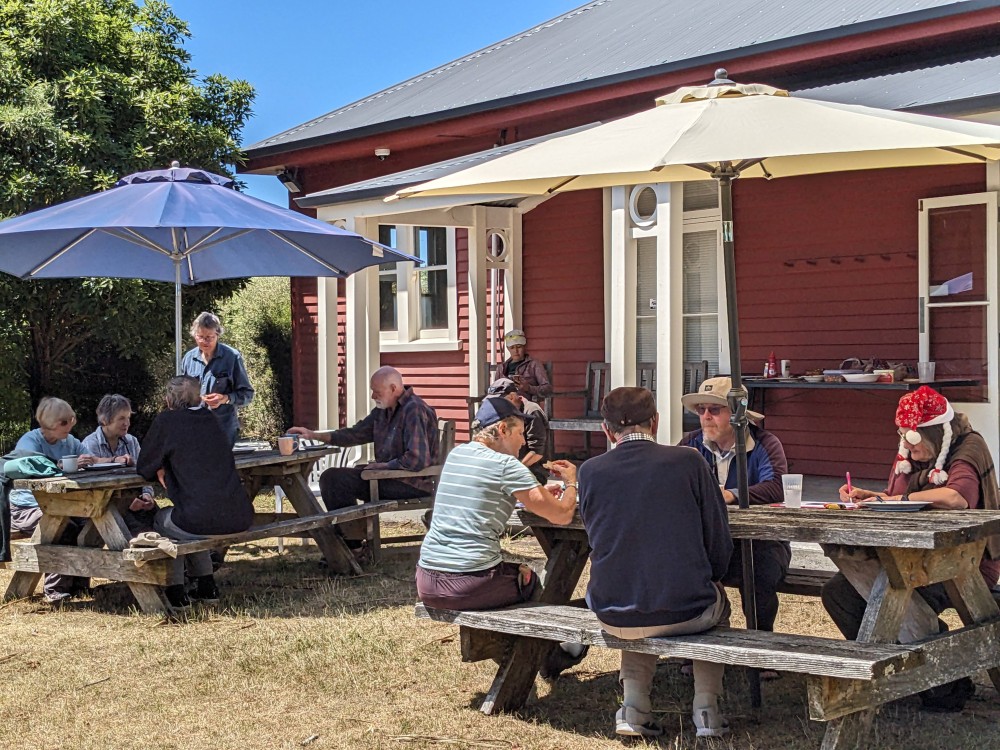
Lunch at the Ed Centre was a treat thanks to Wayne’s efforts with the BBQ and a variety of salads and desserts provided by volunteers. Colin Meurk spoke to the group about progress at Travis and the fact that tōtara, kahikatea and pōkākā planted at the turn of the century are now self seeding. Joe Greenaway reminded us of efforts to save the wetland in the 1990s and mentioned his poem from that time entitled Crossroads in Time.
Thanks to everyone for helping and Happy New Year.
Article: Sue Britain and image: Dave Evans
Grey Teal
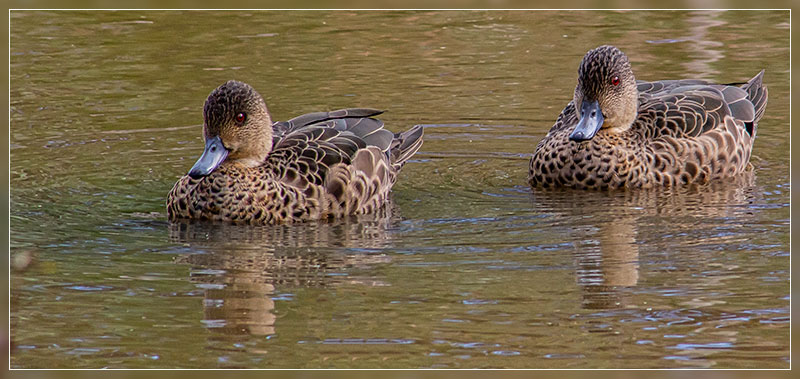
News from Ōruapaeroa Travis Wetland is a bit sparse at this time of year so I put my mind to what hasn’t been covered in recent newsletters. There has been plenty of talk about ducks: Grey and mallard ducks and hybrids of the two, The Intriguing Brown Teal: New Zealand’s Dabbling Dynamo, and the vagrant Chestnut Teal. But the Grey Teal / Tētē-moroiti has been mentioned only in passing. This needs to be rectified because Grey Teal are one of the most common ducks at Travis.
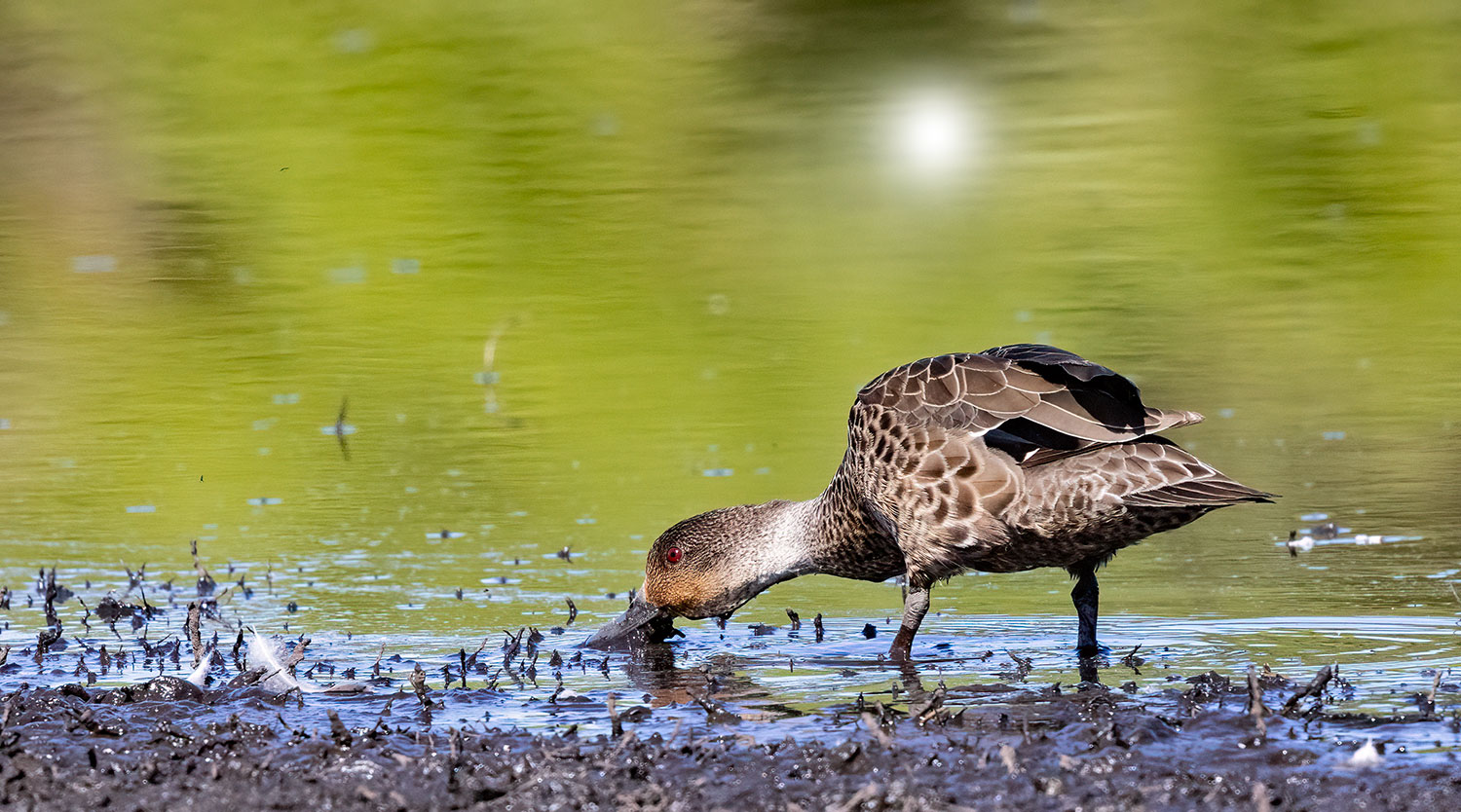
The Grey teal was self introduced from Australia and is a small dabbling duck. It is considerably smaller than a mallard or grey duck. It is mostly grey-brown in colour with pale cheeks, chin and throat. The eye is bright crimson, especially in adult males, and the bill is dark grey. Immature birds have a duller red eye.
Te Waihora / Lake Ellesmere is a stronghold for Grey teal and usually well outnumber all other ducks in the annual survey. The preferred habitat is shallow freshwater lakes, lagoons and swamps with extensive marginal cover, but at times birds are seen on salt and brackish water.
Grey teal are normally nocturnal feeders but are frequently seen forging at dawn and dusk. They feed on small aquatic insects, molluscs and the seeds of swamp plants. Food is obtained by filtering the surface water and the mud. Invertebrates and molluscs are obtained by filtering the surface water and by dredging mud at the waters edge, and seeds are obtained by stripping the plants on the waters edge or near water.
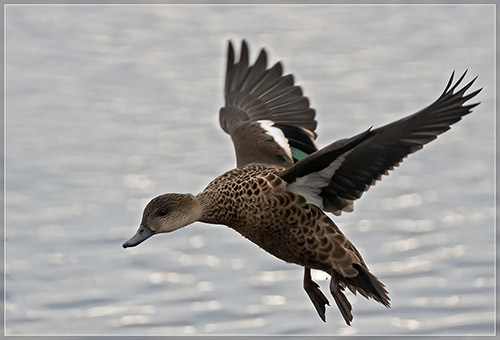
The details on the Grey teal were sourced from the NZ Birds Online page for the species.
Having written this I see there are other gaps in the newsletter coverage of ducks, so expect to see articles on Scaup / Papango and Australasian Shoveler / Kuruwhengi. Both are frequently seen at Travis.
The DOC Conservation blog has an amusing Duck Tales 4-part series on the various duck species in Aotearoa:
Ducktales Episode 1: Quacking the case on mallards and grey ducks
Ducktales Episode 2: The Teal Deal
Ducktales Episode 3: That’s a rubber-ducky, you goose!
Ducktales Episode 4: Whio – the ten-buck-duck
Article: Dave Evans, images: Grahame
Images from Grahame